What All-Inclusive Galapagos Packages Cover, And What They Never Do
All-inclusive means something different on a Galapagos ship than in a Caribbean hotel. Here is exactly what falls inside the package fare and what is always billed on top.
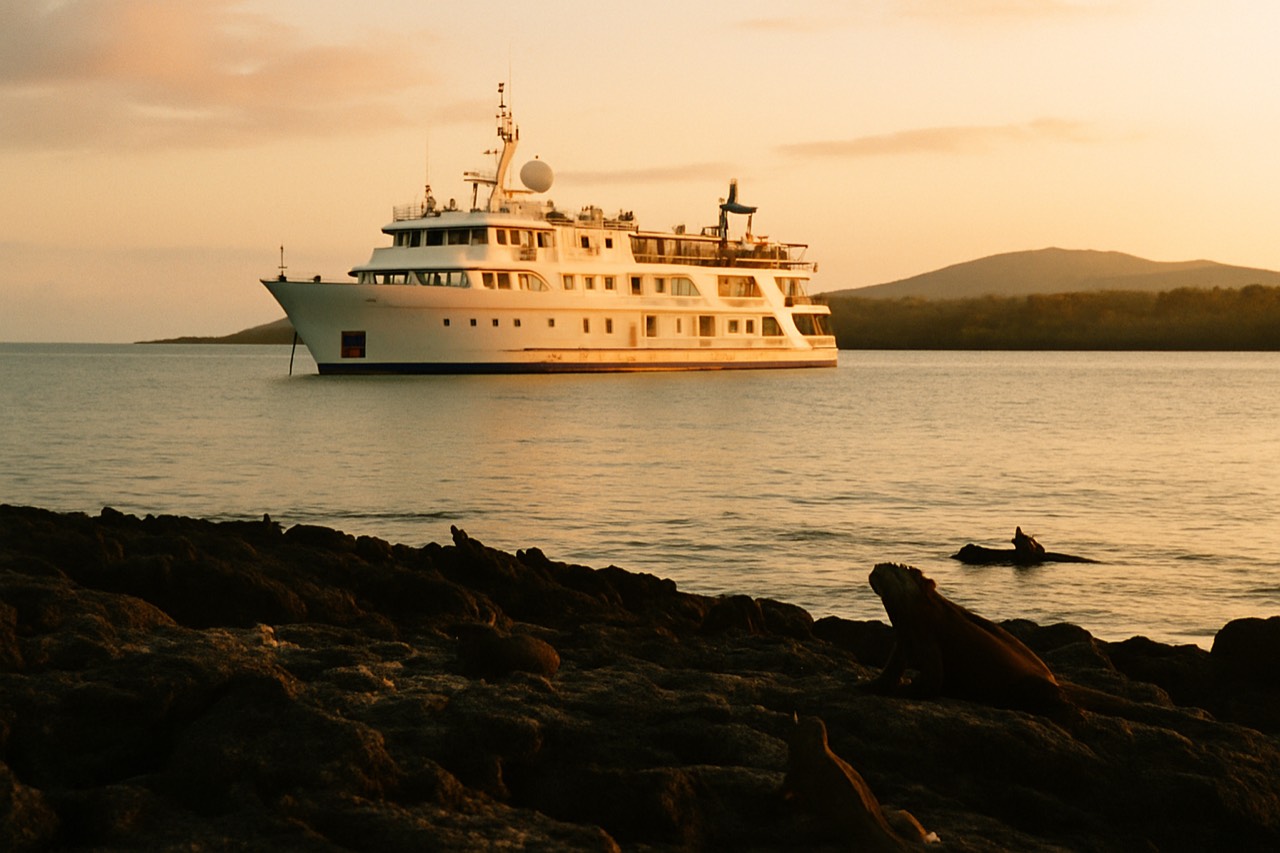
Short answer
A Galapagos all-inclusive package covers your cabin or hotel room, meals, guided excursions with a licensed naturalist guide, snorkel gear and airport or dock transfers. It never covers the $200 park fee, the $20 transit card, flights to the islands, alcohol, wetsuit hire or crew tips. Package prices on this site run from $450 to $8,066 per person.
The phrase "all-inclusive" is used loosely across the Galapagos travel market, and the looseness costs people real money. A traveller who books a package described as all-inclusive, arrives at Baltra, and then discovers that the $200 park entrance fee must be paid in cash at the airport counter has been misled by a word, not by a fraud. The fee is simply never part of any package fare, and neither is the $20 transit control card. On this site's roster of 50 multi-day packages, prices run from $450 to $8,066 per person, and even at the very top of that range the same two airport charges stay outside the fare.
This page itemises the boundary. What follows is a line-by-line accounting of what a package fare buys, drawn from the actual listings of the tours sold here, and what is always billed separately, drawn from the official sources that set those charges. The short version: the more expensive the package, the more of your day is inside the fare, but the two airport payments and the flights never move inside it.
What Does All-Inclusive Actually Mean In The Galapagos?
In the Galapagos, all-inclusive is a spectrum, not a standard. A cruise package typically bundles the cabin, all meals, guided landings with a licensed naturalist guide, snorkel equipment and airport transfers into one fare. A land-based package bundles the hotel, some meals, day excursions with a guide and hotel pickup, but leaves more of the daily routine to you. No package includes the $200 park fee or the $20 transit card.
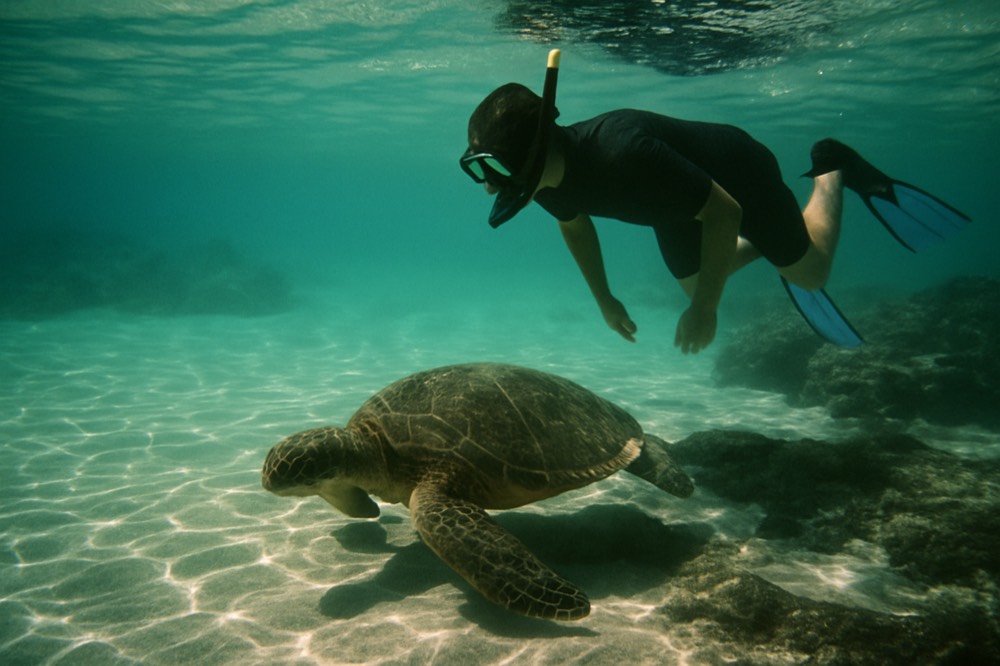
The reason the word stretches so far is structural. The archipelago's tourism runs on two completely different machines. A liveaboard cruise is a closed system: you sleep, eat and travel on the vessel, and every excursion leaves from its deck, so bundling everything is natural for the operator. A land-based hopping package is an open system: you sleep in hotels on San Cristobal, Santa Cruz or Isabela, and each day is a separate guided excursion or a ferry crossing between islands. Operators can bundle the hotels and the excursions, but the ferries, some meals and the free evenings resist bundling.
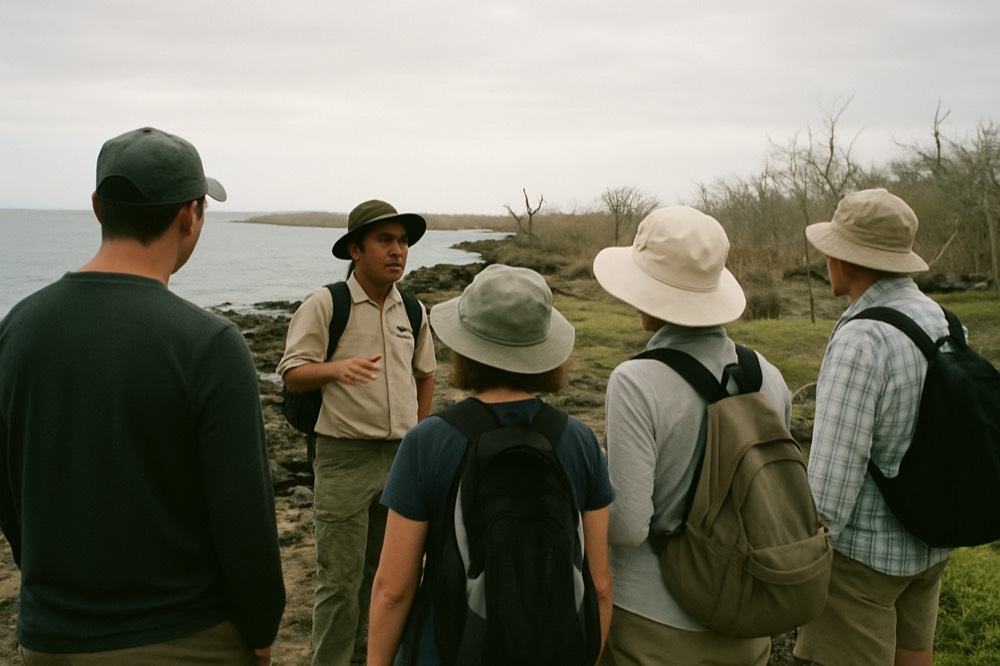
The park's own rules reinforce this. Guided visits to the protected areas may only happen in the company of a DPNG-accredited naturalist guide under the visit rules currently in force, Resolución MAE-PNG/DIR-2026-0044-RM, so the guide is a legal requirement rather than a marketing perk, and every legitimate package includes one. That is why "guided excursions" appears in every fare on the roster, from the $450 bay tour to the $8,066 seven-day cruise.
One more framing helps before the itemised lists. Of the 290,404 visitors who arrived in 2025, 79% stayed on land and only 21% slept on board a vessel, according to the national park's annual visitor report. The all-inclusive question most travellers are actually asking is the land-based version, where the bundling is thinner and the surprise charges are more common.
What Falls Inside The Package Fare
The package fare on any Galapagos multi-day tour covers four things: your bed, your food to the extent stated on the listing, your guided excursions with a licensed naturalist guide, and your transfers between airports, docks and hotels. Snorkel gear is usually included on cruise packages and often included on land packages. Everything else is negotiable, and the listing, not the phrase all-inclusive, is the only reliable record of what you get.
The fare's core is the bed. On a cruise that is a cabin, and cabin location matters more than most first-time buyers expect: traveller reports on small ships repeatedly complain about lower-deck cabins near the engine, with noise and fuel smell, while upper-deck and midship cabins get the favourable reviews. On a land package the bed is a hotel room, usually a tourist-class property on Santa Cruz, Isabela or San Cristobal, and the listing states the class rather than the named hotel.
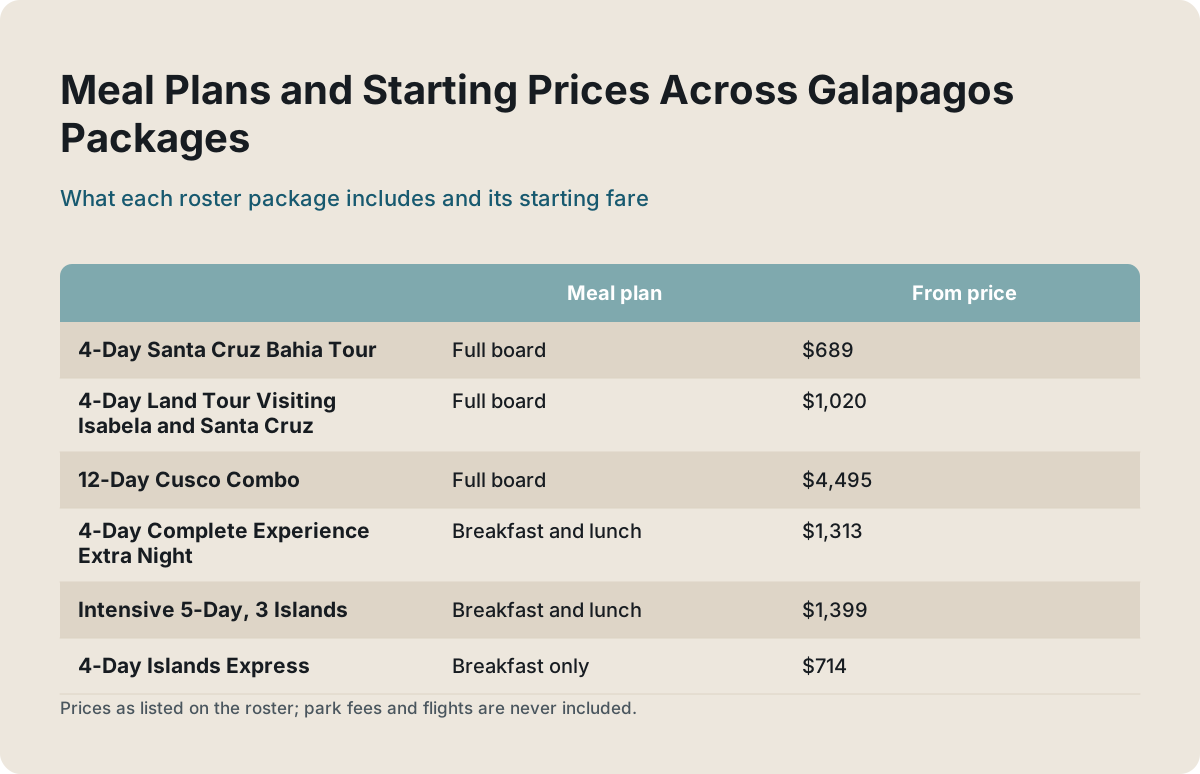
Food is where the packages on this roster genuinely differ, and the differences are itemised on each listing. Three meal plans appear:
| Meal plan | What it means | Roster examples |
|---|---|---|
| Full board | Breakfast, lunch and dinner every day | 4-Day Santa Cruz Bahia Tour from $689; 4-Day Land Tour Visiting Isabela and Santa Cruz from $1,020; 12-Day Cusco Combo from $4,495 |
| Breakfast and lunch | Two meals a day, evenings free to choose your own restaurant | 4-Day Complete Experience Extra Night from $1,313; Intensive 5-Day, 3 Islands from $1,399 |
| Breakfast only | Just the hotel breakfast, everything else self-paid | 4-Day Islands Express from $714 |
The two-meal plan is the most common on land-based packages, and it is less of a gap than it looks: Puerto Ayora and Puerto Villamil have inexpensive restaurants, and many travellers prefer choosing their own dinner. But a package listed as breakfast and lunch is not all-inclusive in the sense a Caribbean resort uses the word, and comparing it against a full-board package on price alone is misleading.
The excursions are the third component, and they are the part no package can legally strip out. Every confirmed stop on a listing, Bartolome, North Seymour, Santa Fe, the highlands, is a guided landing with a licensed guide, and the park caps a cruise permit at 16 passengers per permit and a cruise vessel at 64, under the special tourism regulation for protected areas. Small groups are the norm, not a premium feature.
Transfers round out the fare. Hotel pickup appears on most land-based listings on the roster, and cruise packages include the airport-to-vessel handover; the national park's own arrival guidance notes that a cruise guest is met at Baltra by the ship's naturalist guide. What transfers never cover is the public infrastructure you use before the operator takes over: the free bus from Baltra terminal to the Itabaca Channel, the $1 channel crossing, and the roughly $2 public bus or roughly $25 shared taxi into Puerto Ayora.
What Is Never Included, No Matter The Price
Four charges sit outside every Galapagos package fare: the $200 park entrance fee for foreign adults, paid in cash to rangers on arrival; the $20 transit control card, bought at the airport counter; your flights to the islands; and alcohol on board. Wetsuit hire and crew tips are near-universal extras on cruises. These are not hidden fees, they are published official charges and standard industry practice, but they add up and belong in your budget.
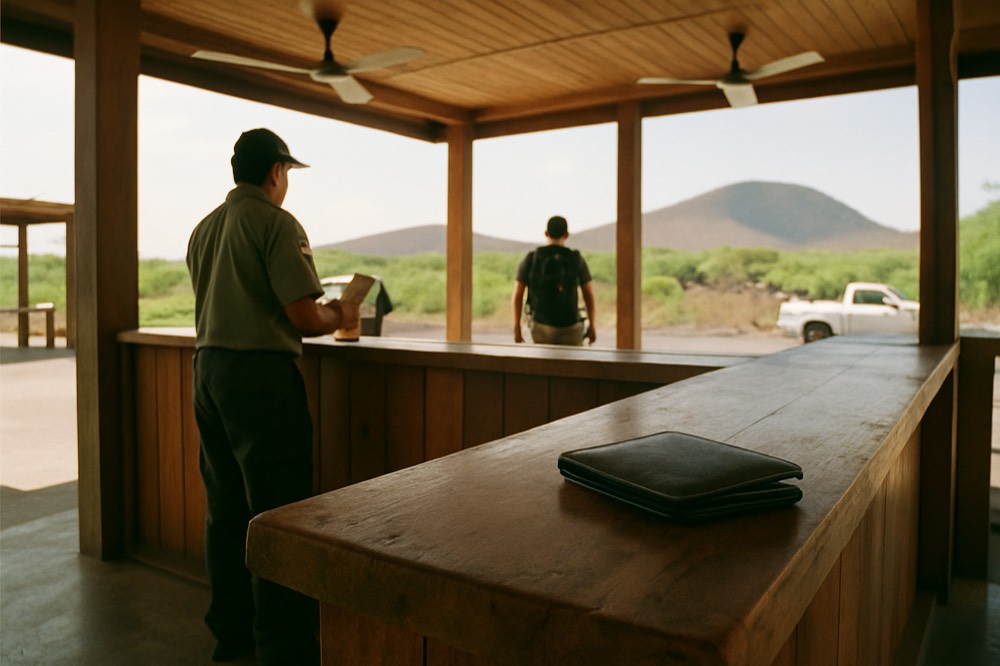
The park entrance fee is the big one. A foreign adult over 12 pays US $200 and a child under 12 pays US $100, current since 1 August 2024, and it is collected in cash, in US dollars, by park rangers at the Baltra and San Cristobal airport checkpoints. There is no official online prepayment portal, so a traveller arriving without clean US notes has a problem at the counter. Half the money funds management and conservation of the protected areas, and the rest goes to local municipal services, per the official fee page. CAN and Mercosur nationals pay $100 as adults, and Ecuadorian residents pay $30.
The transit control card costs $20 per person per trip and is bought at the CGREG counter at Quito or Guayaquil airport before airline check-in. Free online pre-registration exists and speeds up the counter visit, but individual travellers cannot complete the purchase online; advance purchase is limited to travel agencies, per the official CGREG FAQ. You cannot fly to the islands on a one-way ticket either, because the card requires a personal return ticket between the mainland and the province.
Flights are the largest exclusion in absolute terms. Only a handful of listings on this roster state that flights are included, and on most the fare assumes you buy your own Quito or Guayaquil to Baltra or San Cristobal ticket. Avianca and LATAM operate those routes. A full treatment of the flights, fees and card mechanics lives on the flights, park fee and transit card guide.
Beyond those, the smaller extras add up on any vessel: alcoholic drinks, wetsuit hire for the cooler months, tips for the crew and guide, and sometimes Wi-Fi. Traveller reports from 2025 and 2026 consistently flag wetsuit and snorkel rentals as "optional" charges that are effectively required, so ask the operator before departure what gear is in the fare and what is rented on board.
Cruise All-Inclusive Vs Hotel All-Inclusive
A cruise package bundles nearly your entire existence on the water: cabin, all meals, every landing, snorkel gear and the guide, all inside one fare. A hotel-based package bundles the room, some meals and the day excursions, but leaves inter-island ferries, free evenings and some transfers to you. The trade is simple: the cruise buys reach and completeness, the hotel package buys flexibility and a lower price.
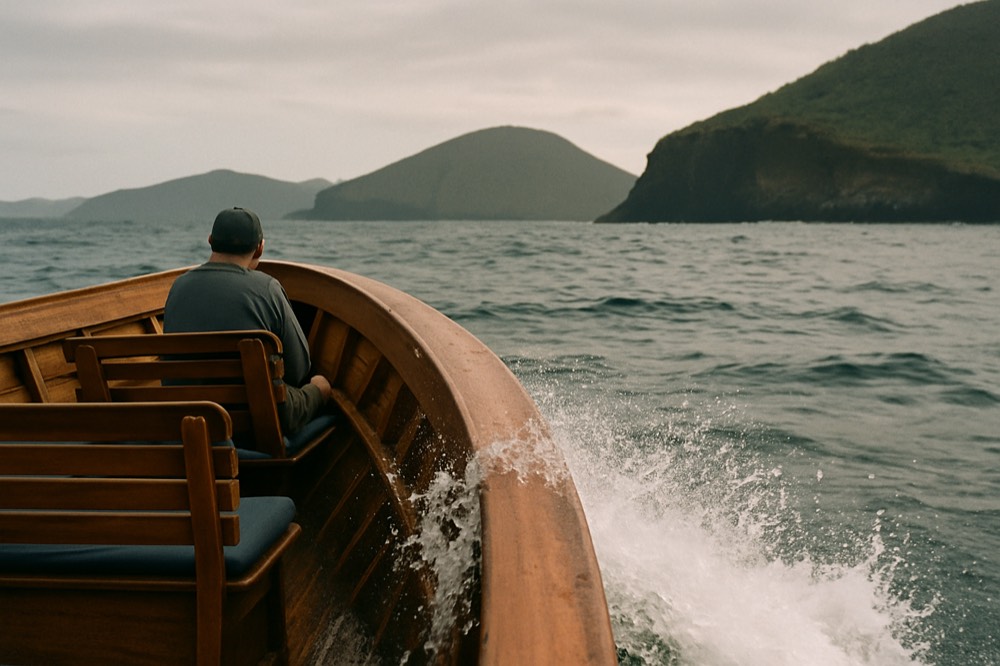
The cruise side of the roster shows the bundling at its thickest. The 5-Day Seaman Journey luxury cruise, from $4,500 per person, includes breakfast, lunch and dinner, hotel pickup and a cabin for a route taking in Genovesa and North Seymour, though it has no reviews yet. The La Pinta seven-day cruise, 5 across 48 reviews, from $8,066, is the most expensive product on the roster and still leaves the park fee, the card and your flights outside the fare. What the fare does buy is remote reach: Fernandina, the westernmost island, appears on cruise itineraries and is effectively unreachable as a day trip from a hotel.
The land side is where most visitors actually are, four out of five of them in 2025. The bundling is thinner but the value is real. The 8-Day Galapagos Adventure in San Cristobal, Santa Cruz and Isabela, 4.9 across 12 reviews, from $2,363, includes all meals and hotel pickup across three islands. The Intensive 5-Day, 3 Islands package, 4.7 across 56 reviews, from $1,399, includes breakfast and lunch, and its review pool is the largest on the whole roster.
The honest comparison is not which is better but which gaps you mind. A hotel package leaves you to find dinners, board ferries and fill free afternoons; a cruise leaves you with no evenings ashore and a fixed itinerary that, under park rules, cannot be modified once authorised. If the comparison matters to your decision, the full trade-off analysis is on the cruise versus land package guide.
How The Meal Plans Compare Across Real Packages
Meal plans split the roster into three tiers: full board, breakfast and lunch, and breakfast only. Full-board packages start at $450 per person on this site, breakfast-and-lunch packages start at $865, and breakfast-only packages start at $714. The meal plan tells you more about a package's character than its price does, because two similarly priced tours can differ by every dinner of the trip.
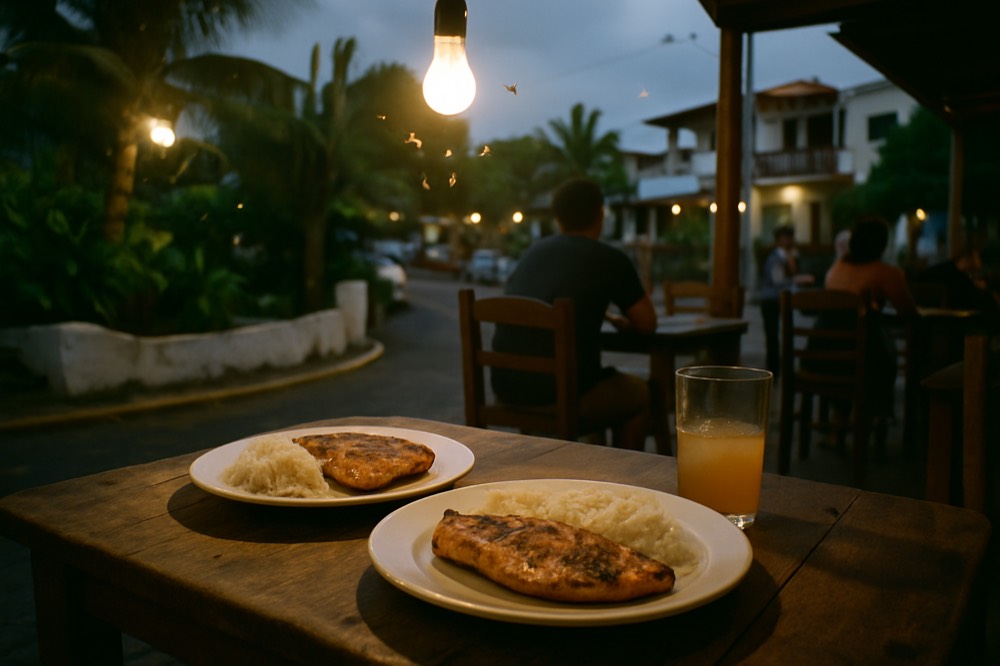
The cheapest full-board package here is the 4-Day Discovery Premium Bay Tour, from $450, rated 4.9 across 24 reviews, with all meals included. It runs on a short bay-tour format out of Santa Cruz rather than a remote sailing, so three meals a day come at a modest price. At the other end, the 12-Day Cusco, Machu Picchu and Galapagos tour, from $4,495, 5 across 2 reviews, includes all meals on the islands as part of a mainland-plus-Galapagos combination. Full board on a liveaboard, like the Seaman Journey, is standard because there is nowhere else to eat.
Breakfast-and-lunch is the dominant plan on island-hopping packages, and it suits the rhythm of a land tour: excursions run through the middle of the day with a packed or restaurant lunch, and the evening is yours. The 4-Day Complete Experience Extra Night, 4.7 across 15 reviews, from $1,313, works this way, with hotel pickup included and a confirmed route through Santa Cruz and Isabela.
A few packages go further and bundle activities into the fare rather than just transport and food. The 5-Day Galapagos Islands plus Bike, Kayak, Hike, Snorkel package, from $1,499, 4 across 2 reviews, includes all meals plus the multisport equipment, which is a genuinely different proposition from a standard hopping tour.
What The Extras Cost Once You Land
Budget roughly $220 per person in cash for the airport charges, $200 for the park fee and $20 for the transit card, plus your flights, before the package fare covers anything. On the ground, the Baltra transfer chain costs about $3 by public bus and ferry, or about $26 by shared taxi and ferry, and dinner in Puerto Ayora is inexpensive by mainland resort standards. Wetsuit hire and tips are the two on-board extras nobody budgets for.
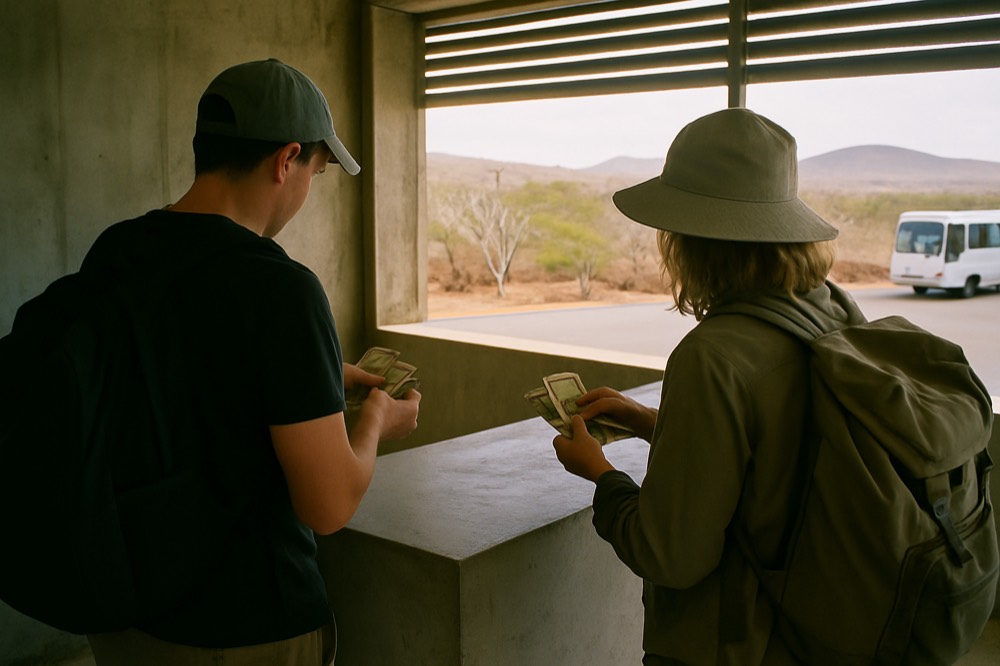
The itemised ground costs, from the national park's own arrival guidance, are small but worth knowing:
| Item | Cost | Notes |
|---|---|---|
| Park entrance fee, foreign adult | $200 cash | Paid to rangers at Baltra or San Cristobal on arrival |
| Park entrance fee, foreign child under 12 | $100 cash | Same counter, same process |
| Transit control card | $20 per person | CGREG counter at Quito or Guayaquil, pre-register online to save time |
| Baltra terminal to Itabaca Channel | Free bus, about 10 minutes | Runs with flight arrivals |
| Itabaca Channel ferry | $1, about 10 minutes | Barge crossing to Santa Cruz |
| Channel to Puerto Ayora | Public bus about $2, about 45 minutes | Shared taxi about $25 for the vehicle |
| San Cristobal airport to town | $1.50 to $3 | About 10 minutes |
The pattern to notice: the airport charges dwarf the ground transport. A traveller who has budgeted the fare and the flights but not the $220 in airport cash arrives with a problem, because the park fee is collected in person, in bills. Traveller reports from recent seasons repeat the same wish, that someone had told them to bring the cash and start motion-sickness medication the night before the ferry.
The biosecurity process is free but slow. Bags are inspected at the mainland departure airport and again on arrival, fresh produce and other restricted items are listed on the official ABG biosecurity page, and the official advice is to arrive three hours before the flight. None of this costs money, but it costs morning, and it is part of why the all-inclusive promise starts at the airport counter rather than at your front door.
How To Compare Package Prices Honestly
Compare package fares on three axes only: the meal plan, the confirmed stops, and the review pool with its count. A $1,313 breakfast-and-lunch package and a $689 full-board package are not the same product at different prices, they are different products. Never compare a package with no reviews against one with 50 on price alone, and never assume the headline fare is your total.
The roster's price ladder illustrates how uneven the surface is. The Galapagos Discovery Premium bay tour, 4.9 across 24 reviews, starts at $450 with all meals included, and it is the cheapest product on the site. The 4-Day Islands Express, from $714, includes breakfast only. The Intensive 5-Day, from $1,399, carries the largest review pool at 56. The 7-Day La Pinta cruise, from $8,066, is nearly six times the price of the 7-Day Penguin Route, from $1,857, and the difference is the vessel, the cabin and the meal plan, not the islands, since both routes call at Bartolome and Isabela.
| Package | Starts from | Rating and reviews | Meals in fare |
|---|---|---|---|
| Galapagos Discovery Premium Bay Tour, 4 days | $450 | 4.9 across 24 reviews | All meals |
| 4-Day Santa Cruz Bahia Tour | $689 | 4.2 across 25 reviews | All meals |
| 4-Day Complete Experience Extra Night | $1,313 | 4.7 across 15 reviews | Breakfast and lunch |
| Intensive 5-Day, 3 Islands | $1,399 | 4.7 across 56 reviews | Breakfast and lunch |
| 8-Day Multisport, 3 Islands | $2,363 | 4.9 across 12 reviews | All meals |
| 5-Day Seaman Journey Cruise | $4,500 | No reviews yet | All meals |
| 7-Day La Pinta Cruise | $8,066 | 5 across 48 reviews | All meals |
Two habits make the comparison honest. First, read the confirmed stops, because a listing only names a stop where the operator has confirmed it, and a longer list of islands is worth more than a longer list of meals. Second, print the review count beside every rating in your head: a 5 from 3 reviews is a rating from three people, and a 4.7 from 56 is a different kind of information. The full price anatomy, including how the park's fee structure lands on different traveller types, is on the Galapagos package cost guide.
Is An All-Inclusive Package Worth It?
An all-inclusive package is worth it when your time is short and your tolerance for logistics is low: five days or fewer, first visit, no Spanish, and the closed fare saves you from booking ferries, dinners and day tours separately. It is worth less if you have eight or more days, want restaurant evenings, or are comfortable assembling the pieces yourself, because the land-based pieces bought separately can cost less than the bundle.
The arithmetic that decides it is simple. A land-based traveller who buys hotels, ferries, day tours at typical island prices and restaurant meals separately can undercut a mid-range package, and traveller reports from recent seasons say exactly that, but they also describe the work involved: every day tour booked separately, every ferry timed, every dinner found. The package is a convenience premium, and the 79% of visitors who stay on land are split between both approaches.
The cruise version of the question has a different answer, because a cruise cannot be assembled piecemeal. Fernandina, the most pristine of the large islands, is effectively a cruise-only destination, and if that matters to you the closed fare is not a convenience premium, it is the only way to buy the product. The liveaboard options are covered in detail on the liveaboard packages guide.
For most first-time visitors with a week or less, the honest recommendation is the middle of the roster: a breakfast-and-lunch or full-board hopping package such as the $689 Santa Cruz Bahia Tour or the $1,399 Intensive 5-Day, with the $220 in airport cash and the flights budgeted separately from the start. That is what the Galapagos Islands Tour Packages site's roster is weighted toward, and it is where the bundling actually matches what the phrase all-inclusive leads you to expect.
Common Questions About All-Inclusive Galapagos Packages
Is The $200 Galapagos Park Fee Ever Included In A Package Price?
No. The park entrance fee, $200 for a foreign adult and $100 for a child under 12, is collected in cash by park rangers at the Baltra or San Cristobal airport on arrival, and no package fare on the market includes it. Budget it separately, in clean US dollar bills.
What Is The Difference Between Full Board And Half Board On A Galapagos Package?
Full board means breakfast, lunch and dinner every day; the common land-based plan is breakfast and lunch only, leaving evenings free. Check the listing's meal line before comparing prices, because two similarly priced packages can differ by every dinner of the trip.
Do All-Inclusive Galapagos Packages Include Flights?
Usually not. Most packages on the roster exclude the flights from Quito or Guayaquil to the islands, and the listing states it either way. Only a small number of packages, such as the Highlight 4-Day Tour with round-trip flights, bundle them in.
Is Alcohol Included On A Galapagos Cruise Package?
Almost never. Cruise fares on the roster bundle the cabin, meals, guided landings and snorkel gear, while alcoholic drinks are billed separately on board, along with wetsuit hire and crew tips in most cases.
Can I Pay The Galapagos Park Fee Or Transit Card Online In Advance?
The park fee has no official online prepayment portal; it is cash on arrival. The $20 transit control card can be pre-registered online for free, but individual travellers still buy it at the CGREG counter at Quito or Guayaquil airport before check-in.
Are Wetsuits Included In All-Inclusive Galapagos Packages?
Sometimes. Cruise packages usually include snorkel gear and often include wetsuits, but traveller reports frequently describe wetsuit hire as an extra on smaller vessels, typically framed as optional. Ask the operator directly before departure, especially for travel in the cooler June to December season.