Ecuador Galapagos Flights, Park Fee, And Transit Card Explained
Almost every Galapagos package quote leaves out three charges you cannot avoid: the flight from mainland Ecuador, the $200 park entrance fee, and the $20 Transit Control Card. Here is exactly what each one costs, where you pay it, and how the airport sequence works.
Short answer
Budget three charges outside most package prices: the mainland-to-Galapagos flight (Avianca and LATAM fly from Quito and Guayaquil), the US $200 park entrance fee paid in cash to rangers on arrival, and the US $20 Transit Control Card bought at the airport counter in Quito or Guayaquil. A few packages fold the flights in; almost none fold in the fee and card.
The advertised price of a Galapagos package is almost never the price you pay. Between the moment you hand over money to an operator and the moment you step onto a visitor site, three separate charges arrive: the flight from mainland Ecuador, the national park entrance fee, and the Transit Control Card. Two of them are paid at airports, one in cash to a park ranger, and only one of them can be folded into a package fare at all.
This page walks through each charge in order of when you meet it: the flight first, then the card at the mainland counter, then the fee on arrival, then the transfer costs that follow. Every figure here comes from official Ecuadorian sources, the park's own published fee tables, or the tour listings themselves, and where a listing does not state something, that is stated too. For the fuller money picture, see our Galapagos package cost breakdown.
What Are The Three Charges Outside A Galapagos Package Price?
The three charges are the mainland-to-Galapagos flight, the US $200 park entrance fee, and the US $20 Transit Control Card. The flight is the only one an operator can include in the fare, and only some do. The fee and the card are paid by the traveller in person: the fee in cash US dollars to park rangers on arrival at Baltra or San Cristobal, the card at a government counter at Quito or Guayaquil airport.
The order matters because the sequence at the airports is fixed. You cannot board a Galapagos flight without the Transit Control Card, and you cannot enter the inhabited islands without paying the park fee. A traveller who arrives at Quito airport ninety minutes before departure, without cash for the fee, is going to have a bad morning.
There is a fourth category that is not a government charge but behaves like one: the transfer from Baltra airport to Puerto Ayora. It is cheap, a few dollars on public transport, but it surprises people because it happens after they have already paid "everything". Add it to your mental total and the arrival day stops being a scramble for change.
The fee's distribution is worth knowing because it explains why nobody can waive it. Half of every entrance fee goes to managing and conserving the protected areas of Galapagos, and the remainder is distributed to local municipal governments for basic services, education, health, sport and environmental sanitation, per the park's own arrival information page.
Which Airlines Fly To The Galapagos, And From Where?
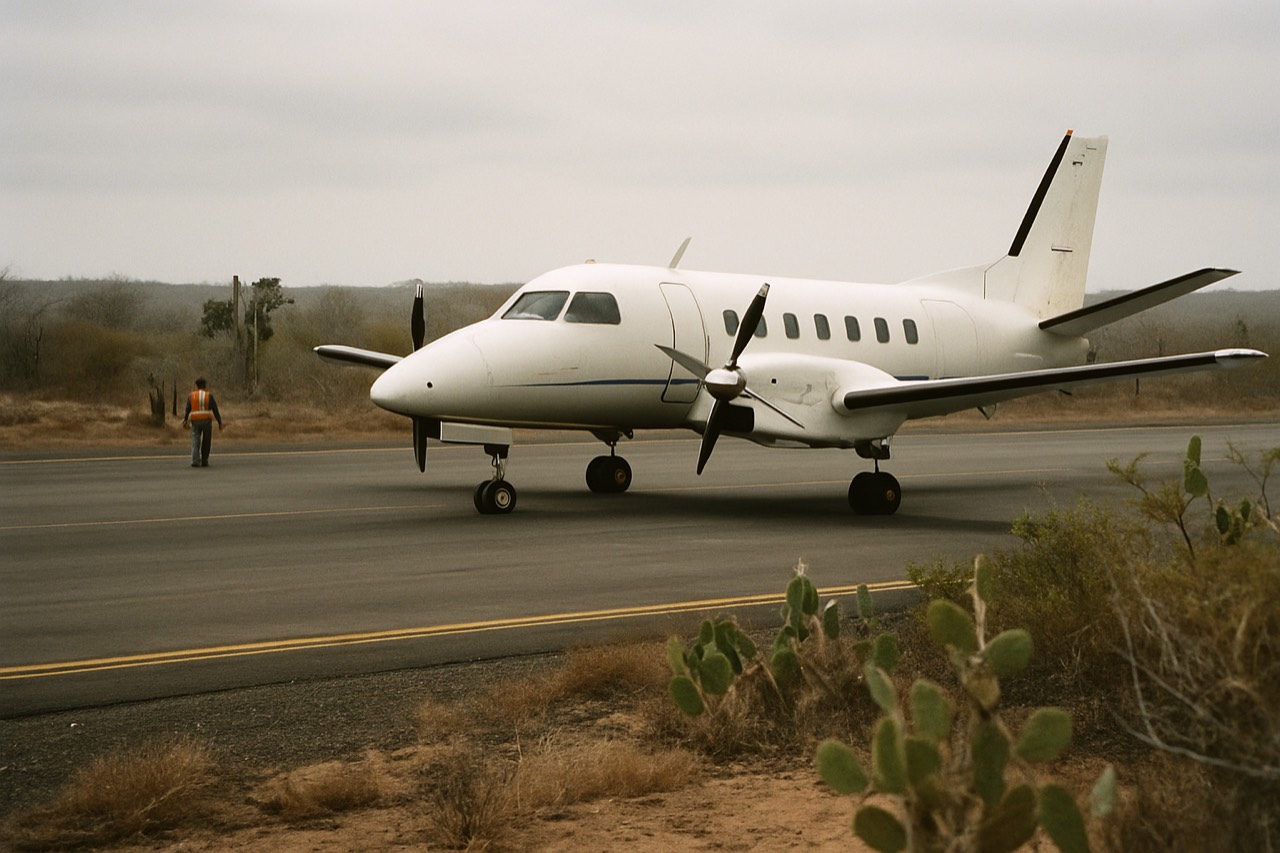
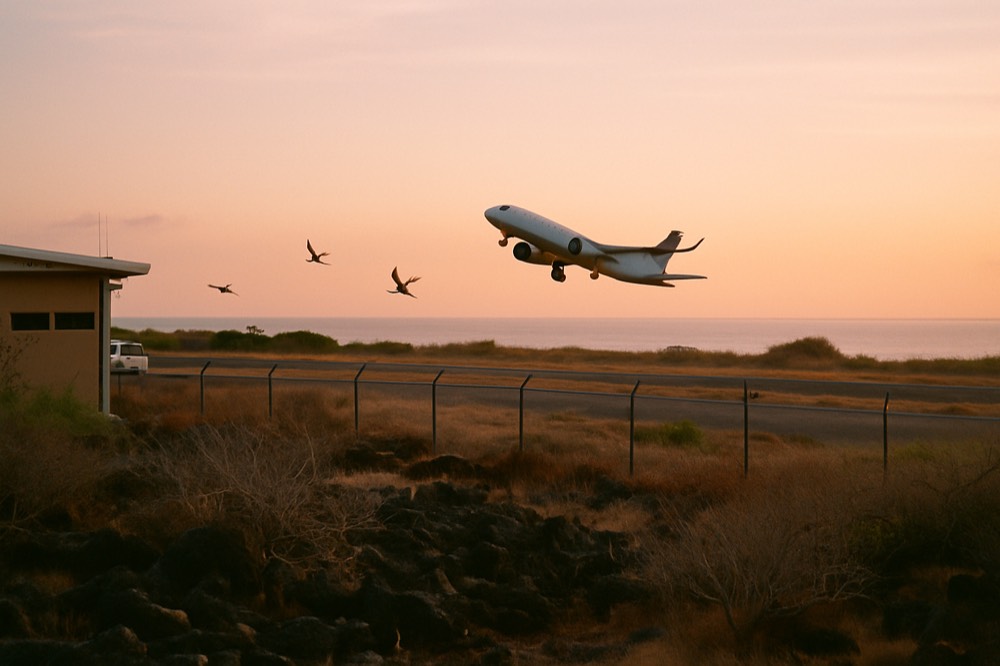
Avianca and LATAM operate the routes, flying nonstop from both Quito (UIO) and Guayaquil (GYE) to Baltra (GPS) and San Cristobal (SCY). Baltra took 71% of 2025 arrivals, 207,392 people, against San Cristobal's 29%. Since 31 March 2026, LATAM has also flown a Cuenca to Quito to Baltra route twice weekly, giving Ecuador a third mainland gateway.
Your package determines your airport more than you do. Land-based packages starting on Santa Cruz almost always fly into Baltra; packages based on San Cristobal fly there. Cruise itineraries are tied to a fixed embarkation port, so the ship's start island dictates the flight. This is one of the practical reasons to compare a Galapagos cruise against a land package before booking either.
| Gateway | Airport code | Airlines serving Galapagos | Notes |
|---|---|---|---|
| Quito | UIO | Avianca, LATAM | Mainland biosecurity inspection and TCT counter in terminal |
| Guayaquil | GYE | Avianca, LATAM | Typically more daily frequencies than Quito |
| Cuenca | CUE | LATAM | Twice weekly via a technical stop in Quito, no plane change |
Two rules shape the ticket itself. First, you cannot fly to Galapagos on a one-way ticket: the Galapagos government requires a personal, non-transferable return ticket between the mainland and the province, dated within the 60-day maximum stay. Second, the maximum tourist stay in Galapagos is 60 days per calendar year, non-extendable, across one or several visits.
Flight fares are volatile and no honest site prints them as fixed facts. What is fixed is the advice: arrive at the mainland airport three hours before departure, because the biosecurity inspection and the TCT counter sit before airline check-in, and the queue at each is its own queue.
If your package does not include flights, a handful do, and the difference is worth checking at booking time rather than at the airport.
How Do You Pay The Galapagos Park Entrance Fee?
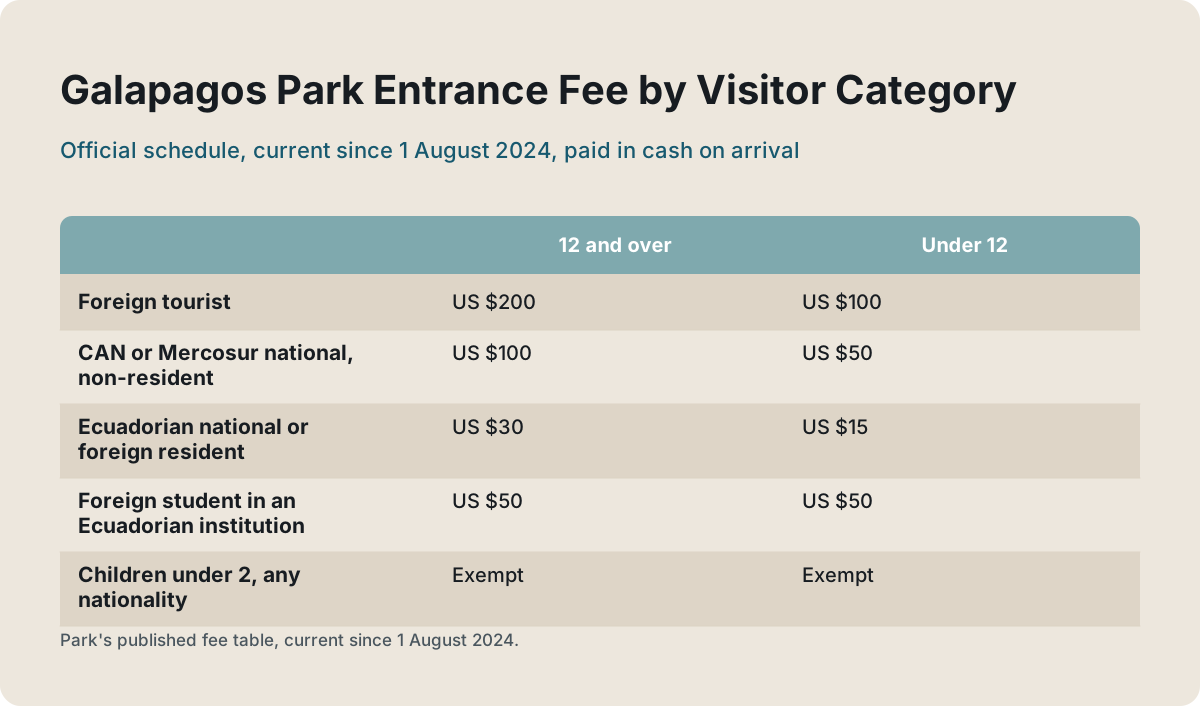
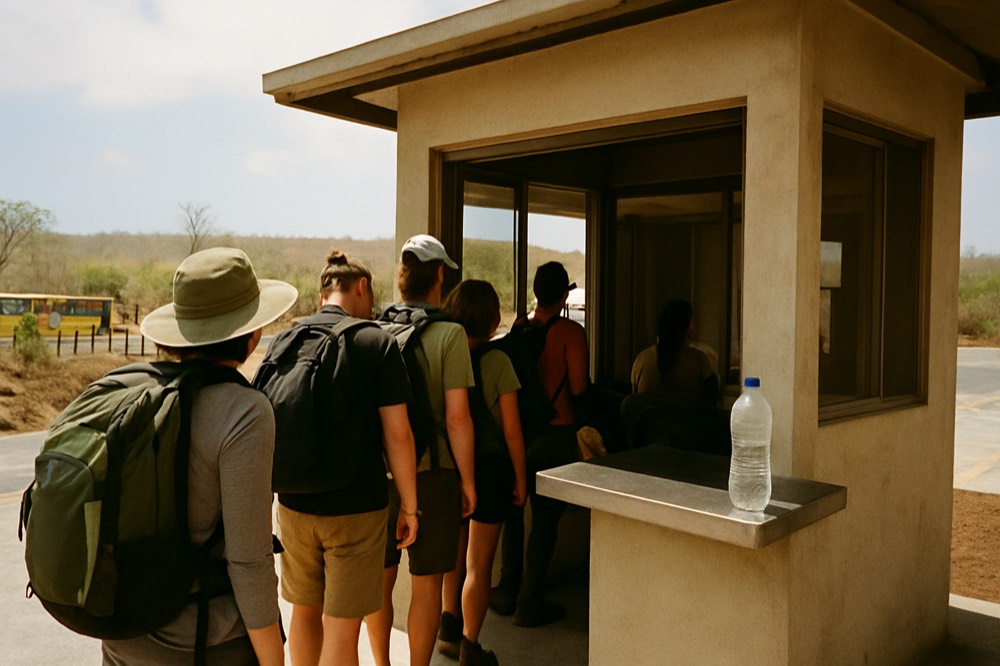
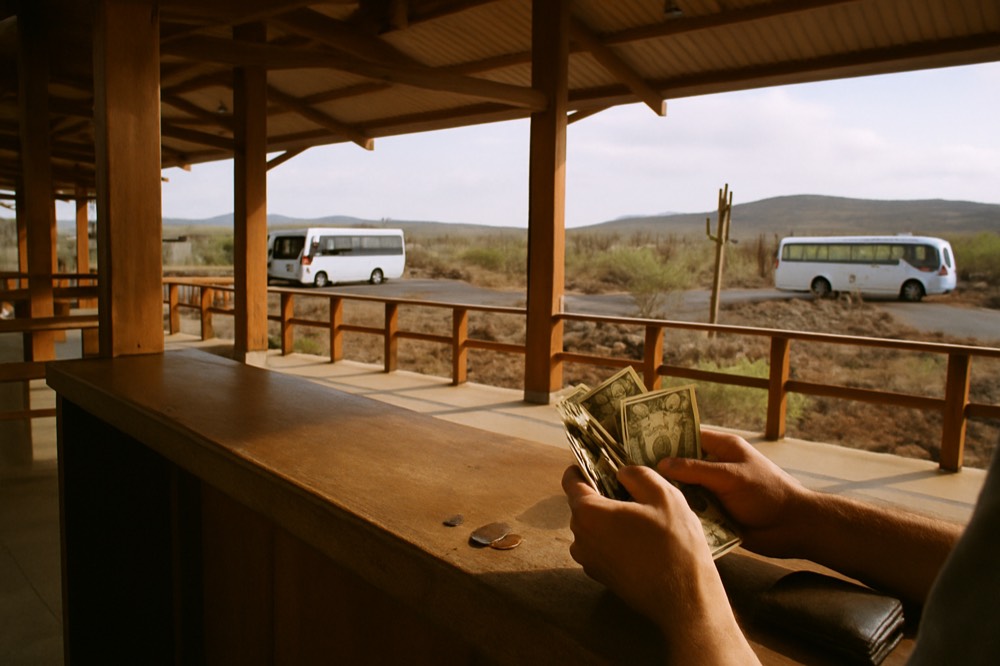
Foreign adults over 12 pay US $200 and children under 12 pay US $100, in cash US dollars, to park rangers at Baltra or San Cristobal airport on arrival. There is no online prepayment portal; the fee is collected in person at official checkpoints, and cards are not reliably accepted, so carry clean notes.
The full official schedule, from the park's published fee table, current since 1 August 2024:
| Visitor category | Entrance fee |
|---|---|
| Foreign tourist, 12 and over | US $200 |
| Foreign tourist, under 12 | US $100 |
| CAN or Mercosur national, non-resident, 12 and over | US $100 |
| CAN or Mercosur national, non-resident, under 12 | US $50 |
| Foreign student enrolled in an Ecuadorian institution | US $50 |
| Ecuadorian national or foreign resident, 12 and over | US $30 |
| Ecuadorian national or foreign resident, under 12, over 65, or CONADIS card holder | US $15 |
| Children under 2, any nationality | Exempt |
The CAN countries named by the park are Bolivia, Colombia, Ecuador and Peru; Mercosur comprises Argentina, Brazil, Paraguay and Uruguay. The rate structure is published on the park's official fee page and mirrored by the Galapagos governing council.
Two myths need killing here. You cannot prepay the park fee online; no official portal exists, and any site telling you otherwise is repeating a rumour. And you should ignore any claim about what the fee "used to be"; the current amount and its effective date are what official pages state, and this site prints only that.
The practical failure mode is cash. Travellers repeatedly report wishing they had arrived with $200 per person in clean US notes, because a crumpled or torn note can be refused at the counter, and there is no ATM between the plane door and the ranger's desk. Withdraw in Quito or Guayaquil the day before.
How Does The Transit Control Card Actually Work?
The Transit Control Card costs US $20 per person, paid at the CGREG counter at Quito or Guayaquil airport before airline check-in. Free online pre-registration speeds up the counter visit, but individual travellers still buy the card at the counter; only travel agencies can purchase in advance, filing at least 48 hours ahead.
The card is mandatory under the special-regime law for anyone entering Galapagos as a tourist, and it is checked on both entry and departure, so keep the slip. The pre-registration system exists and is worth doing: fill the form online the night before, then present your ID and flight itinerary at the counter on the day. Pre-registration is single-use, so if a trip is cancelled you register again next time.
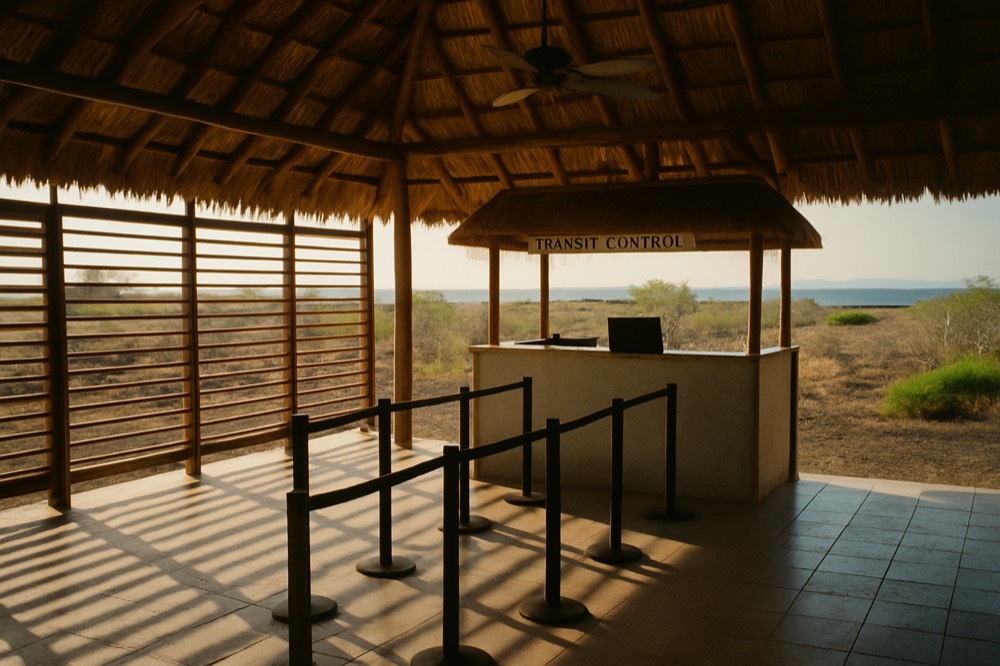
The widely repeated claim that individuals must buy the card online at least 48 hours in advance is contradicted by the governing council's own FAQ, which states that advance purchase "only applies to travel agencies". Individuals pre-register online and pay at the counter. The official TCT FAQ is the source to trust on this, not a blog.
Because the card is per trip, a traveller who splits a visit into two entries pays twice. That matters for anyone combining a Galapagos package with mainland Ecuador travel in a way that exits and re-enters the province; some Galapagos and mainland Ecuador packages are structured that way.
What Happens At Biosecurity, And Why Arrive Three Hours Early?
Every bag, checked and carry-on, is X-rayed and possibly hand-inspected at the mainland departure airport before check-in, and inspected again on arrival in Galapagos. The official recommendation is to arrive three hours before the flight. You must also complete a sworn goods declaration and hand it to an inspector on arrival.
The agency running this is the ABG, the Galapagos biosecurity and quarantine agency. Its rules exist because invasive species are the single largest threat the islands face, and fresh produce is the usual vector. The regulated product list is colour-coded: green for processed items permitted, yellow for restricted unprocessed items with conditions, red for prohibited high-risk items. Check the official ABG standards page before packing rather than trusting a summary.
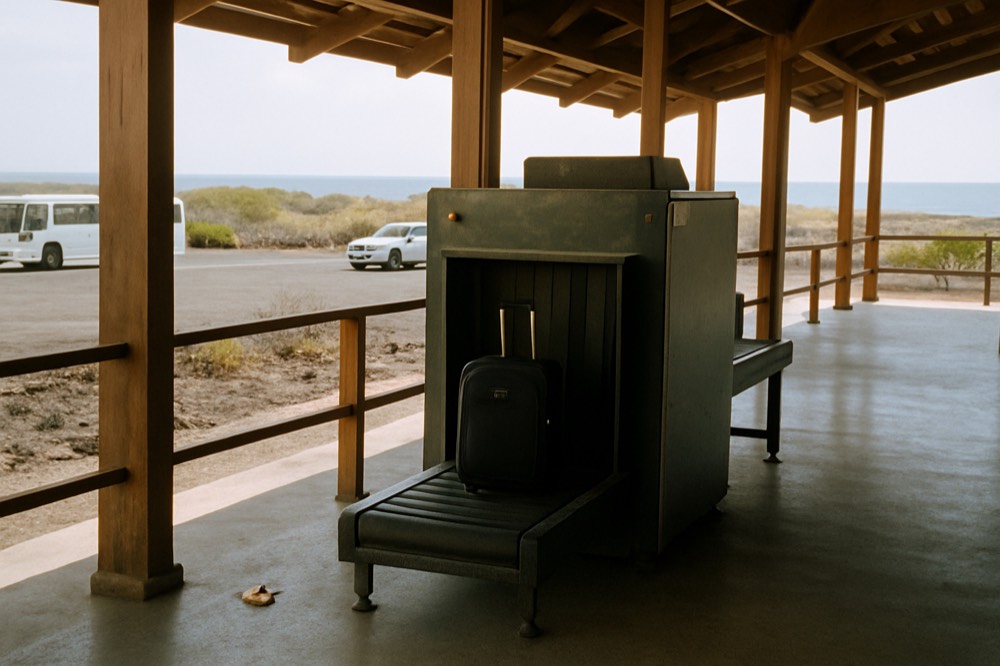
The inspection repeats at the boarding docks of the populated ports before travel between inhabited islands, so an island-hopping package does not exempt you after arrival. The aircraft cabin is also fumigated before landing, with a product the park says is WHO-tested, and the airline announces it beforehand.
The three-hour advice is not padding. In sequence you have: the ABG inspection room, the TCT counter, then airline check-in, then security. Each is a separate queue, and morning departures cluster. Travellers who cut it to ninety minutes are the ones writing the regret posts.
How Do You Get From Baltra Airport To Puerto Ayora?
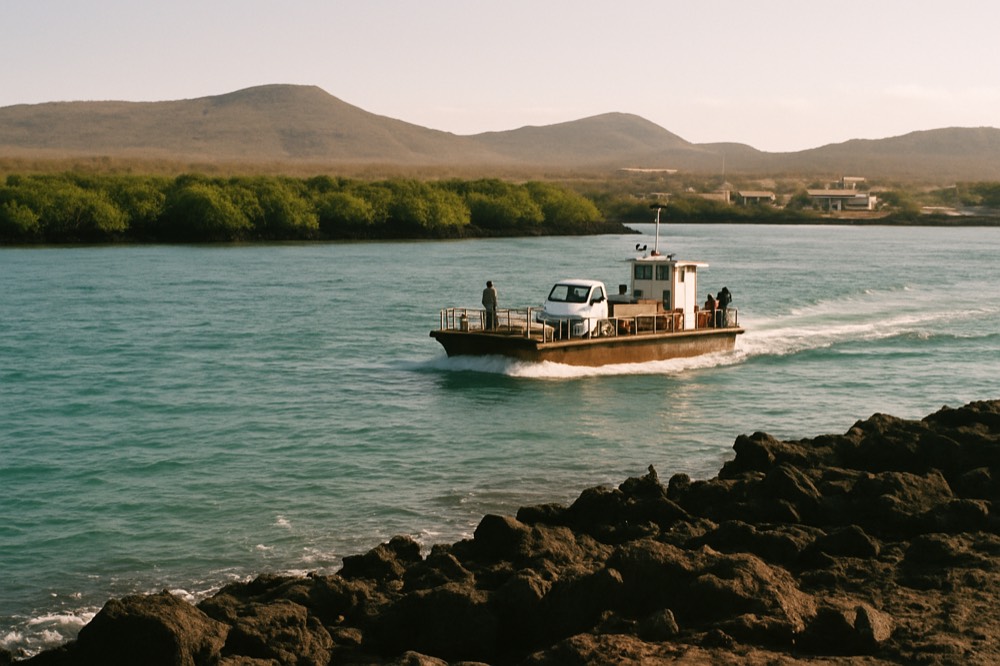
The official sequence is a free bus from the terminal to the Itabaca Channel, about 10 minutes; a barge across the channel for US $1, about 10 minutes; then either a public bus to Puerto Ayora for about US $2 over about 45 minutes, or a shared double-cab taxi at about US $25 for the vehicle.
Baltra is an island with almost nothing on it but the airport, which is why the crossing exists. The park's own arrival page describes this sequence and explicitly recommends the bus over the taxi for conservation reasons. A solo traveller saves real money on the bus; a family of four splits the taxi fare painlessly.
| Leg | Cost | Time |
|---|---|---|
| Baltra terminal to Itabaca Channel, bus | Free | About 10 minutes |
| Itabaca Channel crossing, barge | US $1.00 | About 10 minutes |
| Channel to Puerto Ayora, public bus | About US $2 | About 45 minutes |
| Channel to Puerto Ayora, shared taxi (up to 4 passengers) | About US $25 per vehicle | Varies with traffic |
| In-town taxi, Puerto Ayora | US $1.50 | Short hops |
San Cristobal is simpler: the airport is about ten minutes from Puerto Baquerizo Moreno, by bus or taxi at US $1.50 to US $3. If your package includes hotel pickup, none of this is your problem, and that is one of the quiet advantages of a pickup-included package; the operator meets you at the airport with a sign and the logistics dissolve.
Which Packages Fold These Charges Into The Fare?
Very few packages include the flights, and almost none state that the park fee is included. On this site's roster, the listings mostly leave flights and fees unstated, which means "not stated", not "not included". One 4-day highlights package explicitly includes roundtrip flights, and several include hotel pickup, which absorbs the arrival transfer entirely.
The honest reading of a package listing is careful. A listing that never mentions the park fee is not promising to pay it; it is simply silent. Ask the operator directly before you assume, and treat a written "flights included" as the only kind that counts.
The 7-Day Penguin Route, from $1857 per person with breakfast and lunch, includes hotel pickup and rates 5 across 3 reviews, a small pool but a perfect one. It visits Bartolome, Santa Cruz, Isabela, North Seymour and Pinzon. Pickup included means the Baltra transfer sequence above is the operator's problem, not yours.
A contrasting example is the 4-Day Highlights package with roundtrip flights, from $2299, which names the flights in its own title. It carries 5 across 1 review and free cancellation. That is the format to look for if you want one payment to cover the air leg.
At the budget end, the 4-Day Islands Express, from $714, includes breakfast and hotel pickup but leaves everything else to you, and rates 4.3 across 3 reviews. The gap between $714 and $2299 is mostly the flight and the level of inclusion, which is exactly the arithmetic this page exists to make visible.
Do You Need A Visa, A Return Ticket, Or Vaccinations?
US, UK and Canadian citizens need no tourist visa for stays under 90 days in any 12-month period, passports must be valid six months, and no vaccinations are required to enter Ecuador. The Galapagos leg specifically requires a return ticket dated within the 60-day maximum stay. Children under 2 are exempt from the park fee.
The 90-day rule comes from the three destination governments' own advisories, which agree with each other. One warning that gets repeated out of context: the criminal-record certificate requirement applies only to arrivals via land or river borders from Peru or Colombia. Anyone flying into Quito or Guayaquil, which is every Galapagos package traveller, is unaffected.
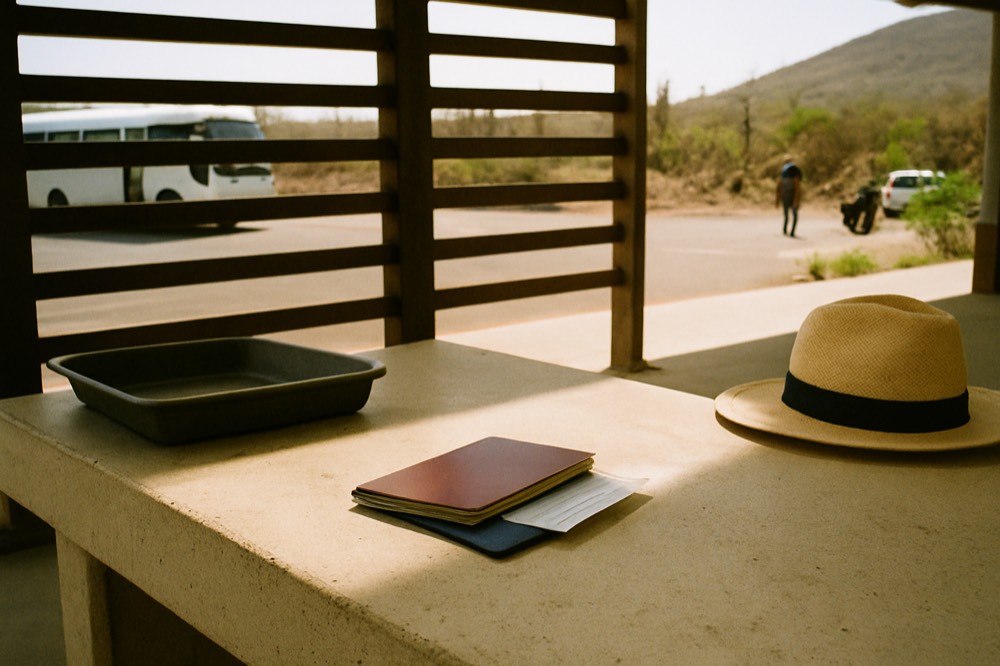
Get your passport stamped on arrival in Ecuador. The Canadian advisory warns that travellers who cannot present an entry-stamped passport at departure can face significant problems, and it is a two-second fix at the booth.
What Do The Three Charges Add Up To In Practice?
Per adult foreign traveller, add US $220 in fixed government charges, the $200 park fee plus the $20 transit card, on top of the package price and the flight. Transfer costs add another few dollars on public transport or about $25 by shared taxi from Baltra. A package with pickup included absorbs the transfer; nothing absorbs the fee and card.
That $220 is the same for a $714 express package and an $8,066 seven-day cruise, which is why it deserves its own line in any budget. It is also why a "cheap" package can look cheaper than it is: the fixed charges are a bigger share of a small total.
Timing changes the flight component more than the fixed charges. The March to April foreign peak and the August Ecuadorian peak are the crowded, expensive windows; September is the trough on both counts. The cool season, June to December, brings stronger southeasterly trades and rougher crossings, which matters more for inter-island ferries than for flights.
One last planning note that ties the whole page together: the park fee is cash, the card is cash, the barge is a dollar, and the bus wants small change. Arrive on the mainland with a folder of clean US notes and the entire arrival day becomes routine.
For the deeper money questions, our Galapagos package cost guide breaks down what the package itself buys, and the homepage of Galapagos Islands Tour Packages lists the current roster by category. If you are still choosing between a ship and a hotel base, the cruise versus land package comparison settles most of it.
Common Questions About Galapagos Flights, Fees, And The Transit Card
How Much Is The Galapagos Park Entrance Fee?
US $200 for a foreign adult over 12 and US $100 for a foreign child under 12, paid in cash US dollars to park rangers on arrival at Baltra or San Cristobal airport. CAN and Mercosur nationals pay US $100 and US $50, and Ecuadorian nationals and residents pay US $30.
Can I Pay The Galapagos Park Fee Online In Advance?
No. No official prepayment portal exists. The fee is collected in person, in cash, at official checkpoints at the two island airports, so carry clean US notes.
Do I Need To Buy The Transit Control Card 48 Hours Before My Flight?
Only travel agencies can purchase the card in advance, filing at least 48 hours ahead. Individual travellers pre-register online for free, then buy the US $20 card at the CGREG counter at Quito or Guayaquil airport before airline check-in.
Which Airlines Fly From Mainland Ecuador To The Galapagos?
Avianca and LATAM operate nonstop routes from both Quito and Guayaquil to Baltra and San Cristobal. Since 31 March 2026, LATAM has also flown a twice-weekly Cuenca to Quito to Baltra route.
How Early Should I Arrive At The Mainland Airport For A Galapagos Flight?
Three hours before departure. The biosecurity inspection and the Transit Control Card counter both sit before airline check-in, and each is a separate queue.
Does My Galapagos Package Include The Park Fee?
Usually it is not stated either way. On this roster most listings never mention the fee, which means "not stated", not "not included". A few packages explicitly include roundtrip flights; ask the operator in writing about the fee before assuming.