Ecuador And Galapagos Tours: Combining The Mainland With The Islands
Flight schedules almost always force at least one night on the Ecuadorian mainland before or after a Galapagos package. This guide prices the difference between treating that night as dead time and turning it into the Andes or the Amazon.
Short answer
Most Galapagos flights leave Quito or Guayaquil in the morning, so nearly every traveller pays for a mainland night whether they use it or not. Combo packages from $2,876 fold Quito into an 8-day trip; Machu Picchu versions start at $2,927.11. The park fee of $200 and the $20 transit card are paid separately on top.
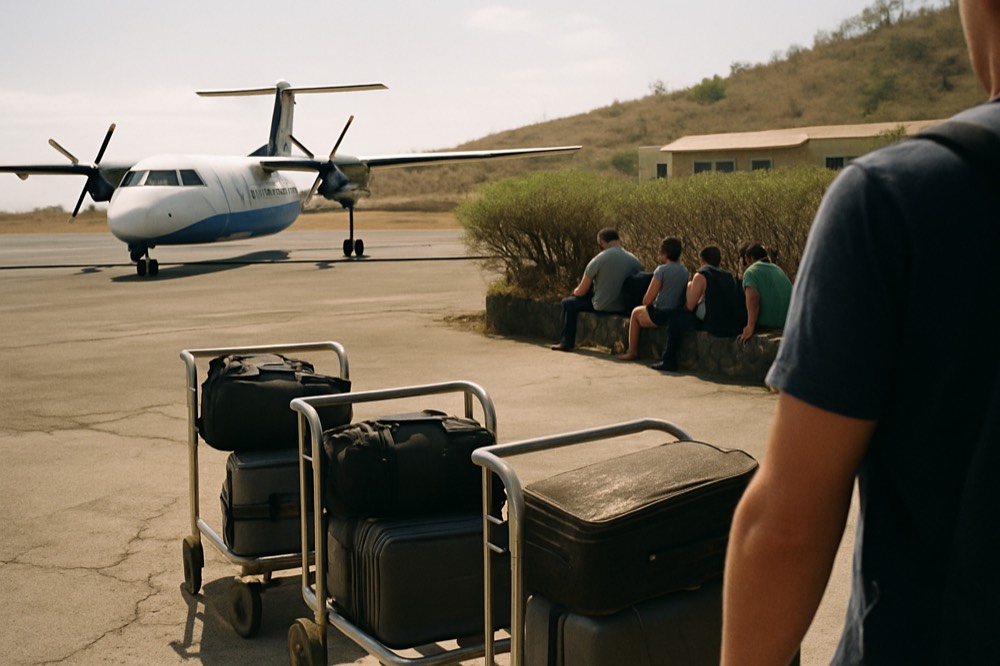
Flights to Galapagos leave in the morning, from Quito or Guayaquil, and the biosecurity and transit-control checks at the mainland airport are slow enough that the park authorities tell you to arrive three hours before departure. That arithmetic pushes almost every Galapagos traveller into at least one mainland hotel night, paid for whether they planned a mainland holiday or not. The question is not whether you will spend a night in Ecuador. It is whether that night stays a logistical tax or becomes the best-value part of the trip.
Why Your Galapagos Trip Already Includes A Night On The Mainland
Almost every Galapagos itinerary forces at least one, usually two, mainland overnights, because flights to the islands depart in the morning and the official arrival advice is three hours before departure. Avianca and LATAM operate the routes from Quito and Guayaquil, and no flight from either city lets you connect same-day from a typical long-haul arrival. The hotel night is not optional; only what you do with it is.
The reason sits in the schedule. Galapagos-bound flights cluster in the morning hours, and the Consejo de Gobierno's own travel FAQ recommends arriving at the mainland airport three hours early because of the biosecurity inspection and transit-control validation that happen before airline check-in. A long-haul flight landing in Quito in the evening cannot make a morning departure the same day, and a Galapagos package that ends mid-afternoon cannot connect to an international departure that same evening with any margin. So the mainland night, or two, is baked in.
Once you accept that, the economics change. You have already paid for the hotel, the transfer and a chunk of time in one of South America's most rewarding countries. Quito's old town is a UNESCO World Heritage site in its own right, the Avenue of the Volcanoes runs south of the city, the Mindo cloud forest is ninety minutes away, and the Amazon basin is a short hop from Quito's airport. Treating all of that as a layover is the most expensive way to ignore it.
There is also a practical benefit that package buyers underrate: buffer time. Travellers on the Galapagos forums repeatedly describe missed connections and tight same-day turnarounds as the single most stressful part of the trip. A built-in mainland night absorbs a delayed long-haul flight without wrecking an island itinerary that has fixed dates. On our how to book a Galapagos package page we cover why fixed island dates make this buffer worth money, not just comfort.
The split matters statistically too. The park's own 2025 visitor report shows that 79% of visitors now stay on land rather than on a vessel, which means the land-based, hotel-plus-day-tour model that combos are built around is the mainstream way to see the islands, not a niche alternative.
What Ecuador And Galapagos Combo Tours Cost
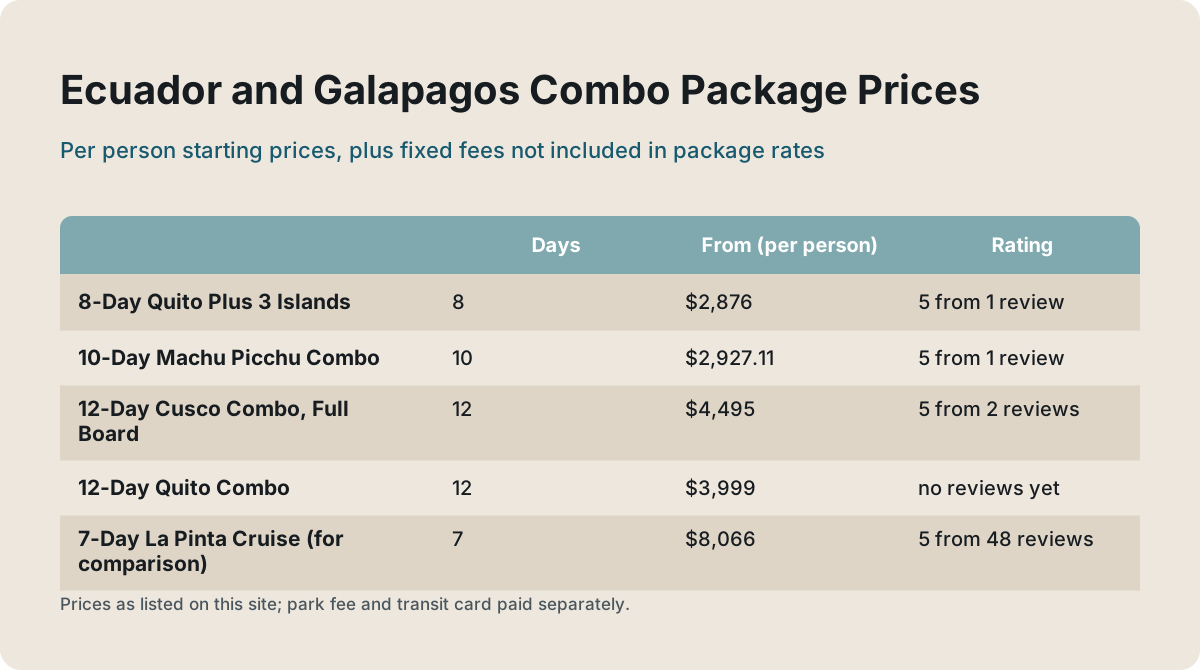
Combo packages on this site run from $2,876 per person for an 8-day Quito plus three islands trip to $4,495 for a 12-day Cusco, Machu Picchu and Galapagos itinerary, all prices per person. A Galapagos-only cruise at the luxury end, such as the 7-day La Pinta itinerary from $8,066, shows the scale of the gap. The $200 park fee and $20 transit card are extra on top of every option.
The honest way to price a combo is against the two trips it replaces, not against a bare Galapagos package. A standalone Galapagos land-based week plus a separately booked Quito stopover means two sets of transfers, two hotel bookings and two support chains if something goes wrong. A combo folds them into one reservation, one contact and, usually, one internal flight booking that is already timed to the island itinerary.
| Package | Days | From (per person) | Rating | What it combines |
|---|---|---|---|---|
| 8-Day Quito Plus 3 Islands | 8 | $2,876 | 5 from 1 review | Quito city tour plus Santa Cruz and Isabela, arriving via Baltra |
| 10-Day Machu Picchu Combo | 10 | $2,927.11 | 5 from 1 review | Cusco, Machu Picchu plus Santa Cruz, Isabela |
| 12-Day Cusco Combo, Full Board | 12 | $4,495 | 5 from 2 reviews | Cusco, Machu Picchu plus Santa Cruz and Isabela, all meals on the islands |
| 12-Day Quito Combo | 12 | $3,999 | no reviews yet | Quito plus San Cristobal, Santa Cruz, Isabela |
| 7-Day La Pinta Cruise (for comparison) | 7 | $8,066 | 5 from 48 reviews | Cruise-only, no mainland component |
Two cautions belong next to that table. Review pools on combo packages are small, one or two reviews on most of them, so the ratings carry little weight either way; treat them as early signals, not verdicts. And the "from" prices are per person, verified against each listing, but the mainland-plus-Galapagos category spans the widest price range on the site because the mainland half can be a hotel night or a full Peru circuit.
If you are weighing this against a Galapagos-only budget, our Galapagos package cost breakdown shows where the money goes on the island half alone.
Quito Extensions: The Cheapest Way To Add A Second Country's Worth Of Sights
An 8-day Quito plus three islands package starts at $2,876 per person and uses the forced overnight as the backbone of the mainland half, with breakfast and lunch, hotel pickup and confirmed stops at Santa Cruz and Isabela, arriving via Baltra. It is the lowest-cost way on this site to see both the colonial mainland and the islands in one booking.
Quito rewards two or three days, not one. The old town is one of the best-preserved colonial centres in the Americas, and the standard package city tour takes in the plazas, churches and the Teleferico viewpoint above the city. From there the day-trip menu is unusually dense: the Mindo cloud forest for hummingbirds and butterflies, the Otavalo market two hours north, the Cotopaxi volcano, or the Equator line museum on the city's northern edge.
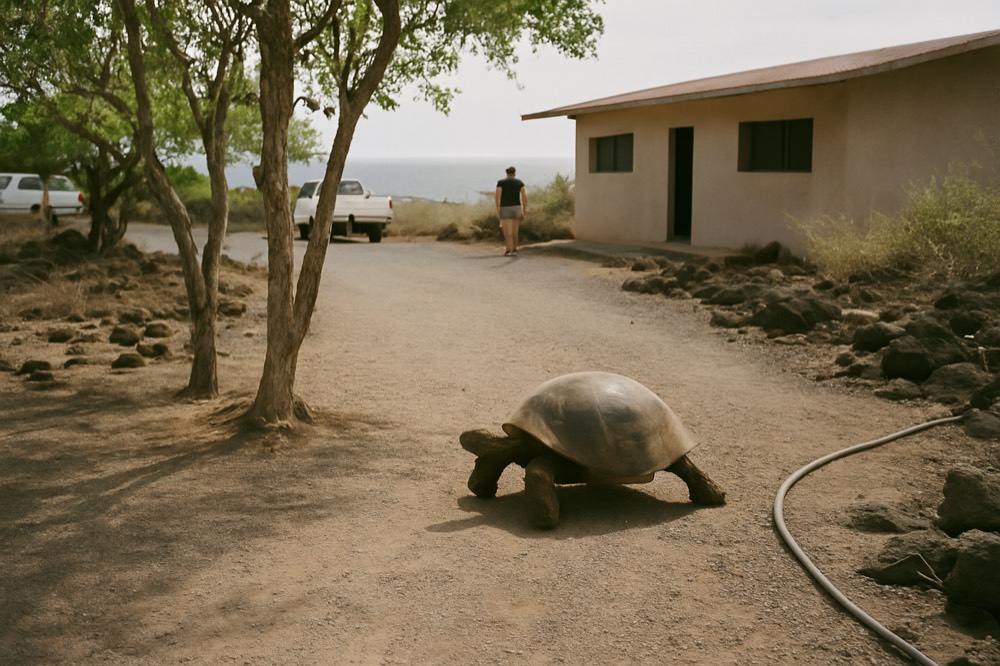
The pairing also works biologically. The highlands around Quito hold species the islands never will, hummingbirds at cloud-forest feeders, condors over the paramo, and the contrast makes the Galapagos half sharper rather than diluted. Travellers who come straight off a red-eye into a boat often describe the first island day as a blur; travellers with a Quito day or two behind them arrive rested and adjusted to the altitude.
The 8-day Quito plus three islands trip is the cleanest example on the roster. It carries a 5 rating from a single review, so there is little community signal yet, but the structure is exactly what most first-time visitors want: a city tour, three inhabited islands, the Bartolome viewpoint, and the internal logistics handled. Check availability on the live listing if the dates line up.
Cusco And Machu Picchu Combos: Two World Heritage Sites In One Trip
Machu Picchu plus Galapagos packages start at $2,927.11 per person for 10 days and $4,495 for a 12-day full-board version that adds all meals on the islands. Both connect through Lima and Quito, and both fold the mainland overnight you were paying for anyway into a Peru circuit that would otherwise need its own trip.
The 10-day version covers Cusco and Machu Picchu before flying to the islands for Santa Cruz and Isabela, rated 5 from one review, from $2,927.11. The 12-day version, five from two reviews, from $4,495, includes breakfast, lunch and dinner on the island half and trims the island count to Santa Cruz and Isabela in exchange for more depth on each. That trade, breadth versus depth on the island side, is the real decision between them, and neither answer is wrong.
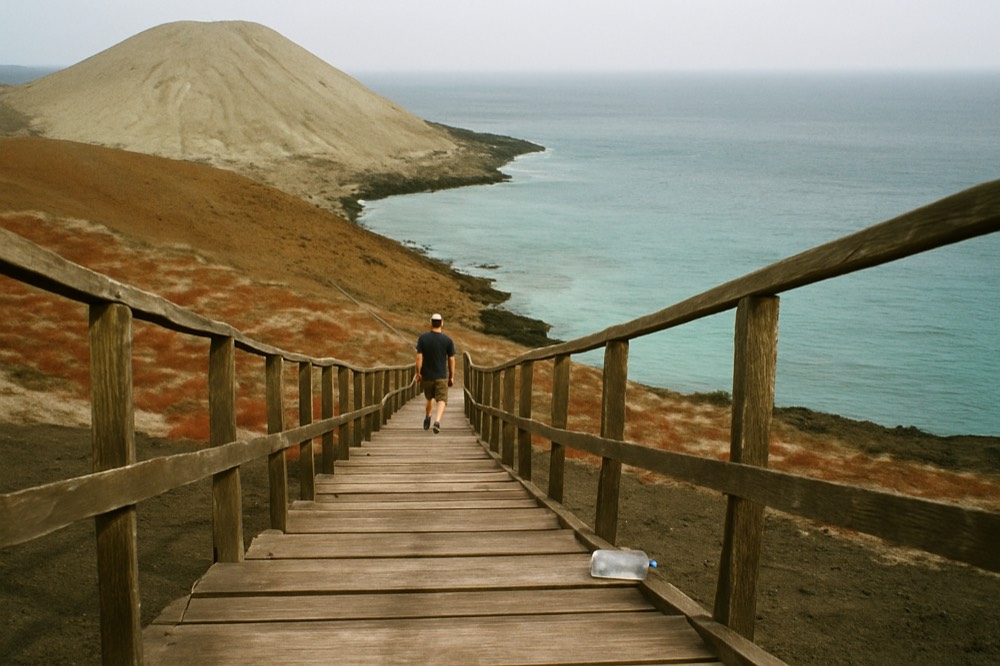
Be realistic about pacing. This is not a beach holiday with a ruin attached; it is two high-intensity itineraries stitched together. Cusco is a high-altitude Andean city that demands a day of easy walking before anything strenuous, and Machu Picchu itself is a full logistics day of train, bus and guided circuit. Arriving in Galapagos after that, at sea level, with the pace suddenly governed by boat schedules and snorkel stops, is a genuine relief, and most travellers who have done both halves say the sequence Peru first, islands second works better than the reverse.
The other honest note is altitude-plus-seasickness. Some travellers manage both fine; others find the combination of Andean altitude and open-water crossings hard on the same body within a fortnight. If you are prone to motion sickness, read our best time for a Galapagos cruise page, because the cool season from June to December brings stronger southeasterly winds and choppier crossings.
For travellers who want the Peru half but only have ten days, the 10-day Machu Picchu combo covers the same Cusco circuit in a tighter frame, from $2,927.11, with breakfast and lunch included and hotel pickup on the island side.
Amazon Extensions: The Third Ecosystem Most Combos Skip
The Amazon is reachable from Quito by a short flight to Coca or an overland route to lodges in Napo province, and it is the one extension that turns a two-ecosystem trip into three. No package on this site currently bundles the Amazon with Galapagos, so it means adding lodge nights before or after the island itinerary.
The reason it is not bundled is structural: Amazon lodges book on fixed arrival and departure days, usually two, three or four-night blocks, and the Galapagos half also runs on fixed dates. Stitching two fixed-date products together multiplies the chance that one half must move. Operators therefore sell them as separate reservations even when a single agency arranges both. The full index of guides sits on Galapagos Islands Tour Packages.
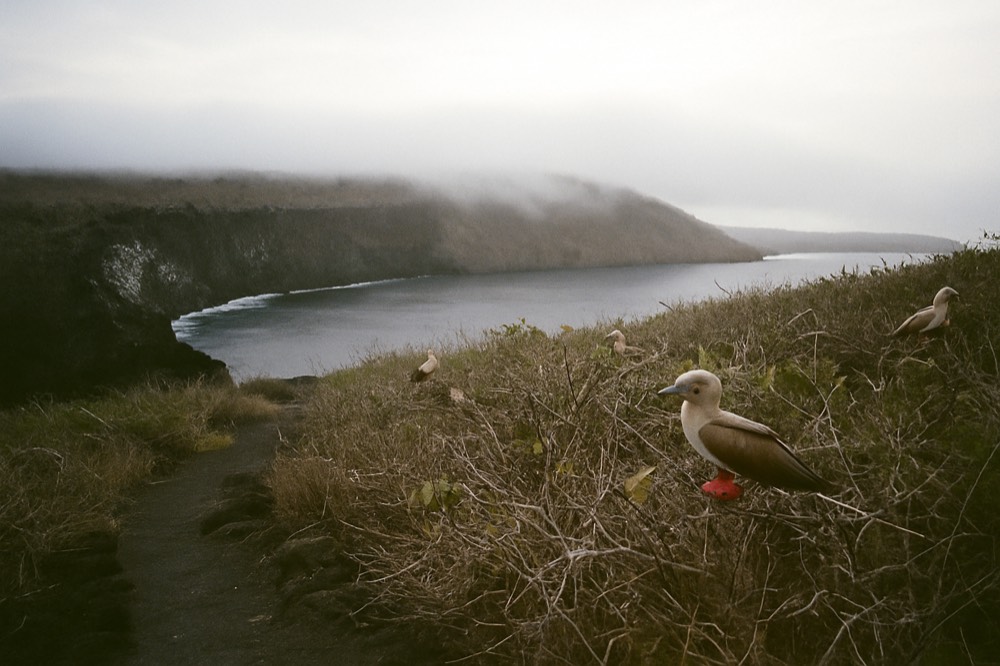
If you build it yourself, the practical sequence is Amazon first, then Quito, then Galapagos. The Coca flights leave from Quito's airport, the lodges run their own river transfers, and returning to Quito gives you the mainland night the Galapagos flight forces anyway. Going the other direction means re-entering the highlands from the islands and immediately flying to the lowland jungle, which is the rougher order on the body.
What the Amazon adds is everything Galapagos cannot: canopy-scale biodiversity, night walks, parrot licks, and the experience of a rainforest that is loud in a way the islands, with their scattered visitor sites and two-metre wildlife distance rules, deliberately are not. The contrast is the point. The Galapagos park's visit rules, which we cover in detail elsewhere, keep you on marked trails at authorised sites among 176 of them in total; the Amazon is a different model of travel altogether.
Flights, Park Fee And Transit Card On A Combo Trip
The Galapagos park entrance fee is $200 per foreign adult, paid in cash US dollars to rangers on arrival at Baltra or San Cristobal, and the transit control card is $20 per person, bought at the CGREG counter at Quito or Guayaquil airport after free online pre-registration. Neither is included in most package prices, and you cannot fly to the islands on a one-way ticket.
These are the mechanics that surprise first-time visitors, and a combo does not change any of them. The fee table is published by the park, on the official entrance-fee page, and the collection method is cash at the airport: rangers at Baltra and San Cristobal take the payment as you enter, so you need clean US notes on arrival. Children under 12 pay $100, and under-2s are exempt.
| Fixed cost on a combo trip | Amount | Who pays it | When and where |
|---|---|---|---|
| Park entrance fee, foreign adult (12+) | $200 | Every foreign traveller over 12 | Cash, US dollars, to rangers on arrival at Baltra or San Cristobal |
| Park entrance fee, foreign child (under 12) | $100 | Foreign children 2 to 11 | Same, cash on arrival |
| Transit Control Card (TCT) | $20 per person, per trip | Every traveller, all ages | CGREG counter at Quito or Guayaquil airport, before check-in |
| Itabaca Channel ferry, Baltra to Santa Cruz | $1.00 | Everyone arriving at Baltra | At the channel crossing, about 10 minutes |
| Itabaca Channel to Puerto Ayora public bus | about $2 | Those taking the public bus | After the ferry, about 45 minutes |
The transit card is the other fixed cost, and the official guidance contradicts much of the travel web. Individual travellers can pre-register online for free, which speeds things up, but the card itself is bought at the CGREG counter at Quito or Guayaquil airport before airline check-in; only travel agencies can purchase in advance, per the official CGREG FAQ. A combo operator with agency status often handles this for you, which is one of the quiet advantages of booking the two halves together.
One more rule matters to combo planners: the transit card system requires a return ticket between the mainland and the islands, and tourist stays are capped at 60 days per calendar year, non-extendable. A 12-day combo sits comfortably inside that, but anyone dreaming of an open-ended Ecuador stay should know the island portion has a hard clock on it. Our flights, park fee and transit card guide walks through each step of the airport sequence.
A detail worth knowing even if you never use it: since March 2026 LATAM has operated a Cuenca to Quito to Baltra route twice weekly, giving southern Ecuador a third mainland gateway alongside Quito and Guayaquil. Avianca and LATAM remain the two carriers on the core routes.
How Many Days To Give Each Half
The workable splits are 8 days with roughly two for Quito and five for the islands, 10 days with three for Peru and six for the islands, or 12 days splitting evenly. Below eight days the mainland half shrinks to a single night, and above twelve the island half starts repeating day tours you have already done.
Length is the decision people get wrong most often, and usually in the same direction: they over-allocate to the mainland because cities feel flexible and under-allocate to the islands because the map looks small. The islands punish that. Each inhabited island is a separate transfer, the good sites are day-tour dependent, and a rushed island half means choosing between Bartolome and North Seymour rather than doing both.
| Total days | Mainland half | Island half | Best for |
|---|---|---|---|
| 8 | 2-3 days Quito | 5 days, 3 islands | First-timers who want the classic city plus islands pairing |
| 10 | 3-4 days Cusco and Machu Picchu | 6 days, 5 islands | Travellers who will not return to South America soon |
| 12 | 4-5 days Cusco circuit | 7 days, 2-3 islands in depth | Slow travellers who prefer fewer islands, done properly |
| 12 | 4 days Quito and highlands | 7-8 days island hopping | Wildlife-first travellers using Quito as the frame |
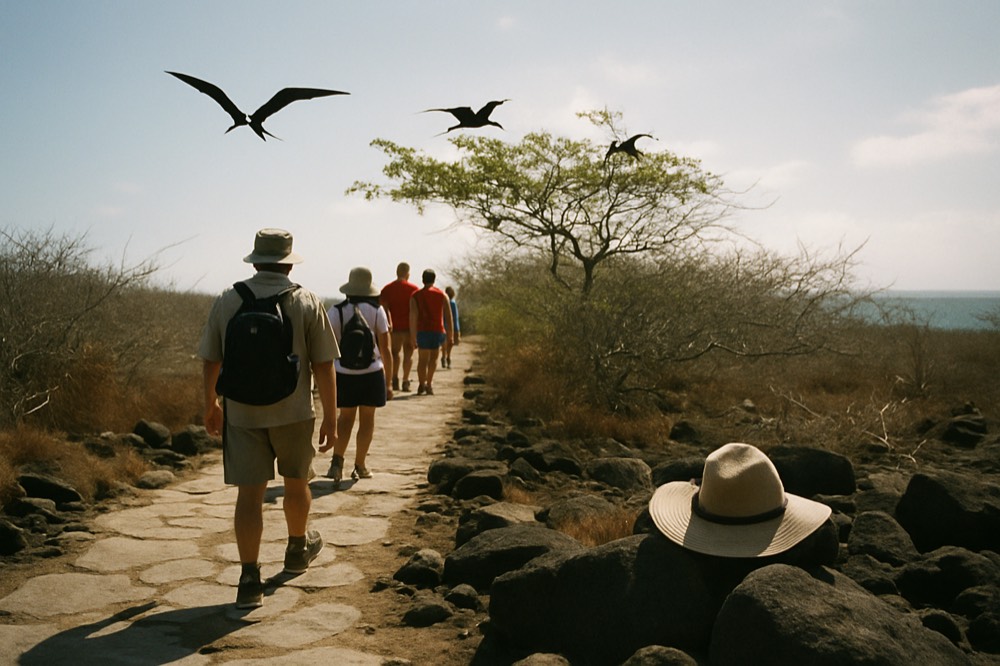
The forum wisdom points the same way. Travellers who have done both halves repeatedly say the island side is where regret lives: short island stays mean missed remote sites, and the inter-island ferries eat half-days that a longer itinerary would absorb. Our how many days is enough in Galapagos post digs into the island half on its own.
What To Pack When One Trip Spans The Andes And The Islands
Pack in layers for two climates in one bag: the Quito highlands are high-altitude with cool nights year-round, while the islands run from about 21.5 °C sea temperature in August and September to 25.7 °C in March. You need a warm layer for the Andes and reef-safe sunscreen for the islands, and the same shoes can serve both if chosen carefully.
The single most useful item is a packable insulated jacket, because it solves the highlands and weighs nothing in the islands. After that the list splits cleanly. For the mainland: long trousers, a daypack, altitude-friendly pacing and more water than feels reasonable. For the islands: a rash guard or wetsuit layer, motion-sickness tablets started the night before any crossing, and sunscreen without oxybenzone or octinoxate, which the park's visit rules restrict during water activities.
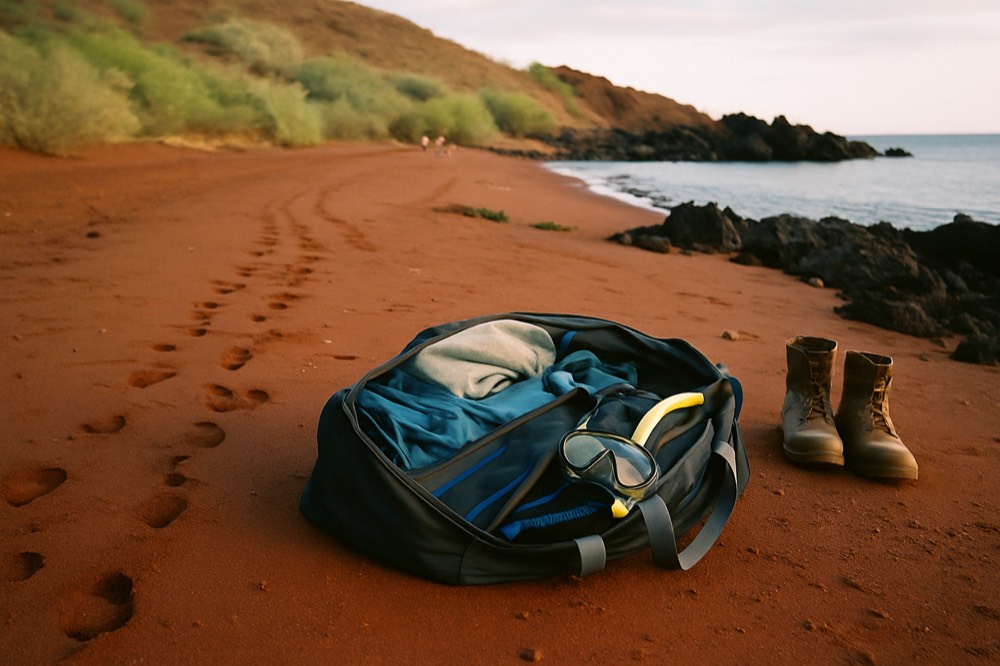
Footwear is where combos get heavy. Cusco and the Machu Picchu approach want proper walking shoes with grip; the islands want shoes that can go on a wet panga landing. One pair of grippy, quick-drying walking shoes handles both, and packing two pairs is the most common combo mistake after over-packing clothes for the mainland half.
Two items on the money side are worth repeating because travellers keep getting caught: US$200 in cash per adult for the park fee, and US$20 per person for the transit card, which can be pre-registered online but is paid at the airport counter. The full packing logic, including what not to bring, is on our what to pack for a Galapagos cruise page.
Common Questions About Ecuador And Galapagos Combo Tours
Do I Have To Spend A Night On The Mainland Even On A Galapagos-Only Package?
Yes, in almost every case. Flights to the islands leave in the morning from Quito or Guayaquil, and the official advice is to arrive at the mainland airport three hours early for biosecurity and transit checks, so evening arrivals and same-day island departures do not connect.
How Much Does A Combined Ecuador And Galapagos Tour Cost?
On this site, combo packages start at $2,876 per person for an 8-day Quito plus three islands itinerary and reach $4,495 for a 12-day Cusco, Machu Picchu and Galapagos version with all meals on the islands. The $200 park fee and $20 transit card are extra.
Can I Combine Machu Picchu And Galapagos In One Trip?
Yes. A 10-day package from $2,927.11 covers Cusco and Machu Picchu plus five island stops, and a 12-day full-board version from $4,495 goes deeper on fewer islands. Both connect through Lima and Quito.
Is The Park Entrance Fee Included In Combo Packages?
Usually not. The $200 foreign adult fee is paid in cash US dollars to park rangers on arrival at Baltra or San Cristobal, and most package listings do not state it as included. Budget it separately for every traveller over 12.
Which Should I Do First, The Mainland Or The Islands?
Most travellers do better with the mainland first. Quito or Cusco absorbs jet lag and altitude while the island dates approach, and arriving at sea level after the Andes feels easier than the reverse. Fixed island dates then act as the anchor the mainland half is built around.
How Many Days Do I Need For Both Quito And The Galapagos?
Eight days is the practical minimum: two to three for Quito and five for three islands. Ten to twelve days lets you add the Cusco circuit or slow the island half down, which experienced travellers consistently recommend over squeezing in a fourth island.