Best Time To Travel Galapagos: A Month-By-Month Guide For Cruise Passengers
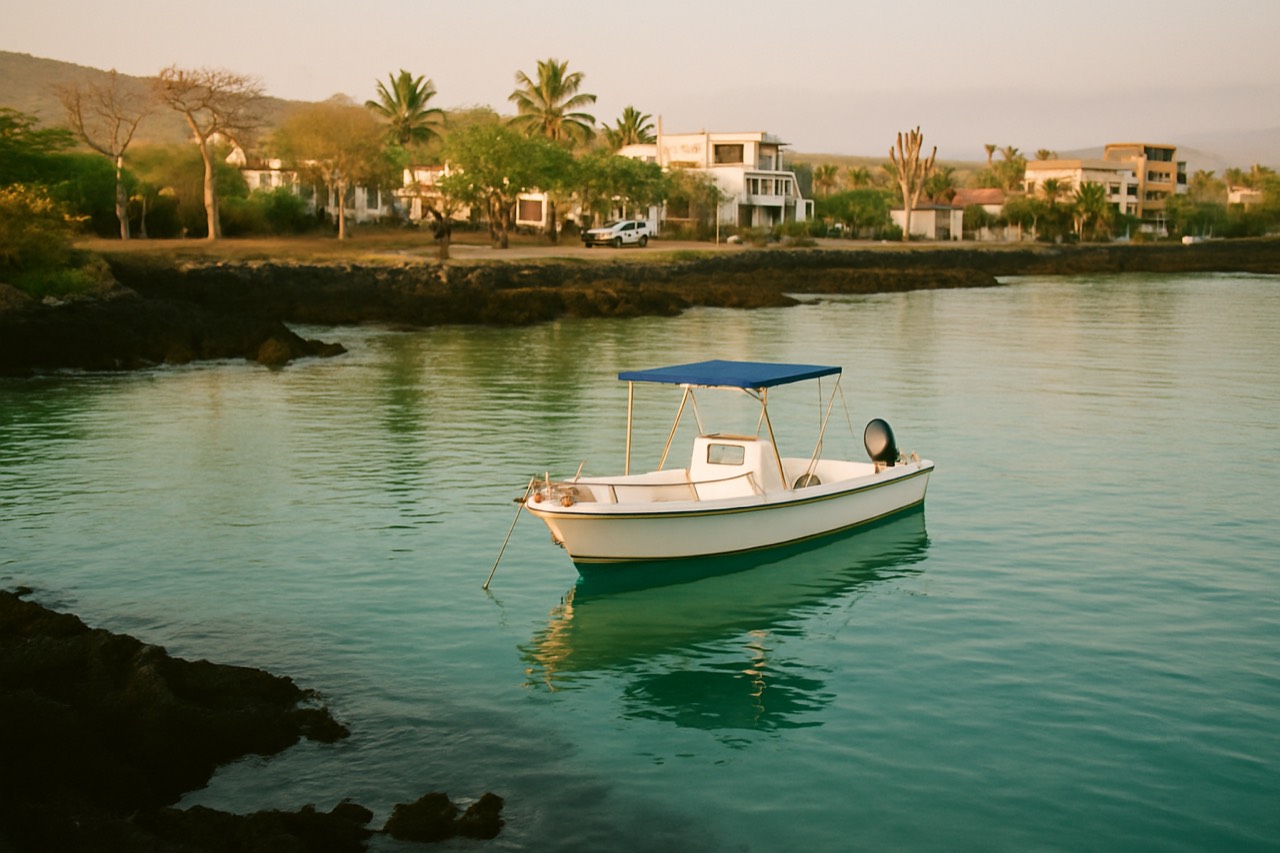
There is no single best month to travel Galapagos. The archipelago runs on two seasons, and each one trades something away: the warm season buys you calm crossings and loses you underwater visibility, while the cool garua season gives you cold, choppy water and the best bird and plankton activity of the year.
Short answer
January to May is the warm season: sea temperatures near 25.7 C in March, calm crossings, afternoon rain, and poorer snorkelling visibility. June to December is the garua season: 21.5 C water, rougher seas, overcast highlands, and the strongest wildlife activity. March to April is the foreign visitor peak; September is the annual trough.
Galapagos does not have four seasons. It has two, and the Charles Darwin Foundation defines them by wind rather than by temperature: from January to May the southeasterly trades weaken, and from June to December they strengthen, pulling cold upwelling along with them. That single mechanism drives everything a cruise passenger actually feels, from the temperature of the water you snorkel in to the size of the swell on an overnight transit toward Fernandina.
Most "best month" articles dodge the choice. This one will not, because the honest answer is that the best time to travel Galapagos depends entirely on what you are willing to tolerate. Calm water costs you visibility. Cold water buys you the best bird activity of the year. The month that is right for a photographer who wants albatross courtship is the wrong month for a family that wants warm swimming water, and no operator's brochure will tell you that plainly.
When Is The Best Time To Travel Galapagos?
There is no universally best month, but there is a best month for each priority. For calm seas, warm water and beach weather, go between January and May, when the sea at Puerto Ayora averages 24.5 to 25.7 C. For the densest wildlife activity, nesting seabirds and the richest plankton blooms, go between June and December, accepting water near 21.5 C and rougher crossings. September is the quietest month for crowds.
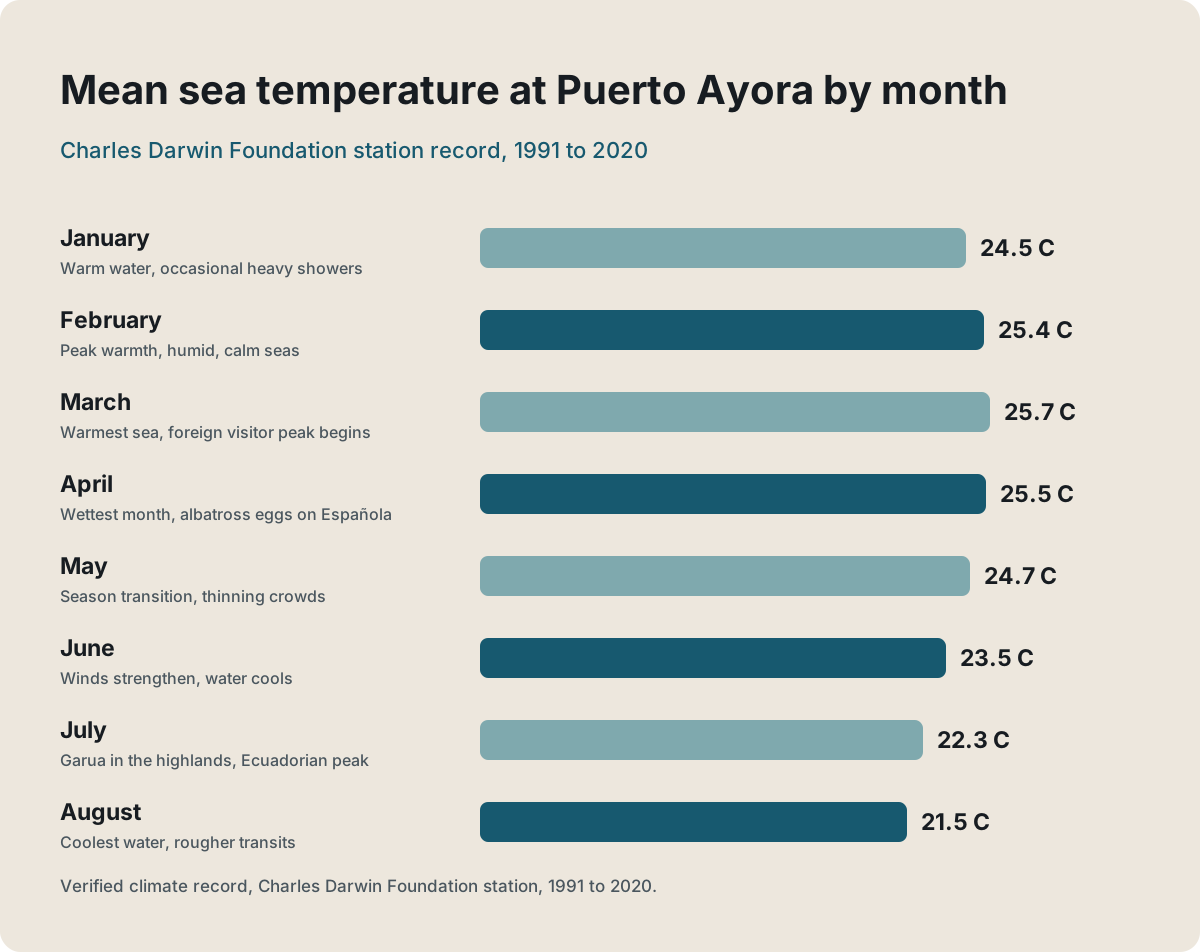
The two seasons are not subtle. Sea temperature at Puerto Ayora, averaged over the 1991 to 2020 period from the Charles Darwin Foundation's own station record, runs from 25.7 C in March down to 21.5 C in August and September. That is roughly four degrees of difference between the warmest and coolest months, and you feel every degree of it through a wetsuit. Air temperatures follow the same curve, from a monthly mean of 26.9 C in March to 21.7 C in September.

Rainfall splits the year the same way. March and April, the heart of the warm season, average 69.7 and 82.4 mm of rain respectively at Puerto Ayora, while August through October average barely 11 to 13 mm each. But the cool season is not dry in the highlands: the garua, a persistent shallow cloud and drizzle layer, sits on the windward slopes from June to December while the lowlands stay largely rain-free. A morning landing can be overcast and dripping at 200 metres of elevation and sunny at sea level an hour later.
Demand tracks the seasons too, and this matters for booking. The park's own visitor statistics show the foreign peak in March to April, an Ecuadorian peak in August, and September as the annual trough for arrivals. If you want a berth in the warm season, you are competing with the largest foreign crowd of the year for it.
The Warm Season: January To May
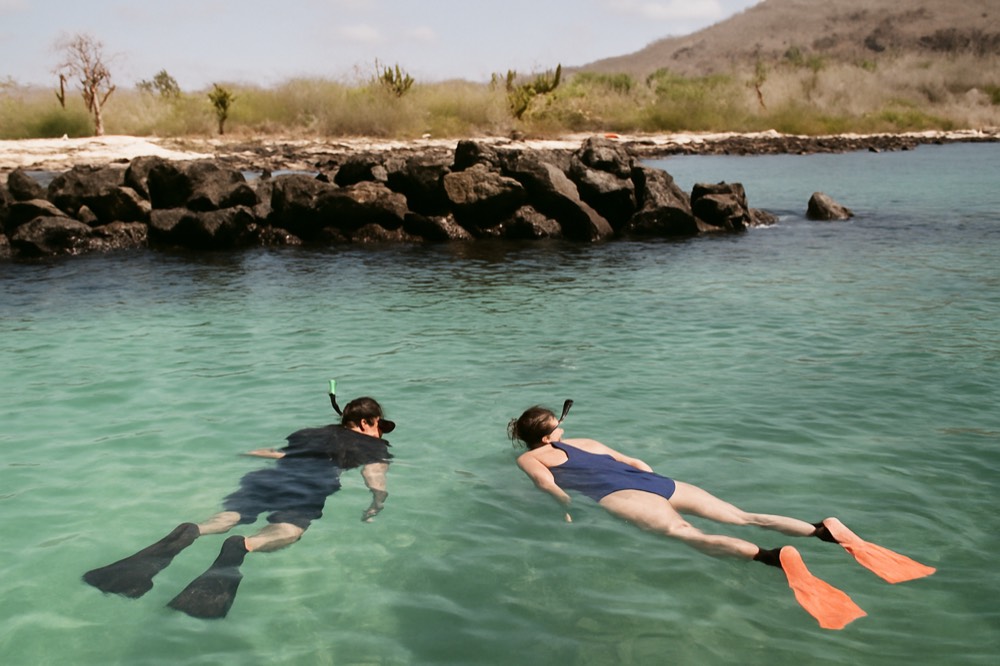
The warm season, January to May, is the Galapagos most travellers picture: sea temperatures from 24.5 to 25.7 C, light winds, calm inter-island crossings, and brief afternoon rain rather than all-day drizzle. The trade-off is underwater: the same warm water that makes swimming pleasant suppresses the upwelling that feeds the marine food web, so snorkelling visibility drops and wildlife is less concentrated.
This is the season for people whose priority is comfort on the water. The southeasterly winds weaken, which means the long overnight transits that cruise passengers dread most, the open-sea legs toward the western islands, tend to be at their gentlest. Daytime air temperatures peak at a monthly mean of 26.9 C in March. Rain arrives as convective afternoon showers rather than the grey, all-day garua of the second half of the year, and the lowlands are at their greenest.
The wildlife case for the warm season is specific rather than general. Waved albatross adults arrive at Española in March, with eggs laid from mid-April to late June, which makes a spring departure the only window for courtship displays on any itinerary that calls at Punta Suárez. Marine iguanas mate from November to February, so the tail of that activity can spill into the early warm season. Giant tortoises nest from July to October, so warm-season visitors instead find them spread through the lush highlands of Santa Cruz, which are at their greenest exactly now.
What you give up is the density of the marine show. Warm surface water means the cold, nutrient-rich layers stay down; plankton is thinner, and the massive baitfish schools that draw feeding frenzies are less reliable. Visibility in sheltered bays is often excellent in the warm season, but the water column is quieter. If your trip is primarily about what is under the surface, the warm season is the softer option, and you should know that before you commit to it.
If you already know the warm season is your window, the format matters as much as the month. A western-route small-ship cruise such as the 7-Day La Pinta Cruise, from $8066, reaches Isabela, Floreana, Fernandina and Rábida on a fixed park-approved itinerary; its 5 across 48 reviews is the largest review pool among the cruise packages on this site. The 7-Day Isabela II Cruise, 4.9 across 31 reviews and from $6137, covers the southern and central islands including Española, which is the albatross island. And the 4-Day Bay Tour, All Meals Included, from $450 with 4.9 across 24 reviews, is the short, calm-water option for travellers who want the warm season without committing to a full week at sea. Check availability on each operator's live listing before the March to April peak fills.
The Garua Season: June To December
The cool season, June to December, is when the southeasterly trades strengthen and the Humboldt Current's influence returns: sea temperatures fall to about 21.5 C in August and September, the highlands sit under the garua cloud, and crossings are rougher. In exchange, upwelling feeds the richest plankton and bird activity of the year, and penguins and cormorants concentrate around the western islands.
This is the season for people whose priority is wildlife rather than comfort. The strengthened trades drive cold, nutrient-rich water up along the western archipelago, and everything that eats plankton follows it. The park's own census work shows the stakes: a joint DPNG and Charles Darwin Foundation expedition counted 413 Galapagos penguins and 762 flightless cormorants around Isabela, Fernandina and the Las Marielas islets in its 2024 census, and the 2025 counts came in at 391 penguins and 656 cormorants. Those birds are there because the cold water is there.
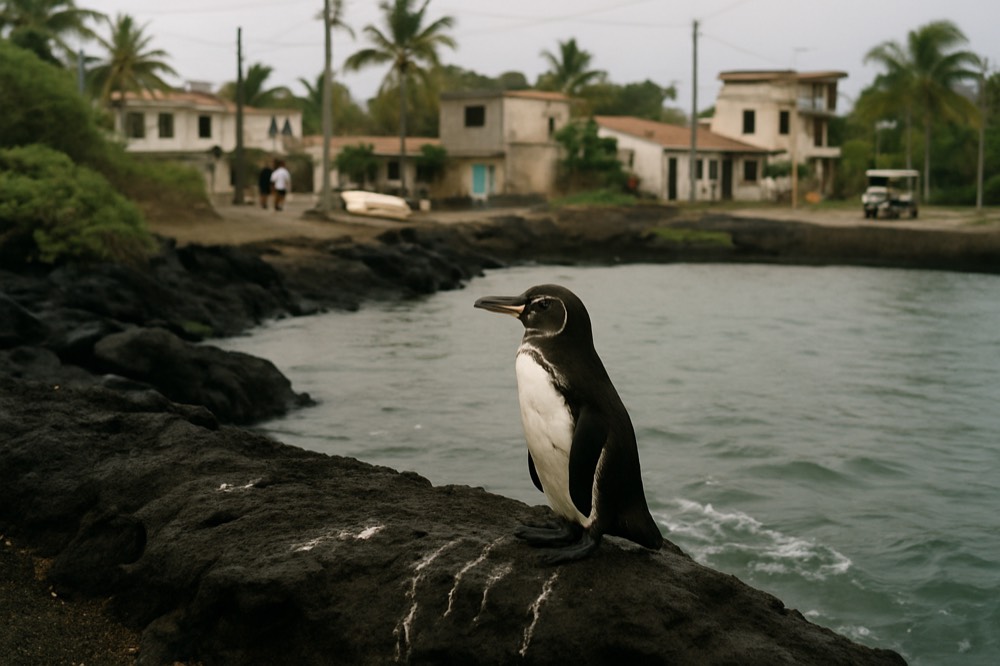
The Galapagos penguin is the only penguin that lives and nests on the equator, and its breeding tracks sea temperature rather than the calendar: it is significantly more likely to breed when the water is at or below 22 C, because the Cromwell Current upwelling around Fernandina and Isabela concentrates its food. That means the cool season, when inshore water sits near its 21.5 C floor, is when penguin breeding activity is most likely, and a western itinerary is the only realistic way to see them. No month range is promised here, and you should distrust any page that prints one.
The garua itself deserves explanation, because it surprises people. From June to December, a shallow, persistent cloud layer forms on the windward highlands and drips continuous drizzle, while the coasts and lowlands stay dry and often sunny. Passengers regularly experience both in one morning: an overcast, dripping visit to the Santa Cruz highlands to see giant tortoises, then a bright, warm landing at a coastal site after lunch. Pack a light rain layer for the highlands even in the "dry" season.
Roughness is the honest cost. The cool season is defined by stronger winds, and stronger winds mean more sea state, particularly on the open transits between islands and on any itinerary pushing west toward Fernandina. Travellers who have done both formats report the inter-island legs and western routes as the roughest, and many recommend starting motion-sickness medication the night before a transit rather than the morning of it. The day boats working sheltered bays are usually calmer than the ferries and the overnight legs.
For a cool-season departure, the itinerary does the heavy lifting. The 7-Day La Pinta Cruise, from $8066 and rated 5 across 48 reviews, is the related pick here because its confirmed route includes Fernandina, which is the western island the cold-water wildlife concentrates around; its fixed itinerary means what you see on paper is what you get, since park-approved itineraries cannot be modified on the day. Read more about how routes work in our guide to Galapagos cruise itineraries, and see our overview of Galapagos cruise packages for the full range of formats and price points.
What The Sea And Air Data Actually Show
The verified climate record for Puerto Ayora, computed from the Charles Darwin Foundation station's 1991 to 2020 data, shows sea temperature peaking at 25.7 C in March and bottoming at 21.5 C in August and September, with air means running from 21.7 C in September to 26.9 C in March. Rainfall peaks in April at 82.4 mm per month and collapses to about 11 mm in September.
These are measured monthly normals, not operator estimates, and they are the most reliable way to plan what to pack and what to expect in the water. The four-degree sea temperature swing means a warm-season traveller can often skip a wetsuit in sheltered bays, while a September traveller will want a full 5 to 7 mm suit for the same snorkel stop. The recent decade, 2016 to 2025, shows the same shape with slightly warmer spring peaks: sea temperature topping out at 26.0 C in April.
| Month | Mean sea temp (C) | Mean air temp (C) | Mean rain (mm) | What it means on board |
|---|---|---|---|---|
| January | 24.5 | 25.6 | 52.9 | Warm water, occasional heavy showers |
| February | 25.4 | 26.6 | 79.5 | Peak warmth, humid, calm seas |
| March | 25.7 | 26.9 | 69.7 | Warmest sea, foreign visitor peak begins |
| April | 25.5 | 26.3 | 82.4 | Wettest month, albatross eggs on Española |
| May | 24.7 | 25.5 | 46.8 | Season transition, thinning crowds |
| June | 23.5 | 24.1 | 19.1 | Winds strengthen, water cools |
| July | 22.3 | 22.8 | 13.0 | Garua in the highlands, Ecuadorian peak |
| August | 21.5 | 21.9 | 12.7 | Coolest water, rougher transits |
| September | 21.5 | 21.7 | 11.1 | Annual arrivals trough, best value window |
| October | 21.7 | 22.1 | 10.9 | Cool and dry, Nazca boobies laying on Española |
| November | 22.3 | 22.9 | 14.5 | Water warming, marine life still dense |
| December | 23.2 | 24.0 | 27.2 | Transition month, seas easing |
One caveat the Foundation itself makes, and which honest planning should keep: both seasons vary in length from year to year. A hotter hot season tends to start earlier and finish later; a cooler one is shorter. Monthly normals are a planning baseline, not a promise, and El Nino years can push warm, food-poor conditions well outside the usual pattern. The 2024 census attributed the low juvenile share among penguins, just 1 percent, to poor breeding probably linked to food scarcity, which is what a warm anomaly does to the cold-water food web.
Wildlife By Season: What You Will Actually See
Verified breeding data splits the year unevenly: waved albatross arrive at Española in March and lay from mid-April to late June, Nazca boobies on Española lay October to December, marine iguanas mate November to February, giant tortoises nest July to October, and sea lion pups arrive mostly August to October. Blue-footed boobies have no season at all: they are aseasonal, opportunistic breeders.
The blue-footed booby is the species every brochure gets wrong. Verified research on the large colonies found that in non-El Nino years breeding is aseasonal and fairly continuous, and a successful breeding attempt runs five to six months. There is no month range, and a page that promises you one is inventing it. What you can say is that courtship, eggs and chicks of some pair are always in progress somewhere, so the odds of seeing the famous foot display are broadly similar year-round.
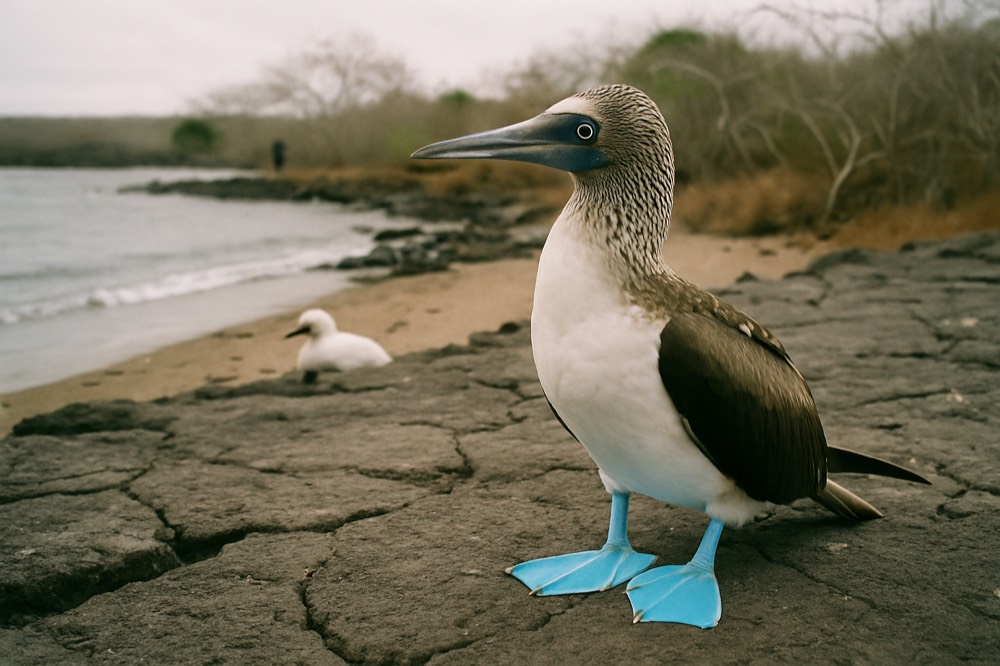
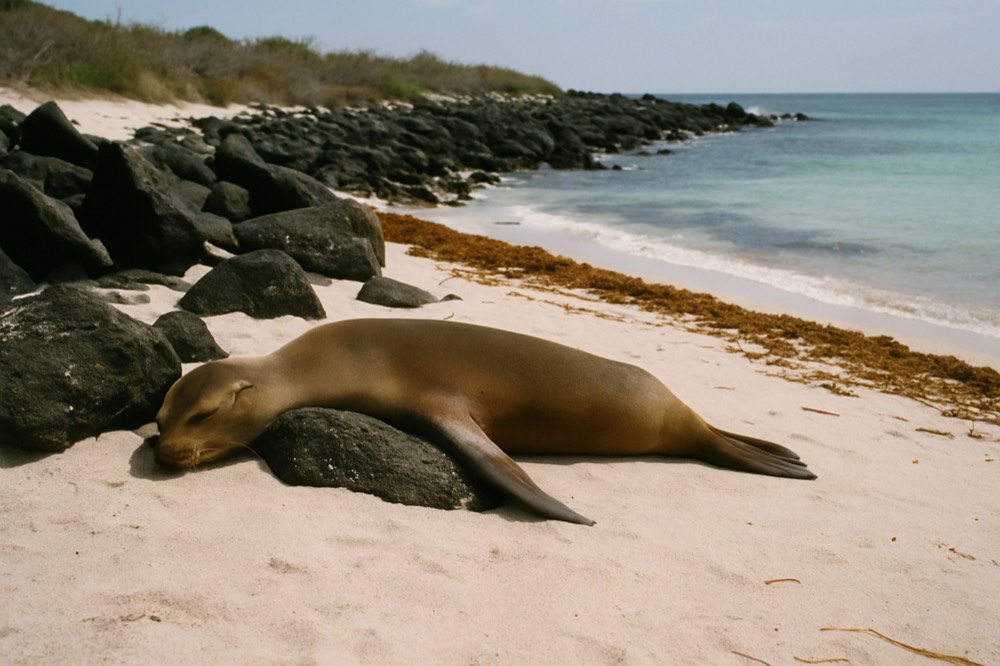
The species with real calendars are the ones worth planning around. Waved albatross, which nest only at Española, arrive in March, so a cruise calling there between March and late June gets courtship, eggs and incubating adults. Nazca boobies lay October to December at Punta Cevallos on Española, but September to November at Genovesa, so the island matters as much as the month. Sea lion pupping runs August to January with most births August to October, which makes the cool season the window for seeing newborn pups in the colonies, and the park's 2025 monitoring counted 6,936 sea lions across its survey sites.
| Species | Verified window | Where it matters most |
|---|---|---|
| Waved albatross | Adults arrive March; eggs mid-April to late June | Española only |
| Nazca booby | Española: laying October to December; Genovesa: September to November | Island-specific |
| Blue-footed booby | No season: aseasonal, opportunistic breeder | Anywhere |
| Galapagos penguin | Breeding tracks sea temperature at or below 22 C, not the calendar | Fernandina and Isabela |
| Marine iguana | Mating November to February | All islands |
| Giant tortoise | Nesting July to October, at low elevations | Santa Cruz and Isabela highlands |
| Galapagos sea lion | Most births August to October; window August to January | All coasts |
Whatever the month, the rules around wildlife are fixed and strict. Park rules in force since August 2026 set a minimum distance of two metres from any animal while walking, snorkelling or diving, camera gear included, and four metres during kayak, paddleboard and panga rides. Touching, feeding or chasing wildlife is prohibited, and guides are compulsory at protected sites. The practical version: your guide sets the distance, and the animals do not. A nesting albatross on the trail does not move for you; you wait.
Which Month Should You Pick For Your Cruise?
Pick March or April for the warmest water, calmest crossings and albatross courtship, at the cost of the year's biggest foreign crowds. Pick September for the coolest water, the quietest berths and the most concentrated marine life, at the cost of rougher seas. May, November and early December are the transition months that trade a little of both extremes away.
The month-by-month choice is really a tolerance question, so here it is as one. Match the row that describes your priorities to the month in the last column, and read the trade-off column honestly before committing.
| Your priority | Best months | The trade-off you accept |
|---|---|---|
| Warm water, minimal wetsuit | January to May | Lower visibility, thinner plankton, peak foreign crowds in March and April |
| Calmest crossings and transits | February to April | The busiest booking window of the year |
| Albatross courtship at Española | March to June | Warm-season marine show is quieter |
| Penguin and cormorant density | July to October | Water near 21.5 C, rougher western transits |
| Sea lion pups in the colonies | August to October | Coolest air and sea of the year |
| Fewest fellow passengers | September | The roughest and coolest month, garua in the highlands |
| Green highlands, tortoises in the lush zone | January to May | Afternoon rain showers |
| Best balance of calm and wildlife | May and November | Neither extreme; weather is transitional and less predictable |
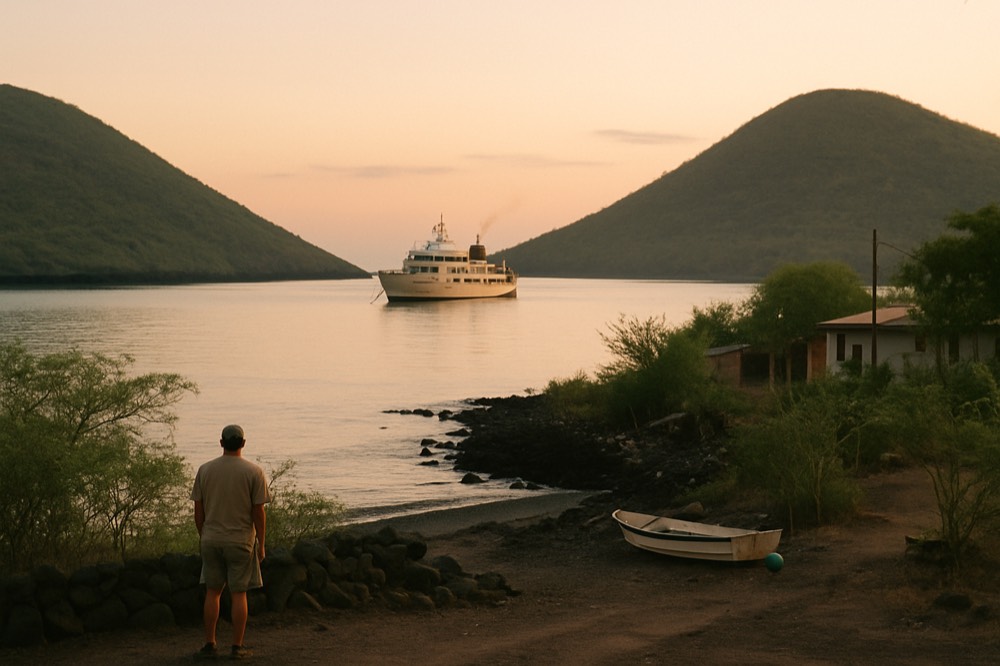
Length interacts with season more than most planners realise. A four-day package in September gives you a compressed, cool, wildlife-dense slice of the central islands; a seven-day package in March can reach Española and the albatross. If you are still deciding how many days to commit, our guide to how many days is enough in Galapagos works through the trade-offs, and the question of which island is best to stay on matters most for land-based travellers in the rough cool season.
Crowds, Prices And Booking Windows
The park counted 290,404 visitors in 2025, up 4 percent on 2024, with the foreign peak in March to April and September as the annual trough. Berths in the warm-season peak go first because fixed itineraries cannot be swapped once approved, so the best months for weather are also the months that need the earliest booking.
The demand data comes from the park's own annual visitor report, and it is worth reading closely because it contradicts the folk wisdom that Galapagos is uniformly busy. Foreign arrivals concentrate hard in March and April; Ecuadorian visitors peak in August, when school holidays align; and September, with sea temperatures at their floor, is the quietest month of the year. First-half 2026 ran 9 percent ahead of the same period in 2025, so the trend is upward, and the warm-season squeeze is tightening rather than easing.
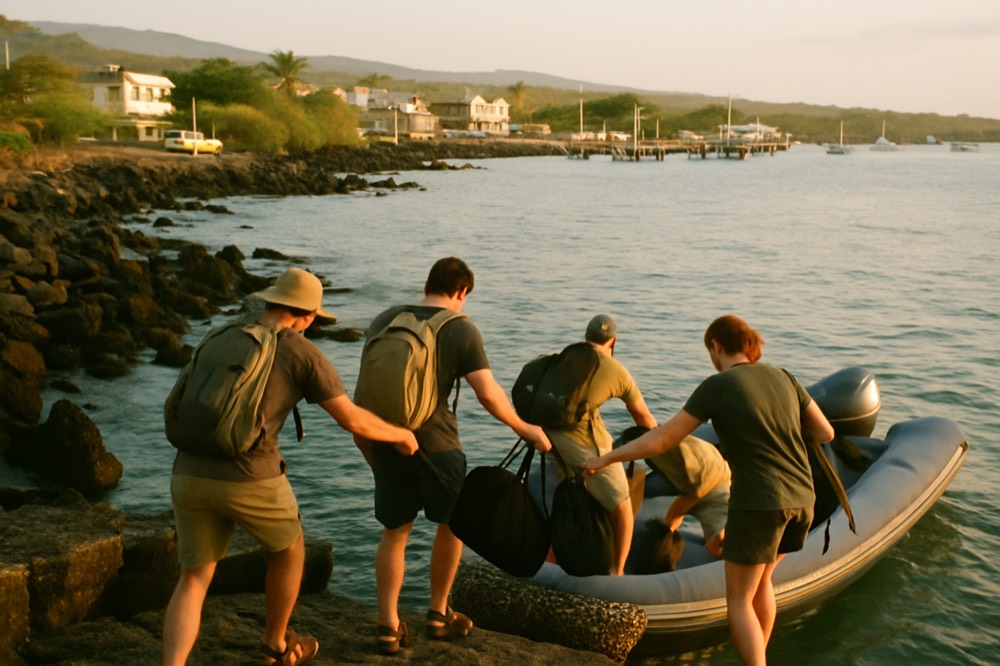
One structural fact makes early booking genuinely matter here rather than generically: cruise itineraries are fixed by the park. An approved itinerary, in the park's own resolution language, may not be modified under any concept except with express park authorisation, and only vessels under 20 passengers may change route at all, with larger ships limited to proven force majeure. The route printed on the listing is the route you sail. That removes the "we'll decide the islands later" flexibility some travellers assume, and it concentrates demand on the specific departures whose fixed routes hit the seasonal highlights, such as Española in albatross months.
Price-wise, the honest statement is that this site's roster spans from $450 for a four-day bay tour to $8,066 for a seven-day small-ship cruise, and the monthly refresh moves those figures, so treat any printed number as a snapshot and confirm on the live listing. The seasonal pattern in demand, warm months busiest and September quietest, is the lever you can plan around: the same fixed itinerary is often easier to berth in, and occasionally cheaper in, the shoulder and trough months. Our Galapagos cruise deals page covers how to think about that without chasing last-minute risk.
Rough Water, Seasickness And The Cool-Season Crossing
The cool season is rougher because the southeasterly trades strengthen from June to December, and no reliable wave-height figure exists for Galapagos waters: the local wave buoy is out of service and the nearby NOAA buoys measure tsunamis, not waves. Plan around wind and season, start medication the night before a transit, and choose your cabin position deliberately.
That absence of a number is itself the finding. Travellers ask how rough the crossing is, and the truthful answer is qualitative: June to December means more wind and more sea state, the inter-island ferries and western transits draw the most complaints, and sheltered day-boat runs are the calmest legs. Anyone quoting you a swell height for Galapagos is guessing.
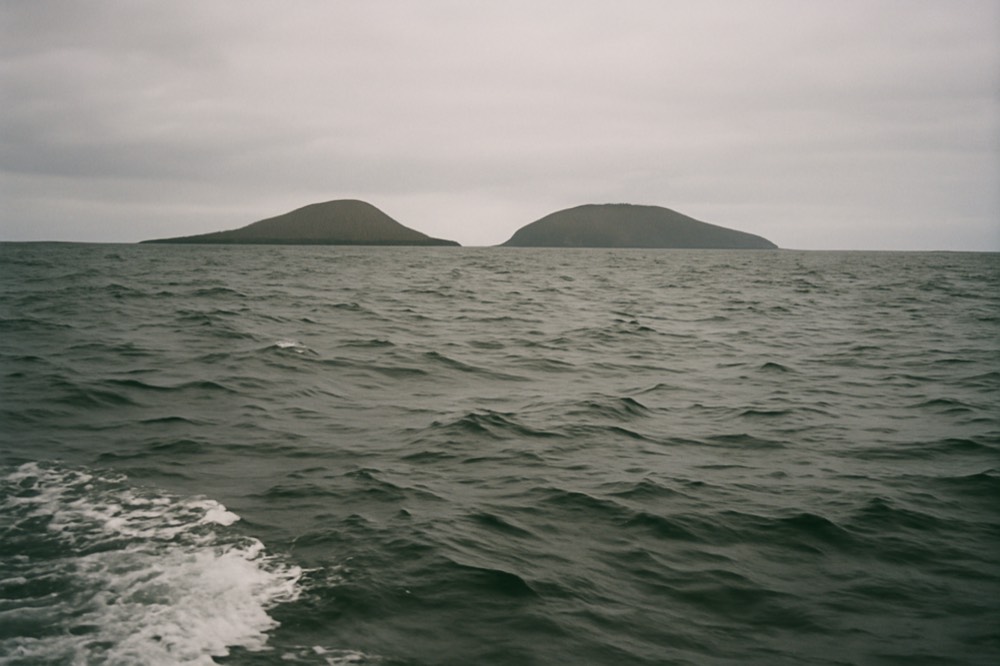
Cabin choice matters as much as month. Repeated traveller reports on small ships describe lower-deck cabins near the engine as noisy and fuel-smelling, with upper-deck and midship cabins preferred for motion, noise and ventilation. On a rough cool-season transit, a midship upper-deck cabin plus medication started the previous evening is the difference between participating in the day's landings and spending them horizontal. If you are prone to motion sickness, weight this heavily when comparing vessels, and read the deck plan, not just the photos.
The warm season inverts the problem. Calmer water means the transit nights are easier, but the same warm surface layer suppresses the plankton that makes the western islands extraordinary, so the calmest week of the year is not the most spectacular week underwater. Some travellers split the difference with a May or November departure, accepting transitional weather for a mix of manageable seas and still-active marine life. That is a reasonable plan, with the caveat that transition months are the least predictable of all.
If the cool season's rougher legs concern you, a southern and central route is the gentler way to take it. The 7-Day Isabela II Cruise, 4.9 across 31 reviews and from $6137, calls at San Cristobal, Santa Cruz, Isabela, North Seymour, Floreana, Española and Fernandina, mixing the sheltered central islands with the seasonal highlights. For a shorter commitment, the 4-Day Bay Tour, All Meals Included, from $450 with 4.9 across 24 reviews, stays close to Santa Cruz, which keeps the open-sea legs short. Check availability on the operator's live listing for the specific month you have settled on.
Common Questions About The Best Time To Travel Galapagos
What Is The Best Month To Cruise The Galapagos?
March and April combine the warmest sea temperatures, 25.7 and 25.5 C respectively, with calm crossings and waved albatross activity at Española. September is the best month for quiet berths and concentrated cold-water marine life, at the cost of 21.5 C water and rougher transits. There is no single best month; match the month to your tolerance for cold water and sea state.
Is The Water Cold In The Galapagos?
It ranges from a monthly mean of 25.7 C in March down to 21.5 C in August and September at Puerto Ayora. Warm-season snorkellers often skip a wetsuit in sheltered bays; cool-season snorkellers generally want a full 5 to 7 mm suit. The four-degree swing is measured data from the Charles Darwin Foundation's station record, not an estimate.
When Is Galapagos Rough Seas Season?
The cool season, June to December, when the southeasterly trades strengthen. The roughest legs are the inter-island ferries and the open transits toward the western islands. No reliable wave-height figure exists for Galapagos waters, so plan around wind and season, and start motion-sickness medication the night before a transit.
When Can You See Waved Albatross In The Galapagos?
Adults arrive at Española in March, and eggs are laid from mid-April to late June, with a nestling period averaging 167 days. Española is the only nesting island, so your cruise itinerary must call there. March to June is the courtship and incubation window.
Is There A Bad Time To Visit The Galapagos?
No month is bad, but each has a cost. September brings the coolest water, the strongest winds and the garua cloud in the highlands; March and April bring the biggest foreign crowds and the year's heaviest rainfall months. The only genuinely poor plan is booking a fixed itinerary that misses the island your must-see species depends on.
What Is The Cheapest Month To Book A Galapagos Cruise?
September is the annual trough for arrivals, and demand is lowest when the water is coolest and the seas are roughest. Shoulder months, May and November, also see thinner crowds than the March to April peak. Prices on this site's roster are refreshed monthly, so confirm current figures on the operator's live listing rather than relying on any snapshot.
Whatever month you settle on, the fixed-itinerary rule means the decision is really two decisions at once: when to go, and which confirmed route to sail. A month chosen for albatross needs a ship that calls at Española; a month chosen for penguins needs a western route. The packages above cover both shapes, and the operator's live listing shows the exact departure dates for each before you commit. For the wider picture of what a Galapagos package costs end to end, including the $200 park fee paid in cash on arrival and the $20 transit card, see our guide to Galapagos flights, park fee and transit card, and for everything this site covers in one place, start at Galapagos Islands Tour Packages.