What A Galapagos Luxury Cruise Actually Gets You
At the top of the Galapagos market, the premium buys stabilisers, balcony cabins and a lower guest-to-guide ratio, not extra islands. Here is what a luxury package genuinely changes about the week, and what it only changes about the brochure.
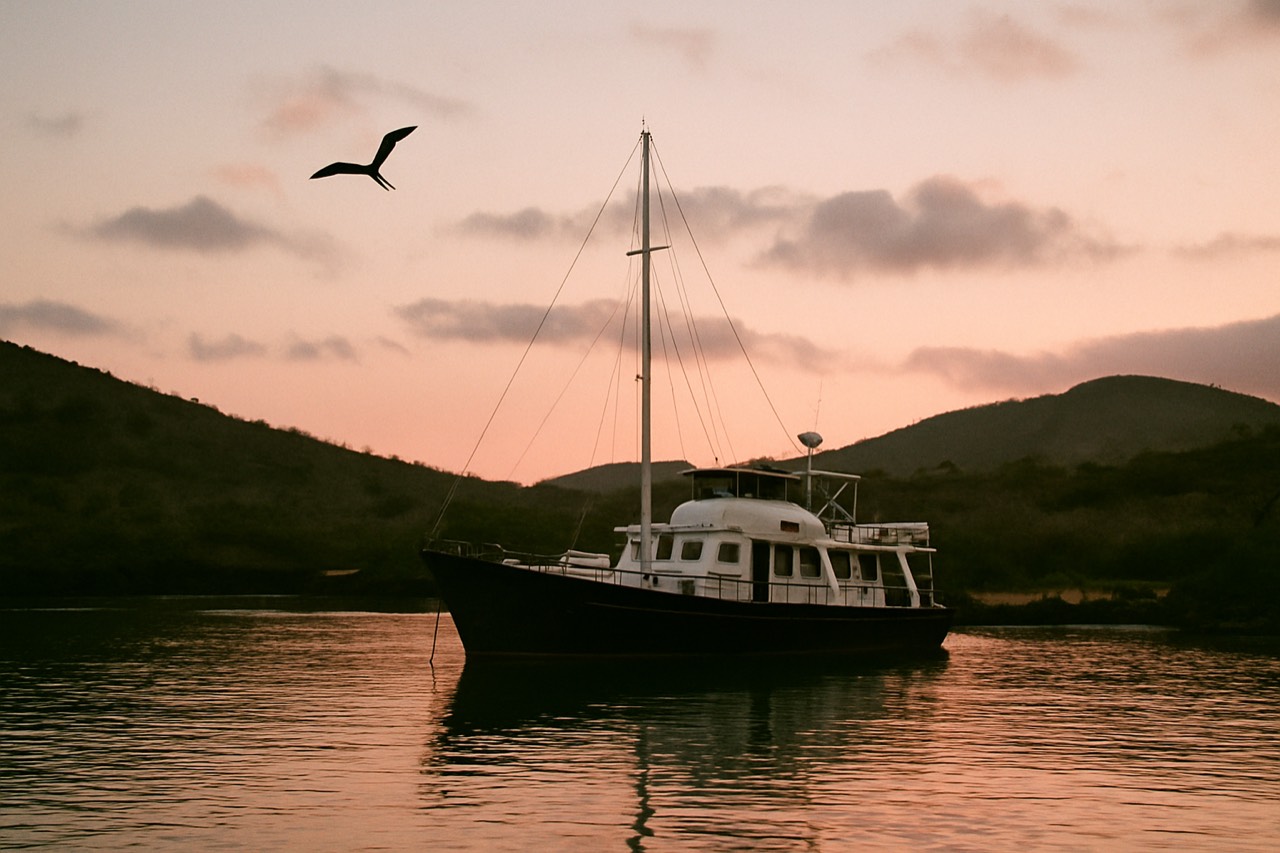
Short answer
A luxury Galapagos cruise runs from roughly $4,604 to $8,066 per person for 5 to 7 days on this site's roster, against $450 at the budget end. That premium buys cabin comfort, stabilisers, full board and a small guest list, but every vessel, luxury or not, visits the same 176 authorised sites under the same park rules.
The most expensive berth in the Galapagos and the cheapest one visit the same islands. The park authorises 176 visitor sites across the archipelago, 91 marine and 85 terrestrial, and every vessel, from a 16-guest catamaran to a 64-passenger small ship, works inside that same network under the same rules. This is the single fact that reframes the whole luxury question, and it is why the honest answer to "what does the premium buy" is never "more Galapagos". It buys a different week at sea, not a different destination.
That distinction matters because the price gap is enormous. On this site's roster, packages run from $450 per person for a four-day bay tour to $8,066 for a seven-day small-ship cruise. The premium end of that range is real money, comparable to what many travellers budget for the entire Ecuador trip including flights. Whether it is worth paying depends on what actually changes at the top of the market, and this guide works through that question section by section: the hardware, the itineraries, the cabins, the costs, and the packages worth comparing. Along the way it also covers the rules that no amount of money can bend, because a buyer who understands those rules shops the luxury market very differently.
What Does A Galapagos Luxury Cruise Actually Buy You?
A Galapagos luxury cruise buys comfort and attention, not access. Every vessel in the archipelago operates under the same park rules, visits from the same authorised site list, and carries a licensed naturalist guide. The premium changes the ship, the cabin, the food and the guest count, roughly from 16 to 64 passengers depending on the vessel, but it cannot buy a private island, a longer daily schedule, or a site other ships cannot reach.
The Galapagos National Park runs a permit system that treats a 64-berth ship as a stack of four 16-passenger permits, per the special tourism regulation in force since 2016. That structure caps how many people share your week regardless of what you pay. It also means the difference between a $450 week and a $8,066 week is not the guide, who is licensed and trained by the park in both cases, nor the landings, which happen at the same designated sites with the same two-metre minimum distance from wildlife.

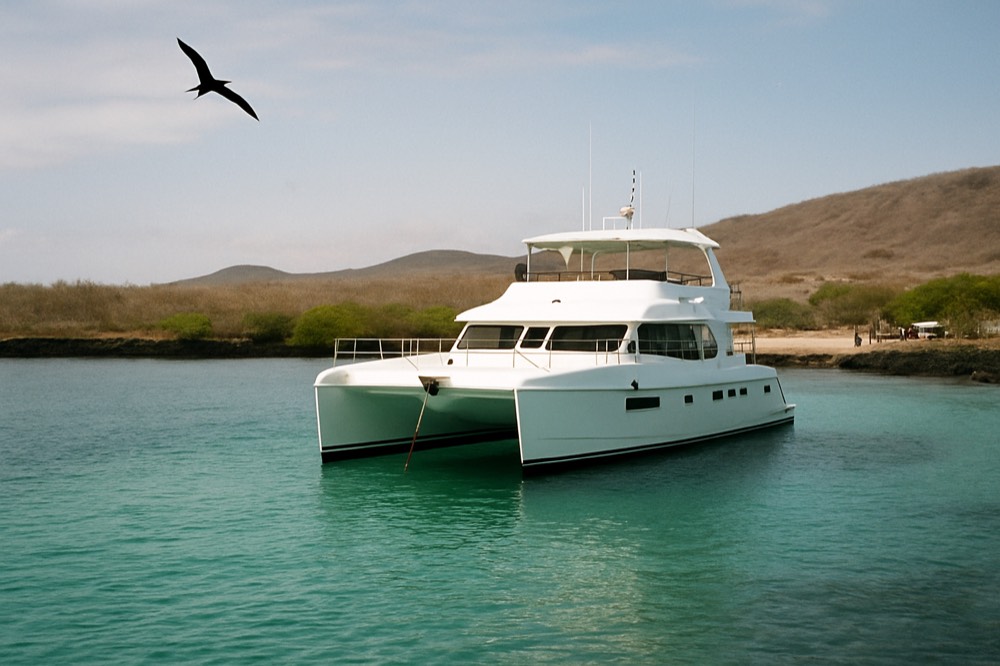
What the premium does change is measurable. Larger premium vessels carry stabilisers, which matter enormously in a cool season defined by strengthening southeasterly winds from June to December. Cabins gain balconies, real beds and private bathrooms instead of bunks. Crew-to-guest ratios climb. Meals go from boxed lunches to full service. And the guest list shrinks relative to the vessel, which shortens panga loading times and gives each guest more of the guide's attention at each landing.
The market context is worth knowing too. The luxury small-ship segment has been growing: new premium vessels have entered Galapagos service since early 2025, including a 20-guest mega-catamaran and two refurbished expedition ships, and one operator's fleet expansion lifted its annual departures past 200. More premium berths exist than a few years ago, but they still represent a small fraction of the fleet, which is why the best cabins book furthest ahead.
What Separates Premium Vessels From Standard Ones?
Three things separate a premium vessel from a standard one: hull design and stabilisers, cabin quality and location, and the ratio of crew and guides to guests. Stabilisers damp the rolling motion that defines the cool season, upper-deck cabins avoid the engine noise and fuel smell that lower decks draw complaints for, and a small guest list means more time with the guide at every landing.
Stabilisation is the least visible and most valuable difference. The cool season, June to December, is the period when the southeasterly trade winds strengthen, and travellers consistently report rougher crossings then, especially on the open transits toward Fernandina and Isabela in the west. A stabilised hull does not calm the sea, but it changes how the same sea feels in your cabin at 2 a.m. Smaller unstabilised boats can be superb in sheltered central waters and punishing on the long western legs.
Cabin position matters more than cabin class. Guest reviews of small ships repeatedly single out lower-deck cabins near the engine as the single worst thing about an otherwise good week, with complaints about noise and fuel fumes running through recent traveller reports. Upper-deck and midship cabins cost more for a reason, and on a premium vessel they are what you are largely paying for.
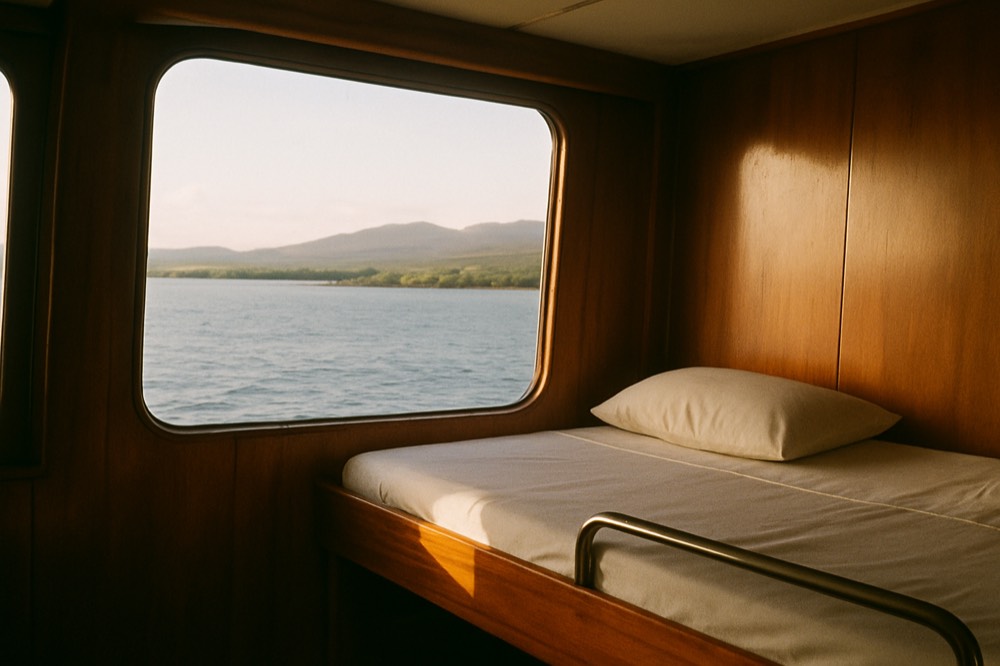
The guest count itself is regulated, which protects the premium buyer. A cruise vessel may carry at most 64 passengers under the park's tourism regulation, and the management plan contemplates no vessel above 100. So "luxury" in the Galapagos never means a megaship; it means a small vessel with fewer people aboard than its permits allow, or a genuinely small one used intensively.
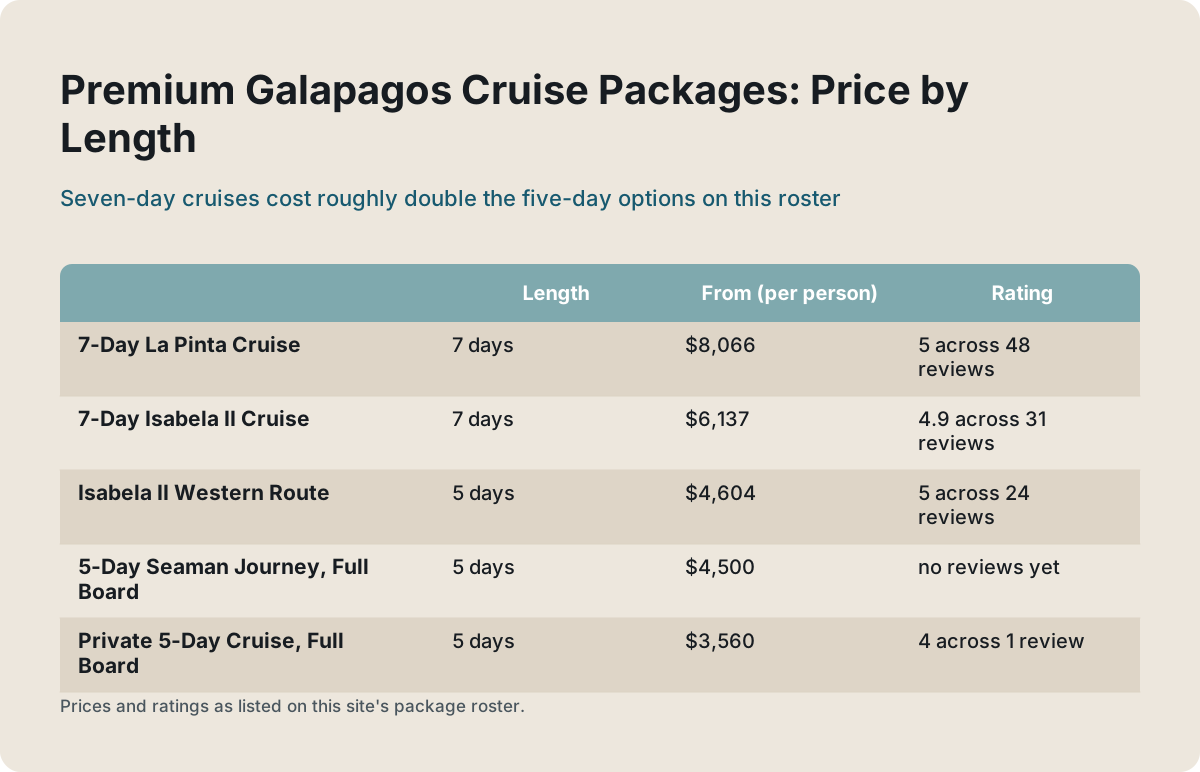
Here is how the premium packages on this site's roster compare on the fundamentals:
| Package | Length | From (per person) | Rating | Style |
|---|---|---|---|---|
| 7-Day La Pinta Cruise | 7 days | $8,066 | 5 across 48 reviews | Small ship, standard class |
| 7-Day Isabela II Cruise | 7 days | $6,137 | 4.9 across 31 reviews | Small group |
| Isabela II Western Route | 5 days | $4,604 | 5 across 24 reviews | Small group |
| 5-Day Seaman Journey, Full Board | 5 days | $4,500 | no reviews yet | Standard, all meals |
| Private 5-Day Cruise, Full Board | 5 days | $3,560 | 4 across 1 review | Private charter feel |
Note what the table shows: the two seven-day premium cruises cost roughly double the five-day options, and the step-up is buying days and western reach as much as thread count. A private five-day full-board package lands at $3,560, which is less than the top seven-day berths, a useful reminder that privacy and luxury are separate purchases in this market.
Which Luxury Packages Are Worth Comparing?
Compare the 7-Day La Pinta Cruise, from $8,066 with a 5 rating across 48 reviews, against the 7-Day Isabela II Cruise, from $6,137 at 4.9 across 31 reviews, and the 5-day Isabela II Western Route at $4,604. All three reach Fernandina, the most remote regular stop on itineraries, and the price differences between them buy cabin class and days at sea, not different islands.
The La Pinta week is the top of this roster, and its confirmed route tells you why it costs what it costs: Santa Cruz, Isabela, Floreana, Fernandina, Baltra and Rabida. Fernandina is the prize. It is the youngest island in the archipelago, it has no introduced predators, and it is the stronghold of the flightless cormorant, a bird that exists nowhere else and has lost the ability to fly. A 2024 park census counted 762 of them, and 656 in the 2025 count, along the Isabela and Fernandina coasts.
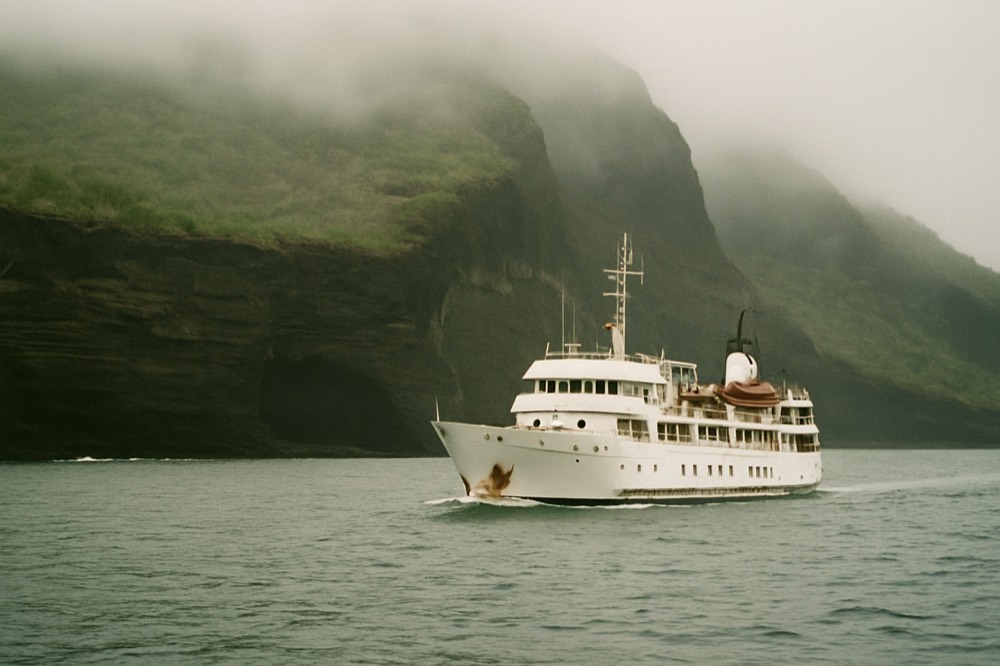
The Isabela II seven-day journey covers even more ground, with confirmed stops on San Cristobal, Santa Cruz, Isabela, North Seymour, Floreana, Espanola and Fernandina, adding the older, wildlife-dense south and east to the western week. Espanola matters for one reason above all: it is home to the waved albatross, whose adults arrive in March and lay eggs from mid-April to late June. No other island on standard itineraries offers that.
For a shorter premium week, the five-day Isabela II western route concentrates on Bartolome, Santa Cruz, Isabela, Fernandina and Santiago, which is essentially the western half of the seven-day journey at 75 percent of the price. If Fernandina and the volcano landscapes are the priority, five days is enough. If the albatross or the eastern islands matter, it is not.
Read more about the full cruise market in our Galapagos cruise packages overview, or see how the top vessels compare in the best Galapagos cruise ships.
The La Pinta week is the one to lock in early if it fits your dates and budget, and the live listing shows current availability and any schedule changes. You can also check availability directly on its tour page, or Check availability on the operator's live listing.
What Does A Luxury Week Actually Cost?
A luxury Galapagos week costs roughly $6,000 to $12,000 per person for the cruise itself at the top of the 2026 market, with this site's premium seven-day packages at $6,137 and $8,066. On top of that, budget about $250 to $600 for mainland flights, $200 cash for the park fee, $20 for the transit card, and $200 to $400 in tips.
The headline price almost never includes everything, and the extras are the same whether you book the cheapest berth or the most expensive. The park entrance fee is $200 per adult foreign visitor, paid in cash US dollars to park rangers on arrival at Baltra or San Cristobal airport, and no official online prepayment portal exists, so a clean stack of bills is non-negotiable. The transit control card is $20 per person, bought at the government counter at Quito or Guayaquil airport before check-in, with free online pre-registration speeding up the counter visit. The official fee schedule is published by the park directorate.
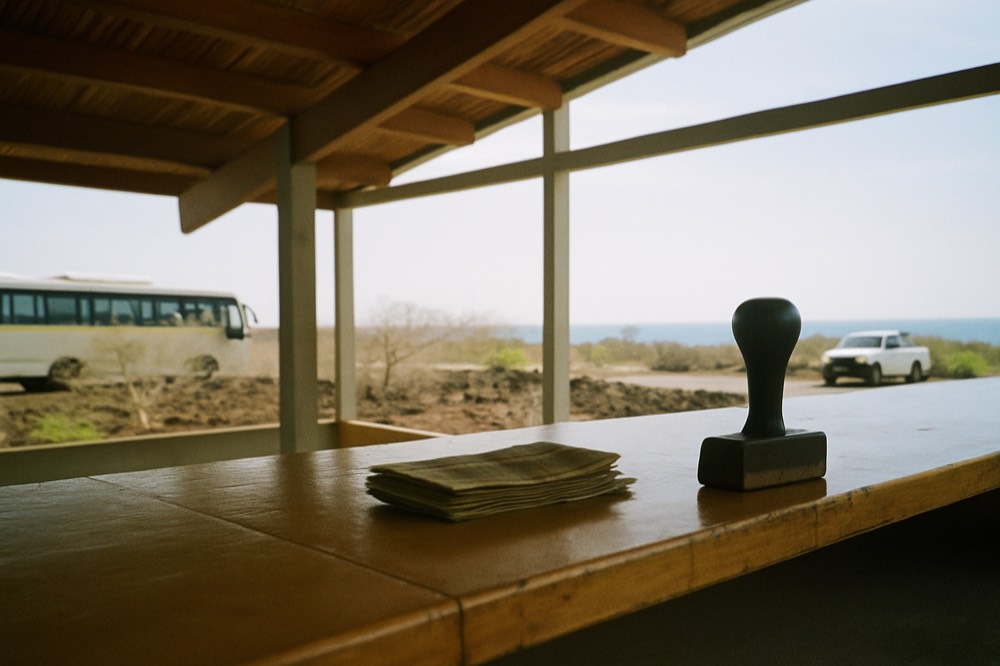
Whether flights are included varies package by package, and many listings simply do not state it. Treat "not stated" as a question to ask, not as a yes. The same applies to the park fee: on most packages it is extra, and where a listing never says, assume you pay it yourself at the airport.
Tips are the other figure people forget. Crew and guide gratuities on a luxury vessel run a few hundred dollars per guest across a week, and on a premium ship the expectation scales with the service level. Wetsuit and snorkel gear rentals, drinks and Wi-Fi are the classic nickel-and-dime items travellers report at the mid-market level; on genuine luxury vessels most of these are included, which is part of what the premium quietly buys.
For a full cost breakdown across the market, see our Galapagos package cost guide.
Does Luxury Get You More Wildlife?
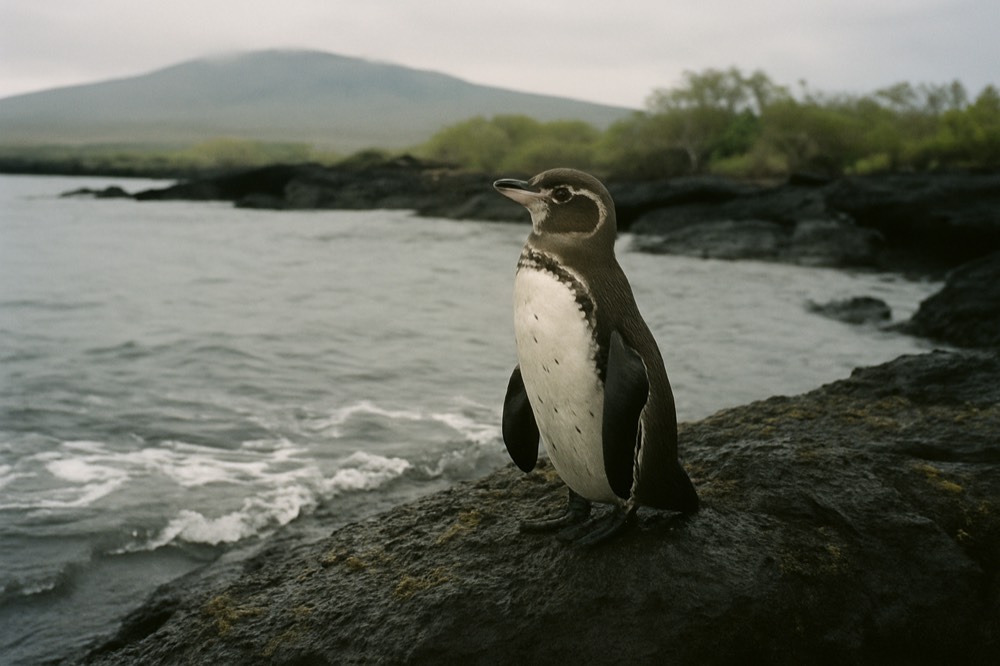
No. Luxury does not get you more wildlife, but it can get you to better wildlife sites and give you more time with it. The premium vessels' western itineraries reach Fernandina and the Isabela coast, where the flightless cormorant and the Galapagos penguin concentrate, and a smaller guest list means each landing group moves faster and lingers longer. The animals themselves are identical.
The wildlife argument for paying more is really an itinerary argument. The penguin is the only species in the world that lives and nests on the equator, and it depends on the cold, nutrient-rich upwelling around Fernandina and Isabela, which is why western routes see them and central routes often do not. A 2024 census counted 413 penguins across those coasts, and the 2025 count was 391. Those are small, precious numbers, and the itinerary, not the cabin, determines whether you are in them. More of these guides are collected on Galapagos Islands Tour Packages.
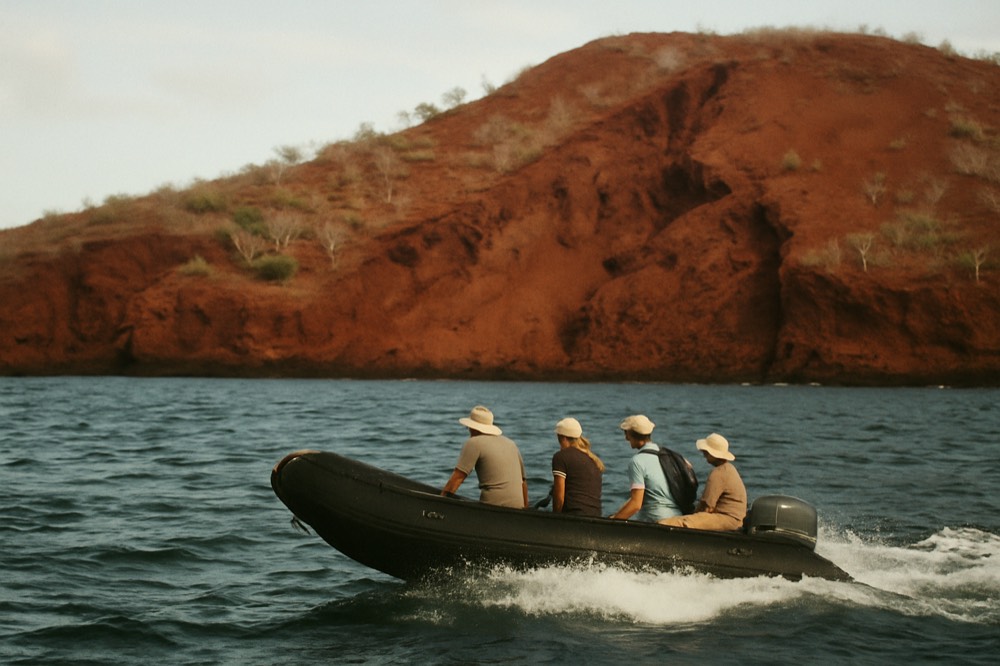
The second argument is time. Every vessel obeys the same park hours, 06h00 to 18h00, and the same two-metre minimum distance from wildlife on landings and in the water. But a group of 16 loads a panga in one rotation and a group of 64 in four, which at two landings a day is close to an hour of standing on a beach instead of watching it. On premium small-group weeks that hour goes back into the wildlife.
One honest caveat: no amount of money changes the season. Sea temperature at Puerto Ayora averages 25.7 degrees in March against 21.5 in August and September, and the same cool season that brings the richest upwelling and the best marine activity also brings the strongest winds. The luxury premium cannot buy calm water; the stabilisers merely soften it.
How Do Cabins And Seasickness Differ On Luxury Ships?
Upper-deck, midship cabins on stabilised vessels are the premium's most underrated benefit, because the cool season's strengthened trade winds make June to December the roughest stretch, and lower-deck cabins near the engine draw the worst recent complaints: noise, fuel smell and poor ventilation. A stabilised premium ship does not eliminate seasickness, but it measurably reduces the motion that causes it.
The pattern in recent traveller reports is remarkably consistent. Inter-island ferries and open western transits get described as the roughest legs; day boats near shore are calmer; and lower-deck cabins get singled out for engine noise and fuel fumes bad enough to drive guests out on deck. One review of a small yacht describes clothes absorbing the fuel smell from a lower cabin for the whole trip. Premium vessels largely solve this by putting cabins above the waterline with proper ventilation, and stabilisers damp the roll.
Medication strategy stays the same at every price point. Travellers who manage well report starting patches or tablets the night before the first rough leg, not the morning of, and keeping a buffer day after the longest crossing. The one thing the premium genuinely changes is that a bad night at sea on a stabilised ship is a minor event, while the same night on a small unstabilised boat can cost you a landing.
The seasonal mechanics are documented rather than folk wisdom: the Charles Darwin Foundation defines the cool season, June to December, as the period when the southeasterly winds strengthen, and its climatology database tracks the matching sea temperature cycle. Nobody can honestly quote you a wave height for the Galapagos; the archipelago's own wave buoy is out of service and the nearby NOAA buoys measure tsunamis, not surf. Plan by season, not by statistics.
This is how the practical differences stack up across the price tiers:
| Factor | Premium vessel | Standard vessel |
|---|---|---|
| Stabilisers | Fitted on larger premium ships | Rare on small motorsailers |
| Typical cabin | Upper deck, window or balcony, private bath | Bunks or twins, some lower deck |
| Engine noise and fumes | Designed out, cabins away from machinery | Recurring complaint on lower decks |
| Guests per landing group | Small group, one panga rotation | Can mean multiple rotations |
| Meals | Full board, restaurant service | Breakfast and lunch common, dinner own cost |
What Is Included, And What Will You Still Pay For?
Most luxury packages include the cabin, all meals, guided landings and snorkelling, but exclude the $200 park fee, the $20 transit card, mainland flights and tips. On this roster, full board is common at the premium end, and several packages state free cancellation, which is worth confirming on the live listing before you commit, because policies vary package to package.
The inclusions worth checking one by one are meals, gear, transfers and cancellation. At the premium end, full board with breakfast, lunch and dinner is the norm, and hotel pickup is stated on most packages. At the budget end, breakfast-only and breakfast-and-lunch plans are common, and dinner becomes your own cost every night, which adds up in Puerto Ayora. Gear is the quiet one: wetsuits and snorkel sets are sometimes listed as "optional" but effectively necessary in the cool season, and rentals are a recurring complaint at the mid-market level.
| Item | Luxury packages | Budget packages |
|---|---|---|
| Meals | Usually all included | Often breakfast and lunch only |
| Park fee, $200 adult | Almost always extra, cash on arrival | Extra, cash on arrival |
| Transit card, $20 | Extra, at the mainland airport counter | Extra, same process |
| Mainland flights | Sometimes included, often not stated | Usually excluded |
| Snorkel gear and wetsuits | Usually included | Often a rental charge |
| Cancellation | Free cancellation stated on several | Varies, check the listing |
Two rules cut across every price point. First, six popular sites now require an advance QR reservation through the park's booking system, including the Fausto Llerena tortoise centre on Santa Cruz and the Arnaldo Tupiza centre on Isabela, and only agencies registered in Galapagos can make those reservations. A legitimate package operator handles this; a casual arrangement may not. Second, sunscreen containing oxybenzone or octinoxate is restricted during water activities in the protected areas, so pack a reef-safe formulation before you fly.
The full entry paperwork, including the three-hour mainland airport arrival recommendation, is covered in our flights, park fee and transit card guide.
How Do You Book A Luxury Package Without Overpaying?
Book early for the premium vessels, compare the five-day and seven-day versions of the same ship before committing, and treat the second-hand luxury market with suspicion. Premium berths are few, the foreign market grew 16 percent in 2025, and the best cabins on western itineraries sell out furthest ahead, so the discount you find by waiting is usually a cabin you would not have chosen.
The arithmetic of the premium market favours early decisions. A 64-passenger ceiling per vessel and a handful of genuinely premium ships mean the total supply of top-tier berths is small, and demand is rising. The seven-day Isabela II journey at 4.9 across 31 reviews and the La Pinta week at 5 across 48 reviews are this roster's most-reviewed premium products, and review pools of that size are meaningful in a market where 381 reviews are spread across 50 products.
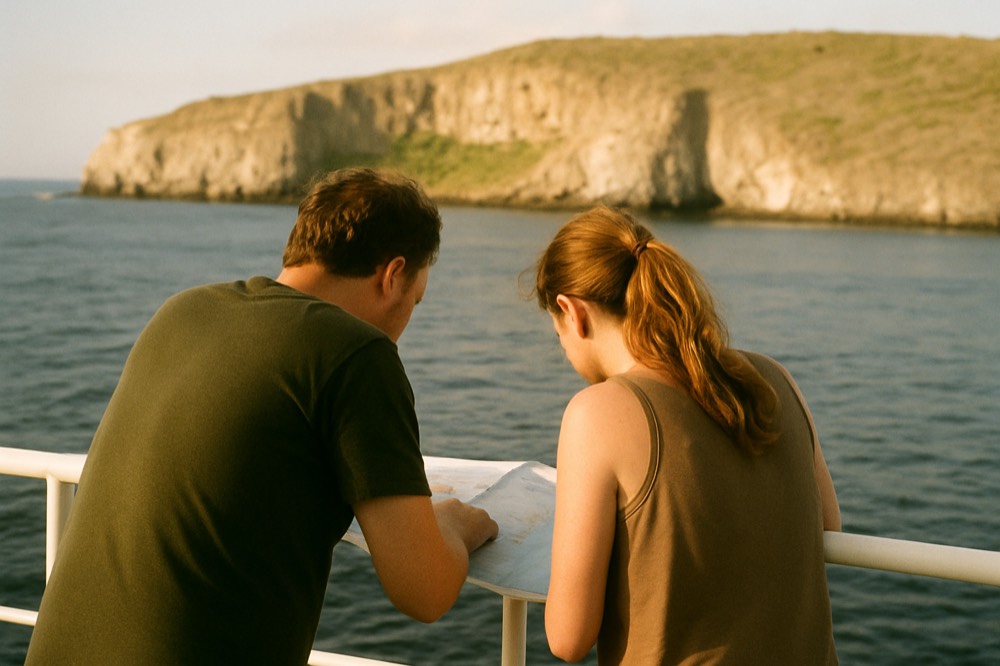
The five-day versus seven-day decision deserves real attention. The Isabela II operates both a five-day western route from $4,604 and a seven-day journey from $6,137, and the five-day version covers the western highlights. If your priority is Fernandina, the penguin coast and the young volcanic landscapes, the shorter week delivers them at 75 percent of the price. The seven-day adds the eastern islands and Espanola, which is the only regular albatross stop, so the decision is really about whether the albatross season overlaps your travel dates.
Be sceptical of last-minute luxury discounts in Puerto Ayora. Travellers report that they exist but carry real risk on dates and itinerary, and on premium vessels an itinerary swap is a bigger loss than on a budget boat because the itinerary is most of what you paid for. Note also that only vessels under 20 passengers may change itinerary at all under the park management plan; larger premium ships run fixed routes that cannot be swapped on the day. If a fixed route matters to you, a bigger premium vessel is paradoxically the safer buy.
For travellers weighing the premium against a land-based week, our cruise versus land package comparison works through the trade-offs, and 79 percent of visitors now choose the land side, which tells you the cruise premium is a deliberate purchase, not a default.
Whatever you choose, the premium market rewards specificity: know your season, your must-see species, and your tolerance for open water before you compare prices, because those three answers narrow the field faster than any budget.
Common Questions About Luxury Galapagos Packages
What Does A Galapagos Luxury Cruise Include?
Most premium packages include the cabin, all meals, guided landings with a licensed naturalist guide, snorkelling gear and airport or hotel pickup. They almost never include the $200 park entrance fee, paid in cash on arrival, the $20 transit card, mainland flights, or crew and guide tips. Check the live listing for the specific package, because inclusions vary and some listings do not state flights at all.
How Much Is A Luxury Galapagos Cruise?
On this site's roster, premium packages run from $4,604 for a five-day small-group western route to $8,066 for the seven-day La Pinta week, per person. Across the wider 2026 market, luxury eight-day cruises generally run $6,000 to $12,000 per person in double occupancy before flights and fees.
Is A Luxury Galapagos Cruise Worth It?
It is worth it if stabilised sailing, a private balcony cabin, full board and a small guest list genuinely improve your week, and if your itinerary reaches the western islands. It is not worth it if you expect more wildlife or exclusive access, because every vessel operates under the same park rules at the same authorised sites with the same two-metre wildlife distance.
Do Luxury Cruises Visit Different Islands?
No. All vessels draw from the same 176 authorised visitor sites. What differs is which sites a given itinerary includes, and the premium seven-day routes are the ones that reach both Fernandina in the west and Espanola in the south, the two islands with species the central routes miss, the flightless cormorant and the waved albatross.
When Should I Book A Luxury Galapagos Package?
As early as you can. Premium berths are capped at 64 passengers per vessel by regulation, the foreign market grew 16 percent in 2025, and demand peaks for foreign visitors in March and April. The best upper-deck cabins on western itineraries sell out furthest ahead, and last-minute discounts in Puerto Ayora carry real risk on dates and routes.
Can I Get Seasick On A Luxury Ship?
Yes. Stabilisers reduce the rolling motion but cannot calm the sea, and the cool season from June to December brings the strongest southeasterly winds. Choose an upper-deck midship cabin, start motion-sickness medication the night before the first long crossing, and build in a buffer day if your itinerary includes the western transits toward Fernandina and Isabela.