What Is The Average Cost Of A Galapagos Cruise?
Per-night pricing is the only honest way to compare a four-night tourist-class boat with an eight-night luxury ship. Here is what Galapagos cruises actually cost, and what sits outside the package price.
 By Oleg Galeev, Editor
What Is The Average Cost Of A Galapagos Cruise?
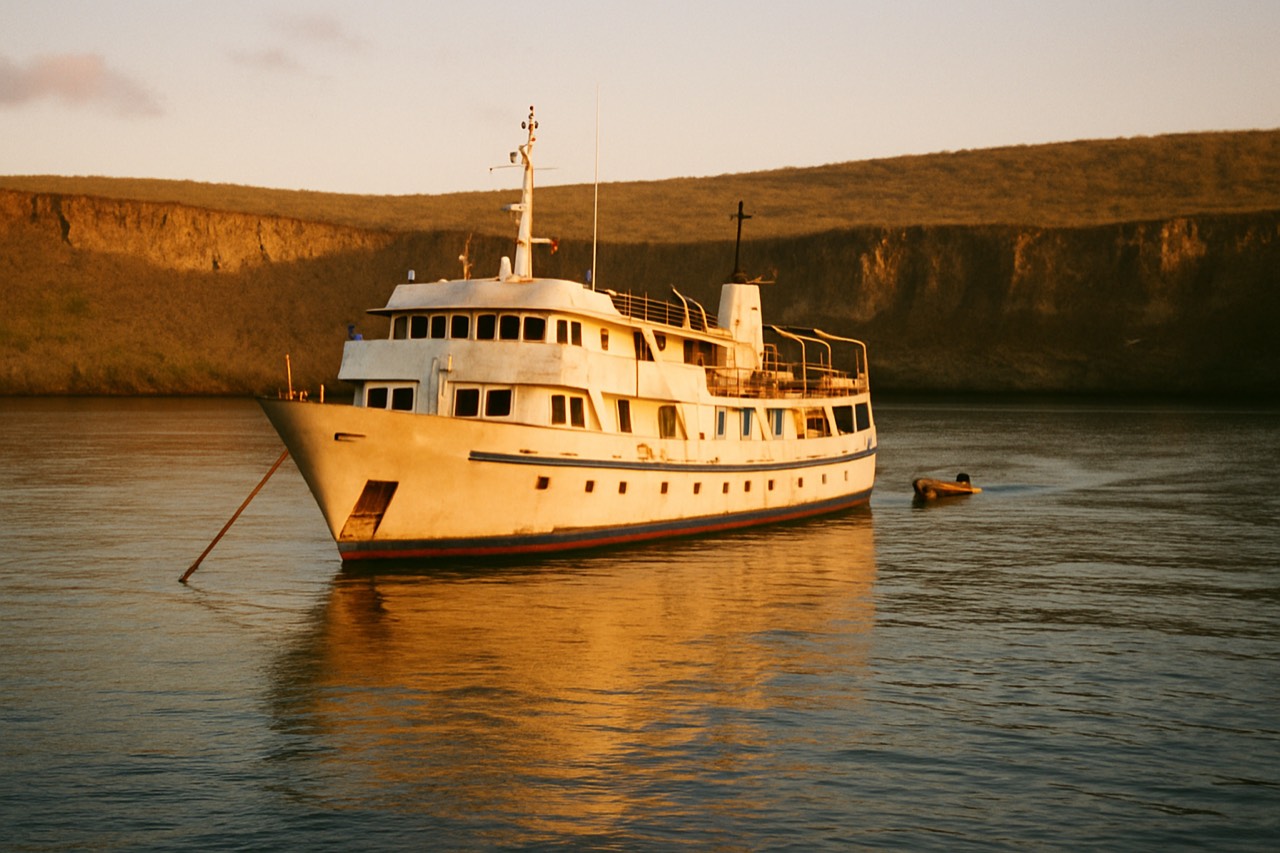
Across the cruise packages on this site, prices run from $3,560 to $8,066 per person for five to seven days. The only honest way to compare those fares is per night, dividing each listing price by its length, because a five-day trip and a seven-day one are not the same product stretched. The fare covers the cabin, meals and guided excursions, but never the $200 park fee, the $20 transit card or your flights to the islands.
The raw price tags mislead more than they inform. A $4,604 five-day itinerary and an $8,066 seven-day one are not simply two points on a quality scale; they are different lengths, different ships and different routes. Per night is the only figure that compares a four-night tourist-class boat with an eight-night luxury one honestly, because it strips out the length of the trip and leaves the actual daily cost of the ship, the crew, the guide and the food. Do the division yourself on any fare you are quoted, and the marketing fog around "from" pricing clears almost immediately.
The park's own arrival data explains why cruise pricing feels opaque to first-time buyers. In 2025, 290,404 people arrived in Galapagos, up 4% on the year before, and only 21% of them slept on board a vessel, a share unchanged from 2024. Four out of five visitors now stay on land. The cruise market is the minority product, priced accordingly, and the small-ship end of it is dominated by a handful of operators whose rates move with the season rather than with a published rack sheet. When supply is capped by regulation and demand concentrates into two short peaks each year, the price you are quoted is a snapshot of a specific week, not a stable menu.
Here are the three cruise products that bracket the price range on this site, from the top of the market to the short-trip floor:
How Much Does A Galapagos Cruise Cost Per Night?
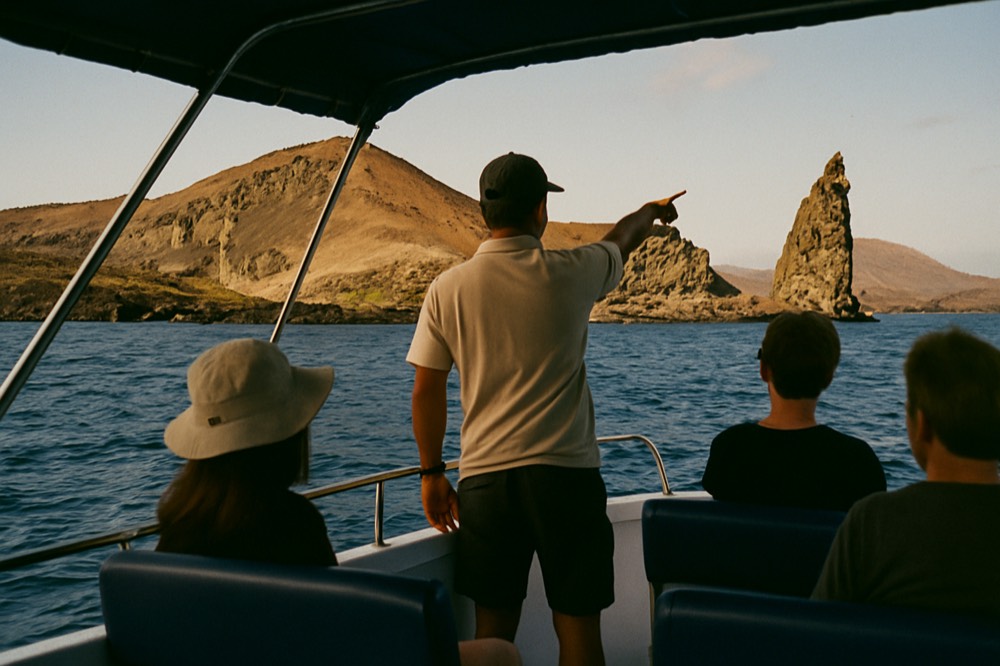
Dividing each verified listing price by its length in days is the comparison that matters, and on this roster it puts the cheapest cruise, $3,560 for five days, against the most expensive, $8,066 for seven. The per-night rate rises with the ship's tier and the remoteness of its route, not with the number of days booked. Stretching a trip from five to seven days does not raise the nightly rate, it simply multiplies it.
The pattern underneath those numbers is consistent across the roster. The 5-Day Seaman Journey at $4,500 and the 7-Day Isabela II Cruise at $6,137 are different tiers of ship at different lengths, and the only way to see what you are actually paying for is to put each fare over its nights. A traveller comparing a five-day and a seven-day option on the same vessel should expect the longer one to cost proportionally more in total, not more per night, because the daily machinery of the ship costs the same to run on every day of the trip.
This table lays out every cruise package in the site's roster with its verified listing price, stated length, rating and what the fare includes. The per-night comparison is yours to run on whichever pair interests you; printing a single derived average would hide the tier differences that actually drive the decision.
| Cruise package | Listing price (per person) | Days | Rating | Included in the fare |
|---|---|---|---|---|
| 7-Day La Pinta Cruise | from $8,066 | 7 | 5 across 48 reviews | cabin, meals, guided excursions |
| 7-Day Isabela II Cruise | from $6,137 | 7 | 4.9 across 31 reviews | cabin, meals, guided excursions |
| Isabela II Western Route, small group | from $4,604 | 5 | 5 across 24 reviews | cabin, meals, guided excursions |
| 5-Day Seaman Journey, full board | from $4,500 | 5 | no reviews yet | breakfast, lunch and dinner, hotel pickup |
| Private 5-Day Cruise, full board | from $3,560 | 5 | 4 across 1 review | breakfast, lunch and dinner |
Two honest caveats belong beside that table. The Seaman Journey and the private cruise carry thin review pools, one of them none at all, so their prices are real but their reputations are unproven. And the La Pinta's 48 reviews make it the most-reviewed cruise on the roster, which is worth knowing when the same money buys an unrated hull elsewhere. Review counts on this roster are small across the board, so print them beside the rating and weigh them accordingly: a perfect score from three people is a data point, not a verdict.
For context outside this roster, operator-published 2026 rates sit well above these figures at the luxury end. The Grace, an 8-day itinerary listed by a long-established operator, quotes 2026 rack rates from $10,950 per person in double occupancy up to $13,900 for the top suite. The Horizon, another named vessel, lists its 8-day 2026 rate at about $9,445. Industry aggregators put the broader 2026 market for an 8-day cruise at roughly $2,500 to $3,500 budget, $3,500 to $6,000 mid-range and $6,000 to $12,000 and up for luxury, per person in double occupancy, before flights and fees. Those are operator and aggregator figures, not park statistics, but they confirm the shape of the market this site's roster samples: the fares here sit in the mid-range and upper-mid band, not at the ceiling.
What Sits Outside The Package Price?
Every cruise buyer pays three things the listing price excludes: the $200 Galapagos National Park entrance fee paid in cash on arrival, the $20 Transit Control Card bought at the Quito or Guayaquil airport counter, and round-trip flights from mainland Ecuador. Add tips, wetsuit rentals and drinks, and a realistic extras budget is several hundred dollars per person on top of the fare.
The park fee is the one that catches people. It is collected in cash, in US dollars, by park rangers at Baltra or San Cristobal airport, and there is no official online prepayment portal, a point the park's own fee page states plainly. Foreign adults over 12 pay $200, children under 12 pay $100, and the rate has been in force since 1 August 2024. Half of it funds the management and conservation of the protected areas, with the remainder distributed to local municipal governments for basic services, education, sport, health and environmental sanitation. So the fee is not a tourist tax in the abstract sense; it is a direct line item into the park that is showing you the wildlife.
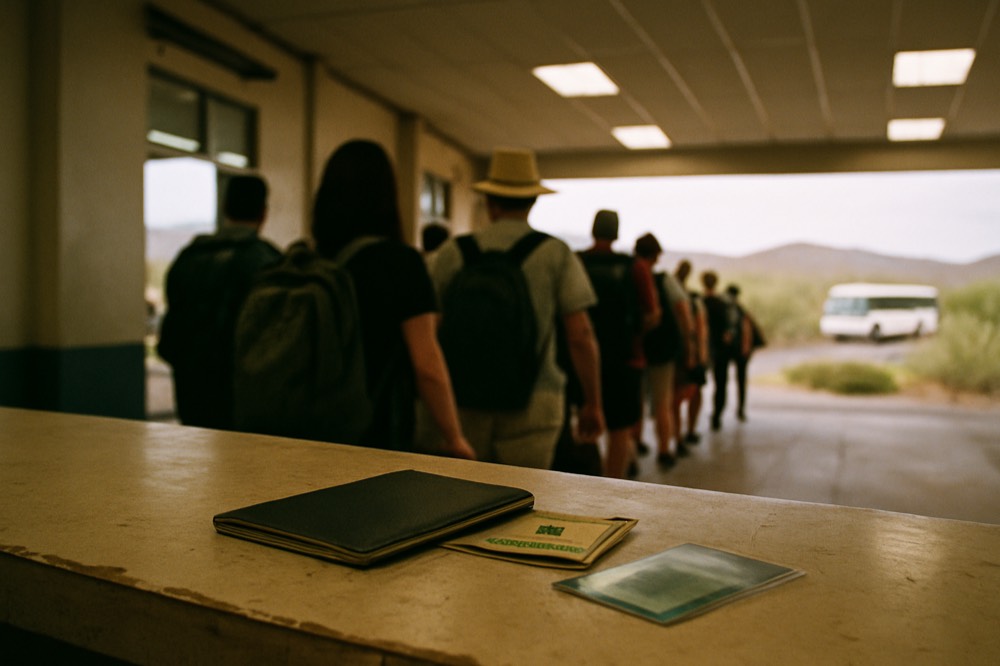
The Transit Control Card is cheaper but more procedural. It costs $20 per person and is bought at the CGREG counter at Quito or Guayaquil airport before airline check-in, according to the official CGREG FAQ. Online pre-registration exists and speeds up the counter visit, but individual travellers cannot complete the purchase online; advance purchase is a travel-agency channel only. Keep the card, because it is checked on departure as well as arrival, and losing it means explaining yourself at the airport on the way home.
This is the full extras ledger, priced from official sources where a figure exists and marked as a planning range where none does:
| Extra | Cost per person | When and where you pay it |
|---|---|---|
| Park entrance fee, foreign adult | $200 cash | To rangers at Baltra or San Cristobal on arrival |
| Park entrance fee, foreign child under 12 | $100 cash | Same |
| Transit Control Card | $20 | CGREG counter, Quito or Guayaquil, before check-in |
| Flights, mainland to Galapagos | varies, check the airline | Booked separately on most packages |
| Tips for crew and guide | planning range, budget a few hundred dollars | End of the cruise |
| Wetsuit and snorkel rental | varies by operator, sometimes charged as an extra | On board |
One roster-wide honesty note: on 33 of the 50 packages this site tracks, the listing simply does not state whether the park fee or flights are included. A null in that field means "not stated", never "not included". Ask the operator before you assume either way, because a fare that looks cheaper may be identical once the fee is added back. Travellers on recent Galapagos forums consistently report the same surprise at the end of their trips: the advertised base price and the actual credit-card statement diverge on exactly these lines, with wetsuit rentals and drinks the most common culprits, since an "optional" rental is effectively required in cool-season water.
What Actually Drives The Price Up Or Down?
Three variables explain nearly all the spread: the ship's tier, the length of the route, and whether the itinerary reaches the remote western islands. A 16-passenger permit structure set by park regulation keeps small ships small, which caps supply at exactly the point where demand is highest, and luxury tonnage commands a clear premium per night over mid-range vessels on comparable routes.
The regulatory floor under all of this is stricter than most travel writing admits. Under the park's tourism regulation, a navigable cruise permit carries at most 16 passengers and a cruise vessel at most 64. A 64-berth ship is legally a stack of four 16-passenger permits. That ceiling is why a Galapagos cabin behaves like a scarce good rather than a commodity, and why last-minute discounts are rarer here than in the Caribbean. It also explains why the fleet skews small: an operator cannot scale up a successful product by adding berths, only by adding permits, and the permits are the constrained resource. More of these guides are collected on Galapagos Islands Tour Packages.
Route remoteness is the second lever. Itineraries that reach Fernandina and the western coast of Isabela, the youngest and least visited terrain in the archipelago, cost more than central-island loops, because the crossing time is longer and the permitted visitor sites fewer. The Isabela II Western Route at $4,604 for five days and the Natural Selection Journey at $6,137 for seven are the same operator's product priced against exactly that difference, one concentrated on the northwest, the other sweeping south and west across a longer arc of islands. Neither price is arbitrary; each reflects where the ship can legally anchor and how many hours of open water separate those anchorages.
Season is the third. Demand peaks twice, March to April for foreign visitors and August for Ecuadorians, with September the annual trough, so a shoulder-season departure can price meaningfully below the same itinerary in the spring. The park's 2025 visitor report is the primary source for that pattern, and it is the reason operators quietly discount outside those windows. The cool season, June to December, is when the southeasterly trades strengthen, which means rougher water and cooler seas, and some travellers find that a fair trade for lower fares and greener highlands; others pay the spring premium precisely to avoid the swell.
Is A Longer Cruise Better Value Per Night?
Yes, in a specific and limited sense: the per-night rate does not rise with length, so a seven-day cruise costs about the same per night as a five-day one on a comparable ship, while reaching more islands for the same fixed overhead. What length buys is more route, not a cheaper day. Compare any two fares on this roster by dividing by nights and the pattern holds.
The fixed costs of a Galapagos cruise, the permit, the crew, the guide, the airport logistics, are largely sunk on day one. A longer trip spreads them across more nights, which is why the industry's own pricing rarely penalises duration. The penalty runs the other way: short itineraries carry proportionally more overhead per night, which is one reason four-day products from Santa Cruz start near $450 while a genuine five-day liveaboard starts at $3,560. The bay-tour product and the liveaboard are different experiences, but the price gap between them is a fair illustration of what a hull, a crew and a park permit cost before a single excursion is run.
The La Pinta's seven-day Darwin's Legacy itinerary is the clearest worked example on the roster. At $8,066 per person it is the most expensive package this site tracks, and in exchange it confirms stops at Santa Cruz, Isabela, Floreana, Fernandina, Rabida and Baltra. Whether that premium is worth it depends on how much you value Fernandina, which no land-based day trip can reach. You can see the full itinerary on the 7-Day La Pinta Cruise tour page, and Check availability if the dates line up with your travel window.
Travellers who have done both formats keep landing on the same trade-off. Reports on recent Galapagos travel threads describe small-ship cruises as "vastly superior" for wildlife access, while land-based travellers praise the flexibility and the lower bill. Neither is wrong; they are pricing different things, and the honest comparison is per night, not per trip. A recurring regret in those same threads is booking too short: travellers who chose four or five days often wish they had taken seven, because the remote western sites are the ones a short central loop misses, and there is no way to add them later from a hotel in Puerto Ayora.
How Do Cruise Prices Compare To Land-Based Packages?
Land-based packages on this roster run from about $180 to $400 per person per night, against cruise fares that start at $3,560 for five days and rise to $8,066 for seven, so staying ashore typically halves or better the nightly spend. A five-day land tour at $1,399 works out near $280 a night with breakfast and lunch included. The trade is cost against access, since remote sites like Fernandina are cruise-only.
The arithmetic is stark. The site's most-reviewed land package, the 5-Day Intensive 3-Islands tour at $1,399, rates 4.7 across 56 reviews, the largest review pool anywhere on the roster, and costs about $280 a night. The cheapest cruise on the roster costs $3,560 for five days. Over a week, that gap compounds into the price of the flights, the park fee and several extra days of travelling. Industry reporting puts the saving from land-based touring at mid-tier around $800 to $1,000 against comparable cruise itineraries, with luxury land-based options running 30 to 40% below top cruise luxury, and this roster's spread is consistent with that.
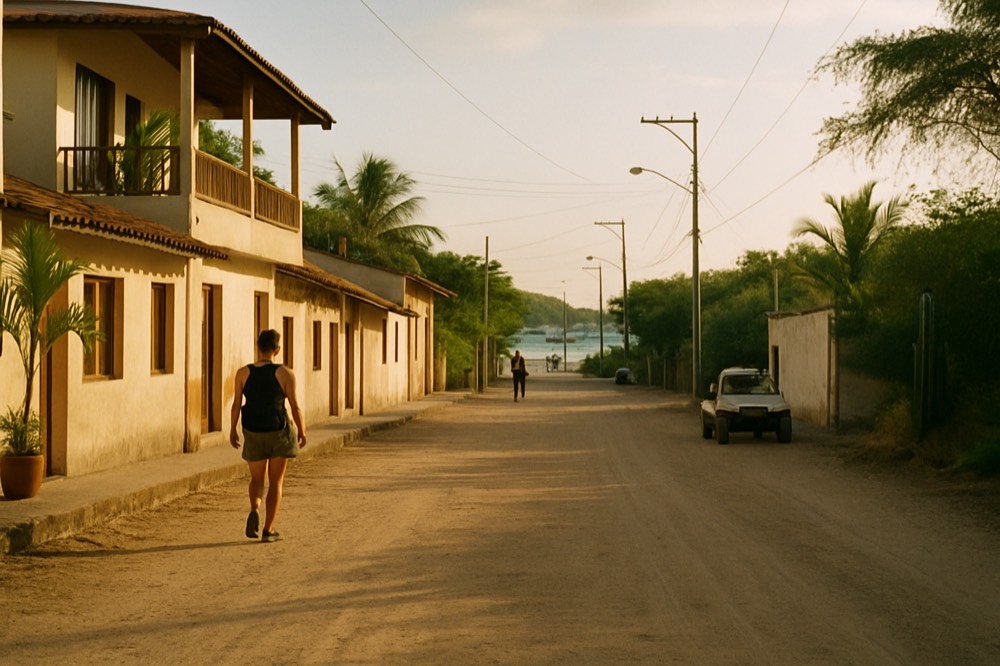
What the land-based price hides is the ferry day. Inter-island crossings are paid separately on most hopping packages, and travellers consistently report the Santa Cruz to Isabela ferry as the roughest leg of any Galapagos trip, rougher than most cruise sailing. A cruise folds every crossing into the night's fare while you sleep, waking up at a new visitor site rather than queueing at a dock with your luggage. The full breakdown of both formats, including what each includes at mealtimes, is in our Galapagos cruise versus land package comparison.
The middle path is worth naming. The Galapagos Discovery Premium Bay Tour, four days and three nights from $450 per person with all meals included, rates 4.9 across 24 reviews and functions as a low-commitment sampler of the archipelago. It is not a liveaboard, but it is the cheapest verified way on this site to test whether the islands hook you before committing thousands to a week at sea. Budget-conscious travellers should also read our guide to budget Galapagos packages before assuming a cruise is the only format on offer.
How Should You Budget For The Whole Trip?
Take the fare that matches your ship tier, then add about $300 to $500 per person in fixed extras plus your flights. A realistic mid-range week on this roster starts from the $6,137 seven-day fare, with the park fee, transit card and flights from Quito or Guayaquil added on top, so budget well above the headline number.
Budget in three layers. The first layer is the fare, which this page has laid out listing by listing. The second is the fixed extras, the $200 park fee, the $20 card and the airport transfers, which together are predictable to the dollar. The third layer is the discretionary spend, tips, rentals, drinks and souvenirs, which no listing prices for you and which travellers on recent Galapagos threads consistently report as the line item they underestimated. A cruise that quotes full board still sells soft drinks, alcohol and sometimes wetsuit rental on board, and a week of small charges adds up faster than most people expect.
The transfer costs are small but worth knowing. From Baltra airport, a free bus runs about ten minutes to the Itabaca Channel, the barge crossing costs $1, and the public bus to Puerto Ayora about $2, per the park's official arrival information. A shared taxi for the vehicle runs about $25. None of this will break a budget, but arriving without small US notes for the park fee genuinely will, since the rangers take cash only and the airport has no official prepayment portal of any kind.
One booking mechanic deserves a mention before you commit. Since August 2026, the park requires an advance QR reservation for several high-demand sites, including the Fausto Llerena tortoise centre on Santa Cruz, the Arnaldo Tupiza centre on Isabela and Las Grietas, and only agencies registered in Galapagos can make those reservations. If your package visits any of them, the operator's registration is doing real work for you, which is one quiet argument for booking through an established seller rather than assembling the trip yourself.
For a fuller treatment of the total trip budget, including how package lengths change the maths, see our Galapagos package cost guide. And if you are weighing whether the cruise premium is worth it at all, the honest answer is that it depends entirely on whether Fernandina and the western islands matter to you, because that is the one thing the cheaper format cannot sell you at any price.
If a cruise is the format you want, these are the three price points that bracket the market on this site:
Common Questions About Galapagos Cruise Costs
What Is The Average Cost Of A Galapagos Cruise?
Across the cruise packages tracked on this site, fares run from $3,560 to $8,066 per person for five to seven days, and the only honest comparison is per night: divide each fare by its length before comparing ships. The fare covers cabin, meals and guided excursions, with the park fee, transit card and flights paid on top.
What Extra Costs Are Not Included In The Cruise Fare?
The $200 Galapagos National Park entrance fee, paid in cash to rangers on arrival, the $20 Transit Control Card bought at the Quito or Guayaquil airport counter, and your flights from mainland Ecuador. On many listings the inclusion of flights and the park fee is simply not stated, so confirm with the operator before booking.
Is A Galapagos Cruise Cheaper Per Night If You Book More Days?
The per-night rate does not rise with length, so a seven-day cruise costs about the same per night as a five-day one on a comparable ship. What the extra days buy is more route and more islands, not a cheaper day. Short itineraries actually carry more fixed overhead per night.
How Does Cruise Pricing Compare With Land-Based Packages?
Land-based packages on this roster run roughly $180 to $400 per person per night, against cruise fares from $3,560 for five days up to $8,066 for seven, so staying ashore typically halves the nightly spend. The trade is access: remote sites such as Fernandina are reachable only by cruise.
When Is The Cheapest Time To Book A Galapagos Cruise?
September is the annual trough in arrivals, and demand peaks in March to April for foreign visitors and in August for Ecuadorians. Shoulder-season departures outside those windows often price below the same itinerary in peak months, and the park's own visitor statistics back the pattern.
Do You Need Cash For The Galapagos Park Fee?
Yes. The fee is collected in cash, in US dollars, by park rangers at Baltra or San Cristobal airport, and no official online prepayment portal exists. Foreign adults pay $200 and children under 12 pay $100, rates in force since 1 August 2024.