How To Do The Galapagos Cheaply?
A cost-first guide to visiting the Galapagos on a budget: which savings are real, which are myths, and what the fixed fees add up to before you book anything.
 By Oleg Galeev, Editor
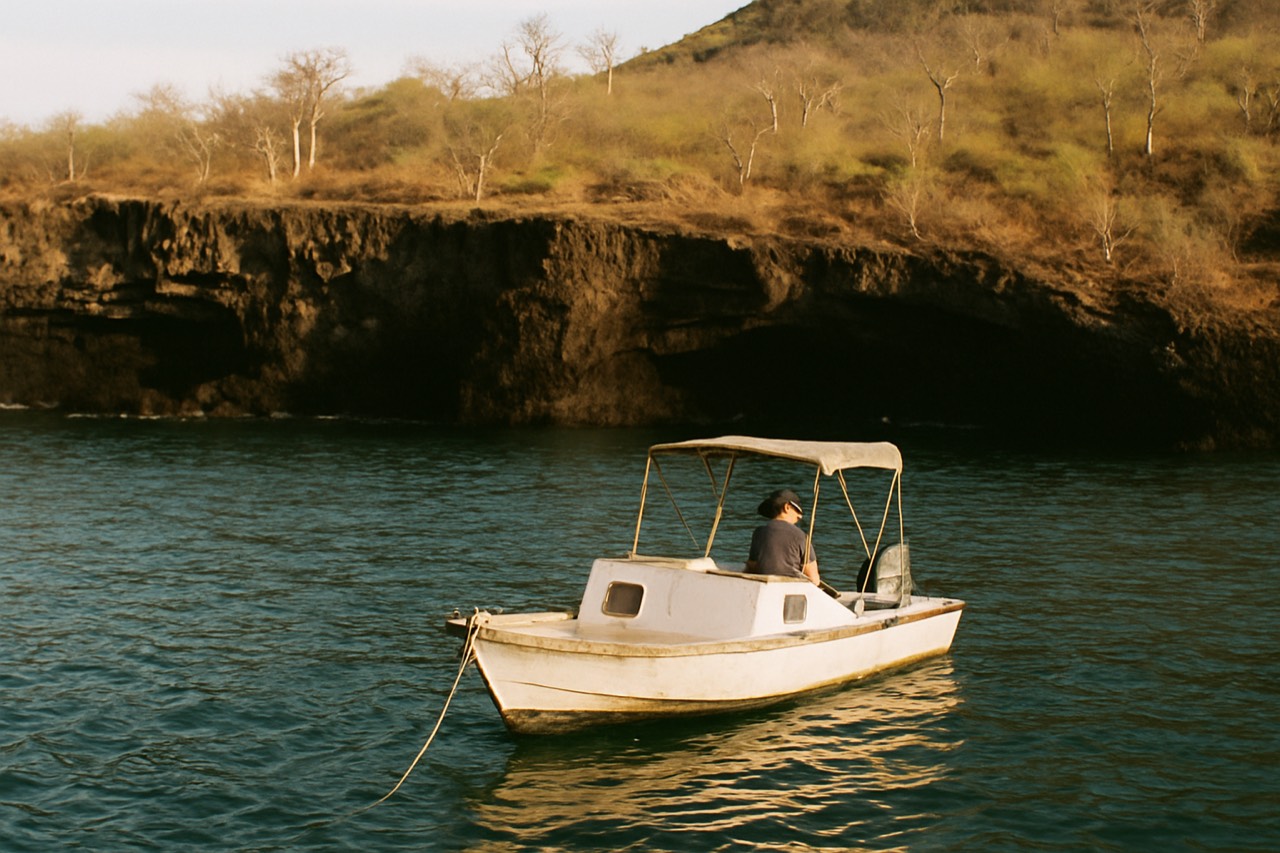
How To Do The Galapagos Cheaply?
The honest answer is that you save money in three places, in this order: last-minute cruise cabins can cut a liveaboard price dramatically, travelling in the September trough or outside the March to April foreign peak undercuts every other timing tactic, and a land-based island-hopping package from $450 per person beats almost any cruise on price. Cutting the guided landings out entirely is the one saving that costs you the trip itself.
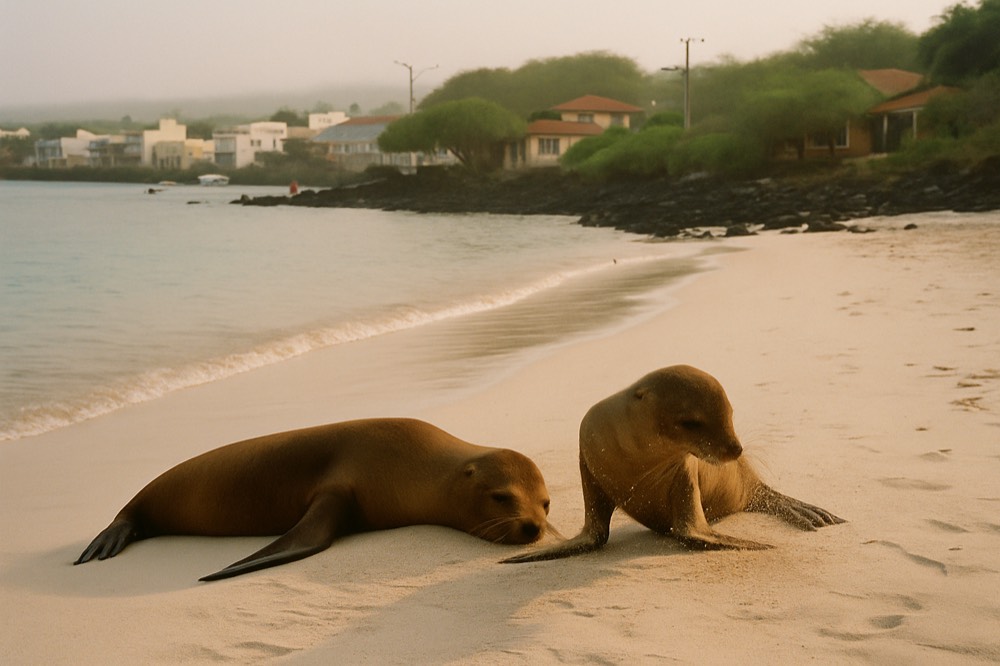
The Galapagos is expensive for reasons that have nothing to do with tour operators marking things up. It sits about 1,000 km off the South American continent, everything arrives by air or sea, only four of its 127 islands, islets and rocks are inhabited, and 97% of the land surface is protected national park where tourism happens only at authorised sites under rules set by the park directorate. Scarcity, remoteness and regulation all push the price up before a single operator quotes you a rate.
That means the savings that matter are structural, not haggling. Where you sleep, when you fly, and how you buy the boat time are the three levers, and they are not equal. A last-minute cabin in Puerto Ayora can halve a cruise fare, though it gambles your dates and itinerary. Travelling in the low season shaves the shoulder off flights and packages alike. A land-based package trades the remote western islands for a hotel room and day excursions, and the price difference is large and reliable.
What you cannot cheaply skip is the framework: the $200 park entrance fee, the $20 transit control card, the flights from Quito or Guayaquil, and the rule that visits to protected areas happen with a licensed naturalist guide. Anyone selling you a Galapagos trip without those costs is leaving them off the invoice, not making them disappear. The cheapest honest trip budgets for them up front.
For context on the price spread, our roster of 50 multi-day packages runs from $450 per person to $8,066, and the median land-based package sits far below the headline cruises. The gap between the cheapest full-board land package and a 7-day luxury liveaboard is roughly the price of a second international flight and a month of living costs. That is the size of the decision you are making when you choose how to travel there.
What Are The Fixed Costs You Cannot Avoid?
Every visitor pays the park entrance fee and the transit control card before the holiday even starts: $200 per foreign adult in cash on arrival, $20 for the card at the mainland airport, plus flights from Quito or Guayaquil. A realistic floor for fees and inter-island transport is about $230 per person on top of any package price, and you should carry clean US dollar notes for the fee because rangers collect it at the airport.
The park entrance fee is set by the provincial government and collected in cash, in US dollars, by park rangers at Baltra or San Cristobal airport. There is no online prepayment portal for it, despite what many blog posts claim, so the money has to be in your pocket when you land. Children under 12 pay $100, and nationals of CAN and Mercosur countries pay reduced rates.
The Transit Control Card is a separate $20 per person, bought at the Consejo de Gobierno counter at Quito or Guayaquil airport before airline check-in. Individual travellers can pre-register online to speed up the counter visit, but advance purchase is only available through travel agencies. You cannot fly to Galapagos on a one-way ticket either: the card system requires a return ticket between the mainland and the province, within the 60-day annual stay limit.
Here is what the unavoidable per-person spending looks like before any tour, hotel or activity is booked:
| Fixed cost | Amount | When and where you pay it |
|---|---|---|
| Park entrance fee, foreign adult | $200 | Cash, US dollars, to rangers on arrival at Baltra or San Cristobal |
| Park entrance fee, foreign child under 12 | $100 | Same, on arrival |
| Transit Control Card | $20 | CGREG counter at Quito or Guayaquil airport, before check-in |
| Itabaca Channel ferry, Baltra to Santa Cruz | $1 | On the crossing, about 10 minutes |
| Bus, Itabaca Channel to Puerto Ayora | about $2 | On the bus, about 45 minutes |
| Shared taxi pickup to Puerto Ayora | about $25 per vehicle | At the channel, up to 4 passengers |
Flights are the other fixed block and the one you have most control over. Avianca and LATAM operate the routes from both Quito and Guayaquil to Baltra and San Cristobal, and fares move constantly, so treat any figure you see online as a snapshot rather than a fact. What is fixed is the process: arrive at the mainland airport about three hours early, because biosecurity inspectors X-ray and may hand-search every bag before check-in, and the sworn goods declaration has to be handed in on arrival. Packing fresh fruit, vegetables or unprocessed plant or animal products is the classic way to lose both time and groceries at the inspection room.
If those fixed costs are already close to $300 per person before you have slept anywhere, the obvious question is what the cheapest complete package looks like. On our roster the floor is a 4-day full-board bay tour from $450, which covers accommodation, all meals and guided excursions around Santa Cruz. It is not a luxury product, but it delivers the wildlife and the guiding for less than many people spend on a weekend city break.
Is Land-Based Cheaper Than A Cruise?
Yes, and by a wide margin. Land-based island-hopping packages on our roster start at $450, with several 4-day options sitting between $689 and $1,313 per person, while the cheapest cruise package starts at $3,560 and liveaboards run to $8,066. The trade is real though: land-based trips reach the inhabited islands and their day-excursion range, while cruises reach remote sites like Fernandina that no day boat can get to.
The official visitor data backs the price instinct. Four out of five Galapagos visitors now stay on land rather than on board a vessel, a share that held steady between 2024 and 2025, and the shift is strongest at the budget end of the foreign market. Land-based travel is not the cheap workaround any more, it is how most people actually do the islands.
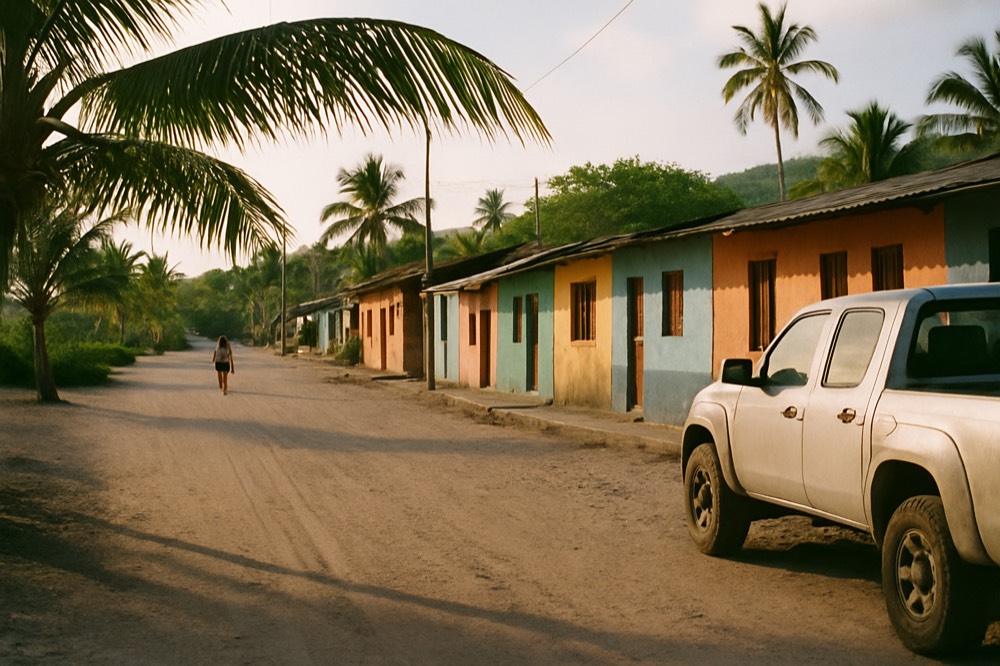
The mechanics of the saving are simple. A hotel room in Puerto Ayora or Puerto Villamil costs a fraction of a cabin night on a licensed vessel, and day excursions are bought individually, so you can mix one or two premium days among cheaper ones. A cruise bundles every night, every meal and every landing into one price, and the permit system is part of why: under the national tourism regulation, a navigable cruise operates on permits of at most 16 passengers and a vessel may carry at most 64. Cabins on those boats are a scarce, regulated product, and they are priced like one.
Here is how the budget end of the land-based market compares, using real packages from our roster:
| Package | Days | From price | Rating | Meals |
|---|---|---|---|---|
| 4-Day Bay Tour, full board | 4 | $450 | 4.9 from 24 reviews | All meals |
| 4-Day Santa Cruz Bahia, full board | 4 | $689 | 4.2 from 25 reviews | Full board |
| 4-Day Islands Express | 4 | $714 | 4.3 from 3 reviews | Breakfast only |
| Essential Budget Tour | 4 | $865 | 5 from 4 reviews | Breakfast and lunch |
| Intensive 5-Day, 3 Islands | 5 | $1,399 | 4.7 from 56 reviews | Breakfast and lunch |
Two warnings from traveller reports are worth carrying into the decision. First, the inter-island public ferries, especially Santa Cruz to Isabela, are repeatedly described as the roughest legs of a land-based trip, so budget a buffer day rather than a tight connection. Second, the day excursions add up: once you price individual day tours, accommodation and meals separately, a budget cruise can close the gap. The land-based saving is real, but only if the package already bundles the excursions you want.
The 4-day Essential Budget Tour illustrates the floor well: from $865 per person with breakfast and lunch included, it bases itself on Santa Cruz and rates 5 from 4 reviews, a small pool but a consistently pleased one. Read the stops list carefully on any budget package, because the cheapest itineraries compress travel days, and a "4-day" tour can contain barely two full excursion days.
When Is The Cheapest Time To Go?
September is the cheapest month, because it is the annual trough in arrivals and operators are filling empty beds and berths. The foreign demand peak runs March to April and the Ecuadorian peak is August, so those three windows carry the highest prices. The cool season from June to December also brings rougher seas from stronger southeasterly winds, which is part of why it is cheaper.
The seasonal price pattern is not folklore, it is in the park directorate's own visitor statistics. Foreign arrivals peak in March and April, Ecuadorian arrivals peak in August, and September is the quietest month of the year. Operators price against that curve. The trade-off is weather: the cool season brings the garúa mist to the highlands and stronger trade winds, which means choppier water on crossings and snorkelling in seas around 21.5 degrees Celsius in August and September against 25.7 in March. More of these guides are collected on Galapagos Islands Tour Packages.

| Period | Demand | Prices | Conditions |
|---|---|---|---|
| March to April | Foreign peak | Highest | Warmest air and sea, calmer seas |
| May | Shoulder | Moderate | Warm sea, thinner crowds |
| June to August | Ecuadorian peak in August | High | Cool season begins, winds strengthen |
| September | Annual trough | Lowest | Coolest sea, garúa mist, choppiest water |
| October to November | Low | Low | Cool season continues |
| December to February | Building | Moderate | Hot season returns, seas calm |
Wildlife does not take a discount, and this is where the cheap months can actually pay off. The waved albatross is on Española from March, with eggs laid mid-April to late June, so the tail of that window overlaps the May shoulder season. Marine iguanas mate from November to February, giant tortoises nest July to October, and sea lion pups appear mostly from August. The blue-footed booby is the honest exception that cheap-season sellers rarely mention: it breeds aseasonally, with no reliable month range at all, so nobody can promise you a "booby season" at any price.
One planning note for the cool season: stronger winds mean rougher small-boat legs, and travellers consistently recommend starting motion-sickness medication the night before a crossing rather than on the dock. The archipelago's own wave buoy is out of service and the nearby NOAA buoys measure tsunamis rather than swell, so nobody, including us, can quote you a wave height. Plan by season, not by statistics.
Do Last-Minute Cruise Cabins Really Save The Most?
They can, and they are the biggest discount available on a cruise, but they are a gamble rather than a plan. Walking into a Puerto Ayora agency days before departure can land a liveaboard berth at a steep reduction, yet you accept whatever itinerary, vessel and cabin are left, and in peak weeks there may be nothing. Budget cruises in the $1,250 to $2,000 range have been reported competing with land-based totals once everything is counted.
The logic is arithmetic. A cruise vessel sailing with empty berths earns nothing for those cabins, and operators discount late inventory hard rather than sail light. Traveller reports from the islands describe last-minute deals in Puerto Ayora as real but risky: the dates are fixed by someone else's cancellation, the western itineraries sell out first, and the cabin you get may be the lower-deck one near the engine that other guests declined. Reviews of small ships repeatedly flag lower-deck cabins for noise and fuel smell, so a late discount on a bad cabin is a poor trade for a week at sea.
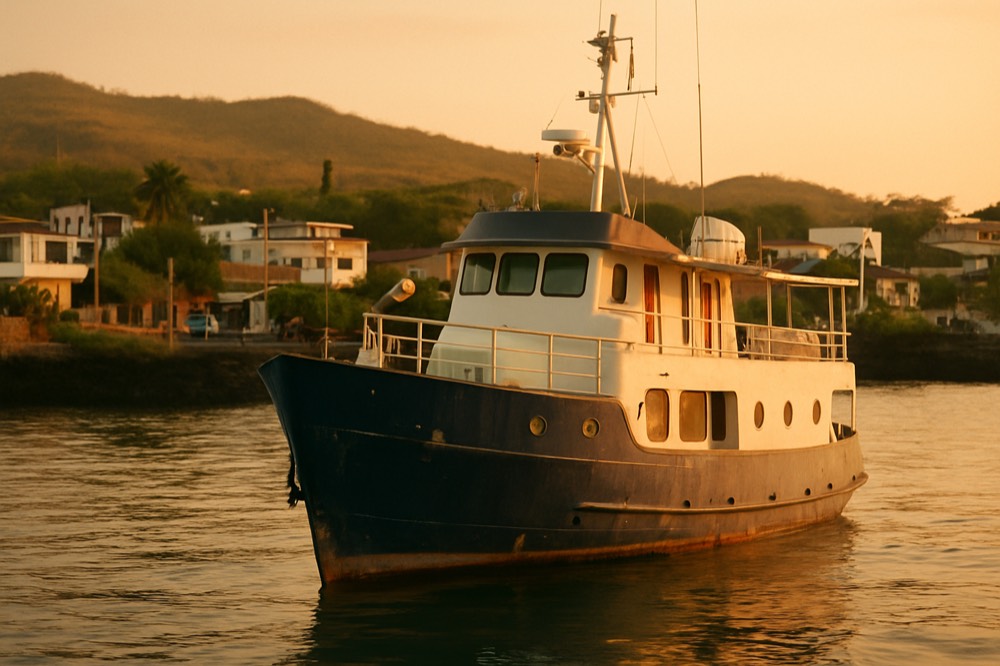
The gamble is also regulated in ways a last-minute buyer should understand. Cruise itineraries in the national park are fixed instruments: the park directorate authorises each vessel's day-by-day itinerary and it may not be modified, and only vessels under 20 passengers may change route at all outside proven force majeure. So the "flexible" last-minute deal is flexible only about which fixed itinerary you join, not about where it goes. If Fernandina or the western islands are your priority, waiting until the last week is the wrong tactic, because those are the berths that go first.
The safer version of the same discount is booking a budget cruise early in the low season, which captures the empty-boat pricing without surrendering your choice of route. On our roster, a private 5-day cruise starts at $3,560 and rates 4 from a single review, while the 7-day liveaboards run from $6,137 to $8,066. If those numbers are out of reach, the land-based packages in the previous section deliver most of the same wildlife at a quarter of the price, and that comparison is laid out in detail in our Galapagos cruise versus land package guide.
What Can You Safely Cut, And What Should You Never Cut?
Safe cuts: cabin category, trip length, restaurant meals and souvenir time. Never cut: the guided landings, the park fee cash, or your buffer days for ferry cancellations. The guided excursion is the product; the national park can only be visited with a licensed naturalist guide at authorised sites, so a "guide-free" Galapagos trip is a beach holiday with none of what you flew 1,000 km for.
The guiding requirement is not an operator upsell. The visit rules in force since August 2026 state that visits to the protected areas may only be made in the company of a park-accredited naturalist guide, except at sites expressly designated otherwise. The rules also set a two-metre minimum distance from wildlife on land and in the water, four metres when kayaking or on panga rides, and they restrict sunscreens containing oxybenzone or octinoxate during water activities. A budget trip that respects these rules costs the same as one that ignores them, so there is no saving on the wrong side of the line.
Where the safe savings sit, concretely:
- Trip length. Four days on Santa Cruz and Isabela with two full excursion days beats six days with four travel half-days. Our how many days is enough in Galapagos breakdown covers the diminishing returns after day five.
- Cabin category. On a cruise, the itinerary is identical from every cabin; pay for the route, not the window.
- Season. As above, September and October are the discount months.
- Meals you do not need. Full-board packages look expensive until you price three restaurant meals a day in Puerto Ayora, so full board is often the budget choice, not the splurge. The 4-day bay tour at $450 with all meals included is the worked example.
The cuts that look like savings and are not: skipping the transit card pre-registration to save time at the counter, arriving at the mainland airport two hours early instead of three, and booking tight same-day ferry connections to squeeze the itinerary. Each one risks a fee, a missed flight or a lost day worth more than the saving. For the full fixed-cost breakdown, see our Galapagos flights, park fee and transit card guide.
What Does A Realistic Cheap Galapagos Budget Look Like?
A defensible budget for one person is roughly $450 to $1,000 for a 4-day land-based package, plus $220 in park fees and card, plus flights, plus $100 to $200 for extras like wetsuit rental, tips and taxis. Call it the package price plus about $500 on top before international flights. A 5-day trip on the $1,399 Intensive package lands close to $2,000 all-in from Quito.
The extras are where budget trips quietly grow. Traveller reports consistently flag wetsuit and snorkel rentals as "optional" costs that are effectively required, tips for crew and guides as a real line, and drinks and Wi-Fi as unbundled charges on boats. None of these are large alone, together they are a day of budget.
Against that baseline, the value question has a clear answer for most travellers. The 4-day full-board bay tour from $450, rating 4.9 across 24 reviews, is the cheapest complete package on our roster and the one we point budget readers at first: it covers the airport meeting on Baltra, hotels, every meal and guided days around Santa Cruz, which is the core wildlife circuit a first-time visitor actually wants.
For anyone whose heart is set on a liveaboard, the honest cheap path is a short cruise in the low season rather than a long one at list price, and our Galapagos cruise deals guide covers where the discounts actually appear. What we do not recommend is the false economy of cutting the Galapagos down to a couple of unguided beach days: the park fee, the flights and the card are fixed whether you see a single giant tortoise or not, and the guided landings are the entire reason those costs exist. Cheap Galapagos is achievable, and thousands of the 79% who sleep on land every year achieve it. Cheap Galapagos without the guiding is just an expensive beach.
Common Questions About Doing The Galapagos Cheaply
How To Do The Galapagos Cheaply?
Rank your savings by size: last-minute cruise cabins if your dates are flexible, low-season travel in September or October, and a land-based package instead of a liveaboard. Land packages on our roster start at $450 per person against $3,560 for the cheapest cruise, and the fixed costs, the $200 park fee and $20 transit card, are the same either way.
What Is The Cheapest Month To Visit The Galapagos?
September. It is the annual trough in arrivals in the park directorate's statistics, and operators discount hardest when beds and berths are empty. The trade-off is the coolest sea of the year, around 21.5 degrees Celsius, and the choppiest crossings, because the cool season's southeasterly winds are at their strongest.
Can You Do The Galapagos Without A Tour?
You can visit the inhabited islands without a package, but you cannot enter the protected areas without a park-accredited naturalist guide, except at designated free-access sites. The towns, beaches near ports and some resident areas are walkable; the iconic wildlife sites are not. The guiding is a legal requirement, not an optional extra.
How Much Should I Budget On Top Of The Package Price?
About $500 per person before international flights: $200 park fee in cash, $20 transit card, airport transfers and inter-island transport, plus wetsuit and snorkel rentals, tips and incidentals. Traveller reports consistently flag rentals and tips as the costs that surprise people.
Is A Budget Cruise Better Than A Land-Based Package?
Only if the itinerary matters more than the price. A cruise reaches remote sites like Fernandina that day boats cannot, but the cheapest cruise on our roster starts at $3,560 while land packages start at $450. If your must-see list is Santa Cruz, Isabela and a couple of day excursions, land-based wins on cost every time.
Do Last-Minute Galapagos Deals Really Exist?
Yes, they are the biggest single cruise discount available, but they are a gamble: you accept whatever itinerary and cabin are unsold, and the western-island routes go first. Since park rules fix each vessel's itinerary and larger vessels cannot change route outside force majeure, the deal is only flexible about which fixed trip you join.