Why Is It So Expensive To Go To The Galapagos Islands?
The four structural reasons Galapagos trips carry a high price: capped permits, mandatory guides, mainland logistics and legally small boats, plus the fees that stack on top.
 By Oleg Galeev, Editor
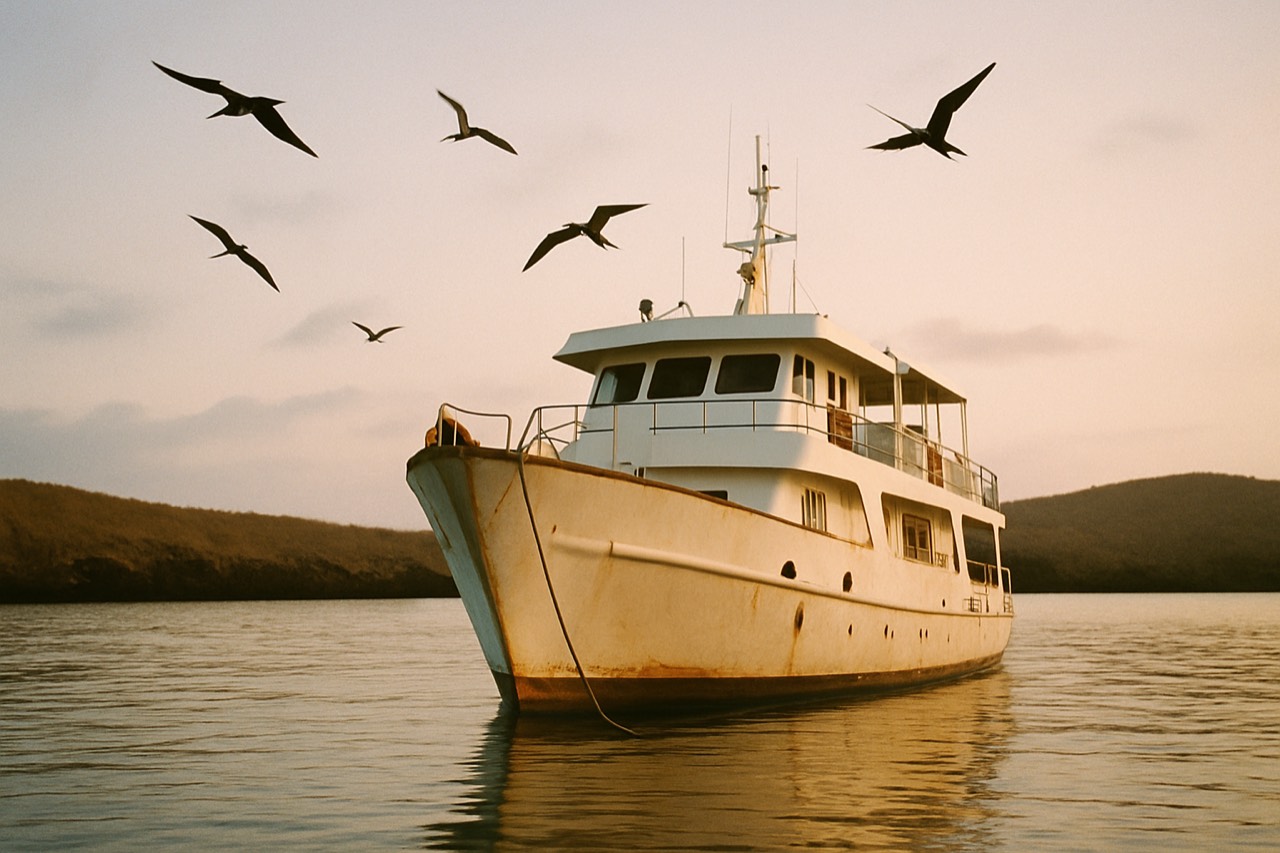
Why Is It So Expensive To Go To The Galapagos Islands?
The price has four named causes, and none of them is a tour operator's markup alone: the permit system caps how many paying guests a vessel may carry, a licensed naturalist guide is legally required on visits to protected sites, almost every consumable on the islands is shipped roughly 1,000 kilometres from the mainland, and the boats themselves run at low guest counts because the law limits a cruise vessel to 64 passengers and each permit to 16. Layer the US $200 park fee and the US $20 transit card on top, and the floor under any Galapagos trip is high before a single hotel night is booked.
The question is fair, because the numbers really are startling. Multi-day packages on this site run from $450 per person for a short land-based stay to $8,066 for a seven-day small-ship cruise. That spread is enormous, but even the cheapest end sits well above what a comparable mainland Ecuador itinerary would cost. The reason is not scarcity marketing. It is a set of rules designed to keep visitor pressure on a fragile national park low, and every one of those rules has a price attached.
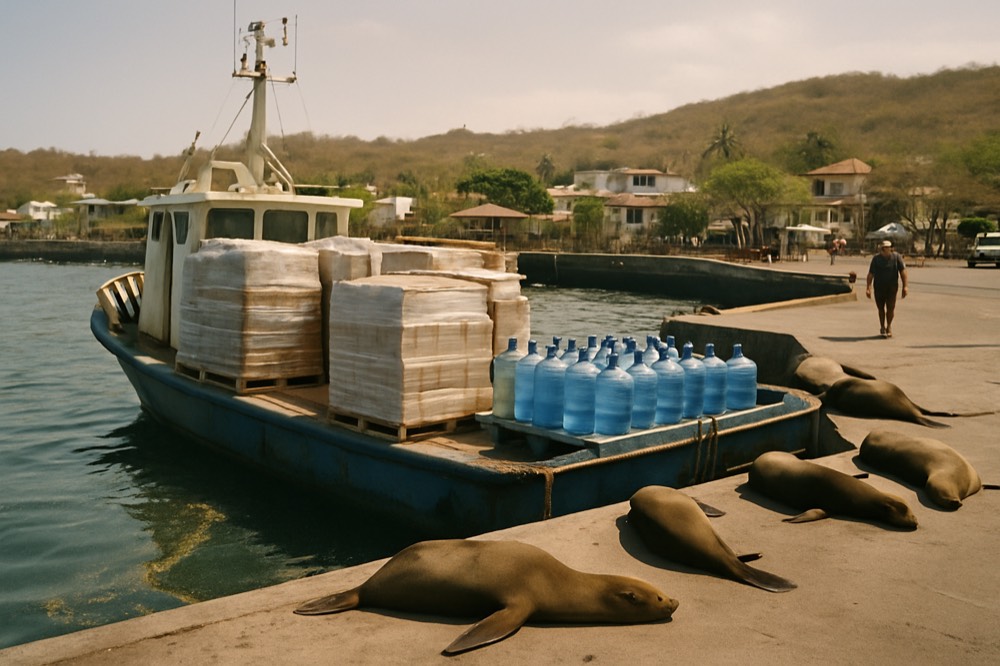
Start with the geography. The archipelago lies about 1,000 km from the South American continent, and 97% of the emerged land was declared national park in 1959, with human settlement restricted to the remaining 3% on four inhabited islands. There is no road, no ferry from the mainland and no local farming industry at scale. Everything a hotel, restaurant or tour boat consumes, from rice and diesel to bed sheets and outboard parts, arrives by air or sea from Quito, Guayaquil or international suppliers. Freight costs land on every plate and every room night.
Then add the visitor management. The park authorises exactly 176 visitor sites, 91 marine and 85 terrestrial, and tourist activity happens only at those sites, in the company of a licensed guide. The rules in force since 12 August 2026, under Resolución MAE-PNG/DIR-2026-0044-RM, make guided visits compulsory at protected areas. You are not paying for a guide because the operator wants one. You are paying because the law requires one.
For readers comparing the two broad formats, the split is worth knowing: 79% of Galapagos visitors stay on land and only 21% stay on board a vessel, unchanged between 2024 and 2025 according to the park's annual visitor report. Land-based trips are the cheaper format, and this site's guide to Galapagos package costs breaks the two budgets down line by line.
If you want to see the actual price floor, these three packages bracket the market, from a short full-board land stay to a seven-day small-ship cruise.
The Permit System Caps How Many Guests A Boat Can Carry
Ecuador caps Galapagos boat capacity through its special tourism regulation for protected areas: a navigable cruise may carry at most 16 passengers per permit and 64 per vessel, while liveaboard dive cruises and day tours are each limited to 16 guests, and day dive tours face the strictest limit of just 12 passengers. A ship's cabin count is therefore not a marketing choice, it is a stack of permits: a 64-berth vessel is running four 16-passenger permits. Fewer permitted guests per departure means each one carries a larger share of the crew, fuel, maintenance and park-authorisation costs, and that share is built into the price of every berth sold.
The figures come from the Reglamento Especial de Turismo en Áreas Naturales Protegidas, Decreto Ejecutivo 827, article 33, which sets passenger limits per tourism modality. The same regulation adds that new tourism modalities in the park and marine reserve may not run on vessels carrying more than sixteen passengers. The intent is explicit: keep groups physically small at the visitor sites, because the wildlife and the trails cannot absorb mass tourism.
This is the single biggest structural cost difference between a Galapagos boat and a Caribbean or Mediterranean cruise. A conventional cruise ship spreads its operating costs across two or three thousand passengers. A Galapagos vessel spreads them across a few dozen at most, while still carrying a full crew, a licensed naturalist guide team and a compliance burden that includes fixed, day-by-day itineraries approved by the park.
The itinerary rules compound the cost. The park's management plan contemplates vessels of up to 100 passengers, but only vessels under 20 passengers may change itinerary at all, and larger ships may deviate only in proven force majeure. A real 2021 park resolution authorising a vessel's itinerary states that it may not be modified "under any concept" without express park authorisation. Operators cannot reposition a ship to chase demand, so empty berths on a fixed departure are simply lost revenue, and pricing reflects that risk.
There is a second-order effect worth understanding. Because itineraries are locked, operators must plan fuel, provisions and crew months ahead against a departure that cannot be reshaped. That planning cost, plus the permit cost itself, is why two nearly identical seven-day routes can differ by thousands of dollars: one is running on a 16-passenger permit stack with a premium guide team, the other on a larger vessel amortising four permits at once. Our Galapagos cruise itineraries guide explains what those fixed routes actually look like.
A Licensed Guide Is Required On Every Landing
Under the visit rules in force since 12 August 2026, visits to Galapagos protected areas may be made only in the company of a DPNG-accredited Galapagos naturalist guide, except at sites the park has expressly designated as not requiring one. Guides are licensed and trained by the park directorate itself, which runs periodic scientific briefings for them. That payroll sits on every departure, every day, and it is a legal cost, not an optional extra.**
The guide requirement is the part of the price visitors most often underestimate. On a cruise, the naturalist guide is with the group from the airport pickup onward; the park's own arrival page states that a cruise guest is met at Baltra by a naturalist guide. On a land-based package, the guide appears at every visitor site, on every day excursion. Either way, a licensed professional's daily rate is embedded in what you pay, and Galapagos guide licensing is a scarce qualification held by a limited number of residents.
The rules the guide enforces also have hardware costs. The 2026 resolution sets a minimum distance of two metres from wildlife while walking, snorkelling or diving, camera gear included, four metres from shore and animals during kayaking and panga rides, and 100 metres from whales and 50 metres from dolphins, doubled when calves are present, with no more than 25 minutes watching one group. Group sizes at sites are managed, visiting hours run 06h00 to 18h00, and six popular sites, including the Fausto Llerena tortoise centre and Las Grietas, now require an advance QR reservation booked through a registered Galapagos agency. Complying with all of this costs an operator real money in staff, systems and scheduling.
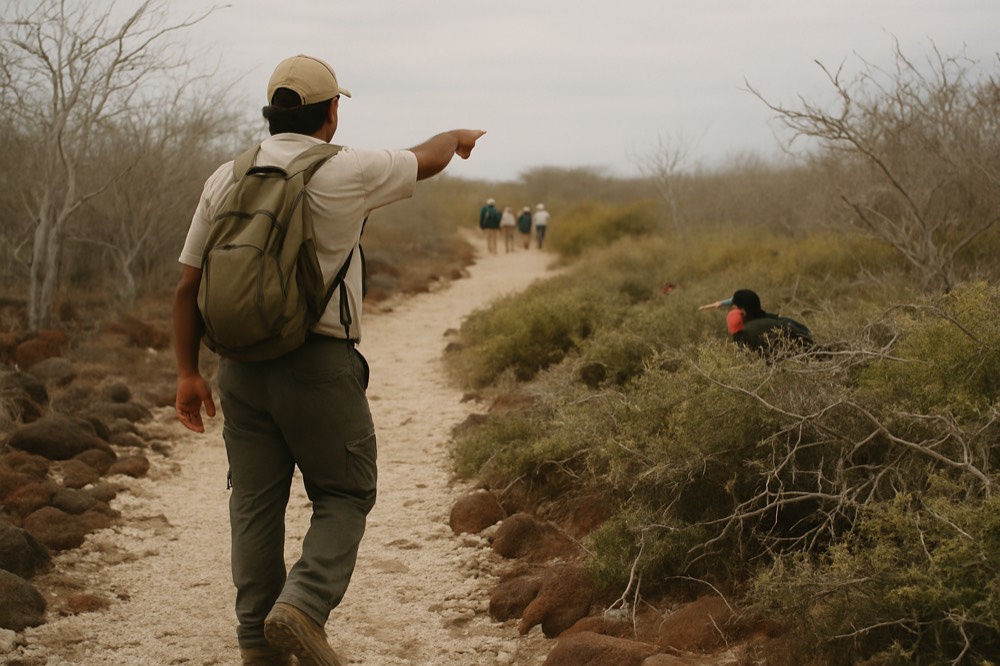
Is the guide worth it? Almost every traveller report says yes, and the reason is practical: the guide is the difference between seeing animals and understanding what you are seeing. The park briefs its guides scientifically for exactly this purpose. When you compare package prices, the guide line is one of the few where paying more genuinely buys more, which is worth weighing against the budget formats compared in our budget Galapagos packages guide.
Everything On The Islands Arrives From The Mainland
The archipelago sits roughly 1,000 km from the continent, has four inhabited islands and no large-scale agriculture or industry, so nearly all food, fuel, building materials and boat parts are freighted in by air or sea from Quito, Guayaquil or international suppliers. Every hotel rate, restaurant bill and tour price on the islands carries that freight cost inside it, and there is no local supply chain that could undercut it, because the biosecurity rules that protect the park are the same rules that keep local production small.**
The biosecurity system is part of the freight bill, and it is deliberately strict. The Galapagos Biosecurity Agency inspects all checked and carry-on baggage at the mainland departure airports in Quito and Guayaquil, and again on arrival, to keep invasive species out. Fresh produce and other unprocessed plant and animal products are restricted or prohibited under the agency's colour-coded product list. The inspection protects the ecosystem, but it also means the islands cannot simply grow or raise their own supply at scale: agriculture is heavily constrained, and much of what is consumed arrives on the same constrained air and sea routes as the tourists. The wider set of guides lives on Galapagos Islands Tour Packages.
Fuel is the sharpest example. Boat engines, generators, island transport and water taxis all run on fuel shipped in and stored on small islands, at prices well above mainland Ecuador. A cruise vessel burning fuel for a fixed seven-day loop around remote western islands like Fernandina, which land-based day trips cannot reach, has an energy cost per guest that no mainland tour operator faces. Traveller reports consistently note that inter-island logistics, ferries and day boats included, are among the priciest line items of a land-based trip.
Labour costs follow the same pattern. Staff on the islands must be flown in and out, housed and fed by the operator, and Ecuador's special regime law caps tourist stays at 60 days per year for visitors, which reflects how tightly the whole economy is managed. The result is a small, permanent tourism workforce serving a market of 290,404 arrivals in 2025, up 4% on 2024, with demand peaking twice a year, in March to April for foreign visitors and August for Ecuadorians. Peak-season pricing is not greed; it is a small fixed supply meeting a concentrated demand curve.
| Cost driver | Why it raises the price | Who pays it |
|---|---|---|
| Freight from the mainland (about 1,000 km) | All food, fuel and supplies are imported | Every hotel, meal and tour price |
| Biosecurity inspection and product restrictions | Limits local agriculture and supply | Island food and goods prices |
| Licensed naturalist guide on every visit | Legally required, scarce qualification | Every package price |
| Permit caps: 16 per permit, 64 per vessel | Fewer guests share fixed operating costs | Every cruise berth |
| Fixed itineraries that cannot be modified | Empty berths cannot be recovered by repositioning | Cruise pricing and yield management |
| Peak demand in March to April and August | Small supply meets concentrated demand | Peak-season rates |
Flights, Fees And The Extras That Stack On Top
The two mandatory extras are the US $200 park entrance fee for foreign adults, paid in cash US dollars to park rangers on arrival at Baltra or San Cristóbal, and the US $20 Transit Control Card, bought at the Consejo de Gobierno counter at Quito or Guayaquil airport before check-in. Neither is included in most package prices, and no official online prepayment portal exists for the park fee. Add mainland-to-island flights, tips, wetsuit and snorkel rentals and drinks, and the real total is routinely well above the advertised base price.**
The fee mechanics are worth getting right, because a lot of the web gets them wrong. The park fee is collected in cash, on arrival, by rangers at the two airports; you cannot prepay it online, and cards are not reliably accepted, so travellers should carry clean US notes. The Transit Control Card is bought at the CGREG counter at Quito or Guayaquil airport before airline check-in; free online pre-registration speeds up the counter visit, but advance purchase in the ordinary sense is limited to travel agencies, and the card is paid for each separate trip. The official CGREG frequently-asked-questions page sets out both the $20 cost and the counter process, and the park's official fee page lists the full entrance-fee schedule, which has applied since 1 August 2024.
Flights are the other big variable, and this site does not publish fares as fact because they move constantly. What is stable is the structure: Avianca and LATAM operate the routes from Quito and Guayaquil to Baltra and San Cristóbal, a third gateway from Cuenca opened in 2026 with two weekly frequencies, and the airport arrival advice from the authorities is three hours before the flight, because of the biosecurity and transit-control processing. Travellers repeatedly report that the flights alone can rival a short land-based package in cost.
The hidden extras are well documented in recent traveller reports: wetsuit and snorkel gear rentals that are described as optional but effectively expected, drinks and Wi-Fi on board, crew and guide tips, and inter-island ferries on land-based routes. One repeatedly given piece of advice is to budget the $200 park fee in cash before landing, because card payment is not dependable at the ranger desk. Our Galapagos flights, park fee and transit card guide walks through every fixed cost in order.
| Fixed extra | Amount | Where and how it is paid |
|---|---|---|
| Park entrance fee, foreign adult (12+) | US $200 | Cash, US dollars, to park rangers on arrival at Baltra or San Cristóbal |
| Park entrance fee, foreign child (under 12) | US $100 | Same, on arrival |
| Transit Control Card | US $20 per person, per trip | CGREG counter at Quito or Guayaquil airport, before airline check-in; free online pre-registration speeds it up |
| Mainland-to-island flights | Not published as fact, fares are volatile | Booked separately on most packages |
| Itabaca Channel barge, Baltra to Santa Cruz | US $1.00, about 10 minutes | Paid at the crossing, after the free airport bus |
| Public bus, Itabaca Channel to Puerto Ayora | About US $2, about 45 minutes | Paid on board |
The budget floor shows how far the entry point has come down. The 4-Day Santa Cruz Bahia Tour with Full Board runs from $689 per person, includes all meals, rates 4.2 across 25 reviews and offers free cancellation, and it is a useful benchmark for what a short, fully catered land-based stay actually costs once the mandatory extras are added.
Why Land-Based Packages Cost Less Than Cruises
Four out of five Galapagos visitors, 79%, stay on land rather than on a vessel, and the land-based format avoids the most expensive structural costs: it uses public ferries and day boats instead of a liveaboard running a fixed, fuel-heavy loop, and it spreads guide costs across individual day excursions rather than a whole voyage. That is why land-based packages on this site start in the hundreds of dollars per person while the cruise floor sits in the thousands.**
The trade-off is real, though. Land-based trips reach the inhabited islands and their nearby sites, but remote western highlights like Fernandina are effectively cruise-only, because no day boat from a populated port gets there. Traveller reports split predictably: some who have done both say the cruise was vastly superior for wildlife and remoteness, others preferred the flexibility and freedom of staying ashore, and the cost difference is often the deciding factor. The comparison is laid out in full in our Galapagos cruise versus land package guide.
The price gap narrows more than people expect once everything is counted. Budget cruise berths in the roughly $1,250 to $2,000 range can end up close to a land-based total once the land trip's ferries, day excursions, hotels and meals are added, and the cruise has most of those costs already inside the fare. What the cruise cannot avoid is the permit stack: even the most affordable liveaboard is running on 16-passenger permits with a full crew and guide team aboard, which is why the cruise floor stays high.
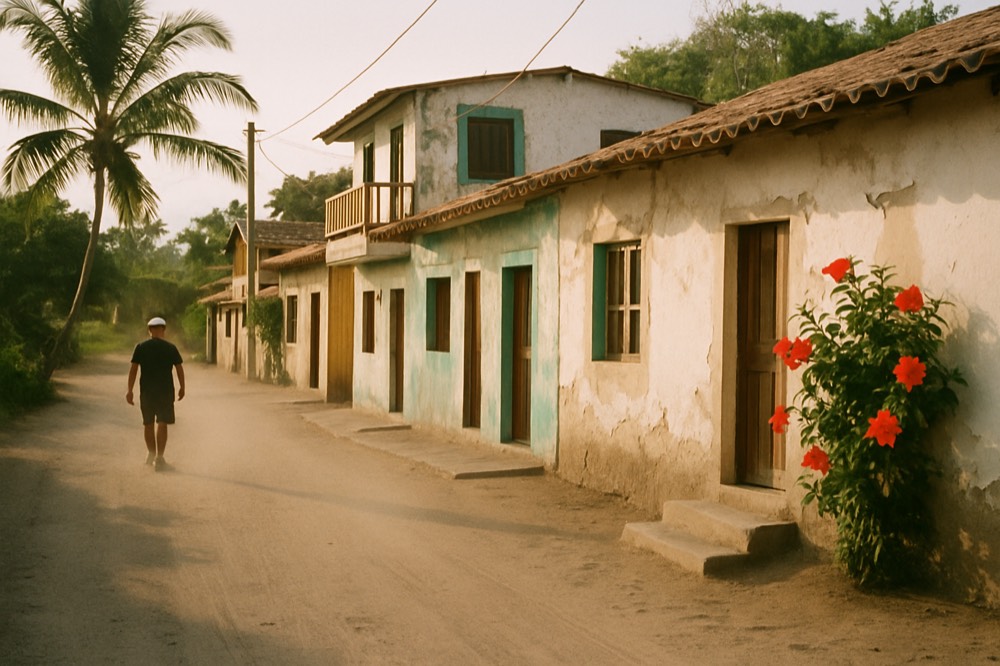
For a mid-priced sense of the land format, the 4-Day Bay Tour package, officially the Galapagos Discovery Premium Bay Tour, runs from $450 per person with all meals included, rates 4.9 across 24 reviews and covers Santa Cruz, with arrival through the airport island of Baltra. It sits at the value end of the short-island-hopping family while still delivering guided landings at authorised sites.
Can The Price Ever Come Down?
Yes, in three honest ways: travel in the shoulder months rather than the March to April and August peaks, choose a land-based package over a liveaboard, and book a short four-day itinerary rather than a seven-day loop, since the per-day cost of the mandatory extras, the $200 park fee and the $20 transit card, is spread over fewer days but the base package price drops sharply. September is the annual demand trough, and the park's own arrival data shows it.**
None of those moves breaks the law of the price floor. The permit caps, the guide requirement and the freight costs do not flex with season, so even a September land-based trip will never be cheap in absolute terms. What flexes is the operator's margin and the accommodation rate, and those move enough to matter: the same four-day package can differ meaningfully between March and September.
The one thing not to do is chase last-minute deals without understanding the risk. Travellers report that last-minute cruise berths are sometimes available in Puerto Ayora at steep discounts, but the dates, the vessel and the itinerary are what is left, not what you chose, and on a big ship the itinerary cannot be changed for you. A discounted berth on a route that misses the sites you flew across the world for is not a saving.
The second band of packages below brackets the realistic floor again, from the short full-board land stay to the premium seven-day cruise, so you can see what each structural tier costs at its entry point.
Common Questions About Galapagos Trip Costs
Why Is It So Expensive To Go To The Galapagos Islands?
Because four structural costs are fixed by law and geography: permits cap a cruise at 16 passengers per permit and 64 per vessel, a licensed naturalist guide is compulsory on visits to protected areas, nearly everything consumed on the islands is freighted roughly 1,000 km from the mainland, and fixed itineraries prevent operators from recovering empty berths. The US $200 park fee and US $20 transit card sit on top.
Is The $200 Galapagos Park Fee Included In Package Prices?
Usually not. On most packages the fee is extra and must be paid in cash US dollars to park rangers on arrival at Baltra or San Cristóbal airport. There is no official online prepayment portal, so carry clean notes. Children under 12 pay $100 and children under 2 are exempt.
Do I Have To Pay For A Guide, Or Can I Explore On My Own?
Visits to protected areas require a DPNG-accredited naturalist guide under the visit rules in force since 12 August 2026, except at sites the park has expressly designated as not requiring one. Towns and a few free-access recreational areas can be explored independently, but the wildlife sites that define the trip cannot.
Are Land-Based Packages Cheaper Than Galapagos Cruises?
Generally yes. The cruise floor on this site sits in the thousands of dollars per person because of permit and crew costs, while land-based packages start in the hundreds. The gap narrows once you add the land trip's ferries, day excursions and meals, but 79% of visitors stay on land, largely for this reason.
What Is The Cheapest Way To Do The Galapagos?
A short land-based package in the shoulder months, outside the March to April and August peaks. Four-day full-board packages start from $450 to $689 per person on this site, and September is the annual demand trough. The park fee, transit card and flights remain fixed costs on top of any package.
Why Do Galapagos Cruises Cost So Much More Per Day Than The Boat Looks Worth?
Because the price is not the cabin, it is the permit stack, the guide team, the fuel for a fixed route to remote islands, and the inability to reposition or discount recoverably. A 64-berth vessel runs four 16-passenger permits and cannot change itinerary, so every departure must carry its full cost.