Galapagos Packing List For A Cruise: What Actually Fits In A Small-Ship Cabin
A Galapagos cruise compresses a week of hiking, snorkelling and Zodiac landings into a cabin the size of a large wardrobe. This packing list covers what the boat supplies, what it charges for, and what the park rules say you cannot bring.
Short answer
Pack soft-sided luggage, quick-dry clothing in layers, reef-safe sunscreen without oxybenzone or octinoxate, personal snorkel gear, and $220 per person in clean US cash for the $200 park fee and $20 transit card. Cabins are small, wet landings happen twice a day, and the cool season is roughly 4 degrees Celsius colder in the water than March.
A Galapagos cruise is not a hotel holiday with a boat attached. The cabin is small, storage is a few shelves and a half-height closet, and the day starts with a wet landing on a volcanic beach before breakfast. The archipelago also runs two seasons at once in a single week: the hot season from January to May and the cool, garúa-damp season from June to December, defined by the Charles Darwin Foundation's climatology record. Packing for all of it in one soft bag is the whole skill.
The rules matter as much as the clothing. The national park restricts sunscreens containing oxybenzone or octinoxate during water activities, biosecurity inspectors open your bags on the mainland before you fly, and the $200 entrance fee is collected in cash, in US dollars, by rangers at the airport. None of that is on a typical tropical packing list, and all of it is on this one, along with what a liveaboard actually supplies and where it quietly charges extra.
What Belongs On The Core Galapagos Packing List?
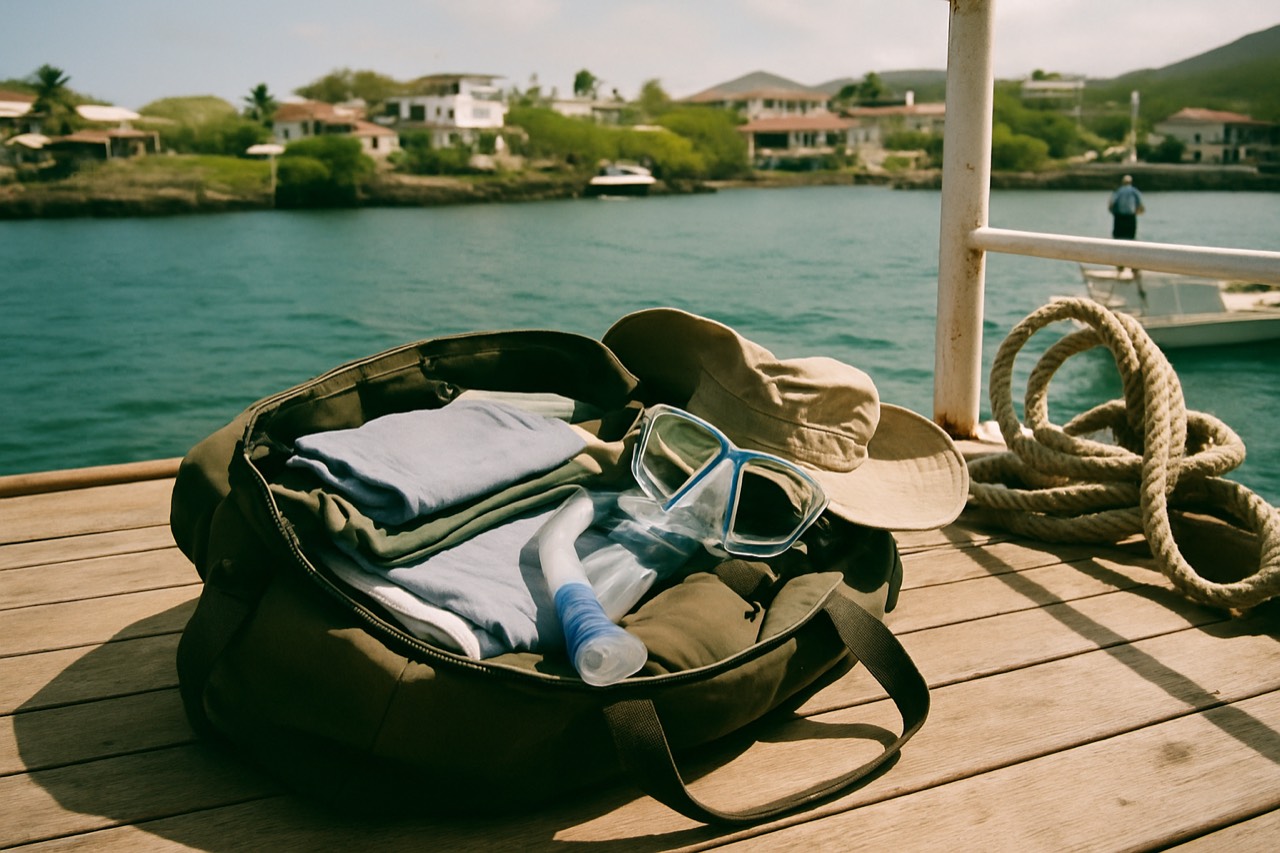
The core list is a soft duffel or backpack, not a hard suitcase; quick-dry layers for two seasons; a wide-brimmed hat; reef-safe sunscreen; personal snorkel gear if you own it; seasickness medication started the night before; and $220 per person in clean US cash for the park fee and transit card. Everything else is refinement. Most small-ship cabins offer a shelf, a small closet and under-bed storage, and hard shells do not fit them.
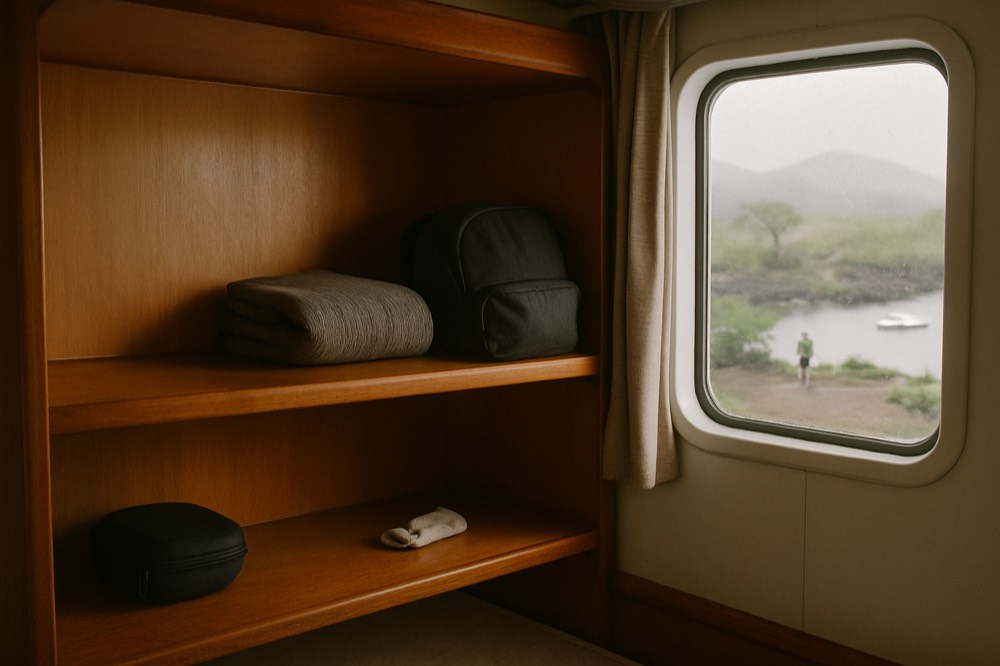
Start with the bag itself. Inter-island flights and small-boat transfers both punish rigid luggage, and crew members hand bags down narrow companionways on many vessels. A collapsible duffel packs flat when empty, which matters when your cabin measures a few square metres. If your itinerary includes a flight between islands, ask the operator for the checked-weight allowance in writing before you pack; allowances vary by carrier and no single verified figure applies across the archipelago.
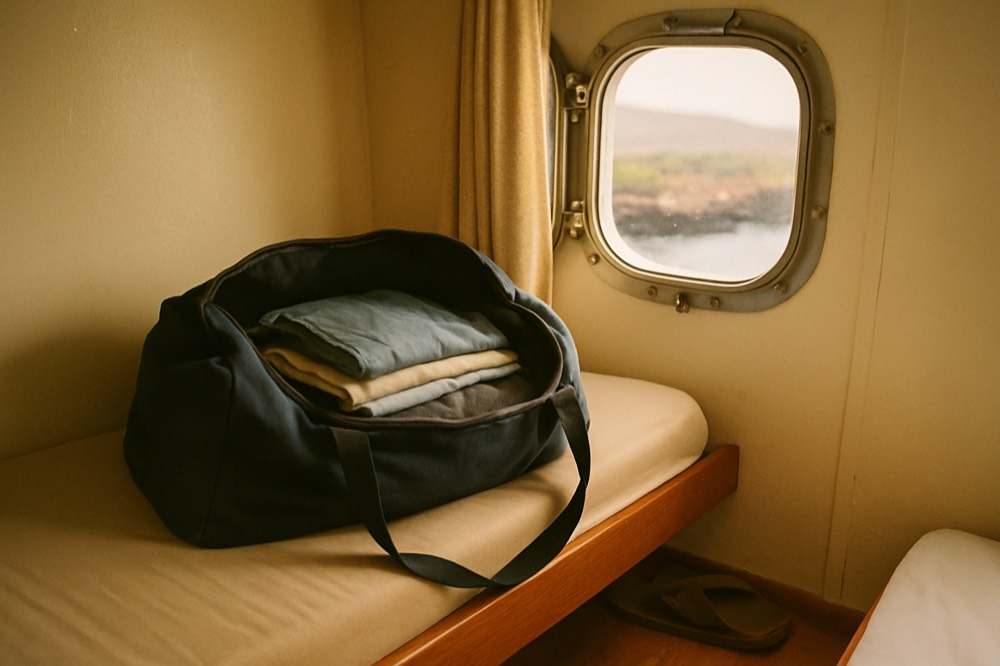
Clothing follows the layering logic of a place that swings from a March mean maximum of 31.1 °C to a September mean maximum of 24.3 °C at Puerto Ayora, with sea temperature dropping from 25.7 °C in March to 21.5 °C in August and September. Two or three quick-dry shirts, one warm layer, a light rain shell for the garúa season, and swimwear that dries overnight cover the range. Laundry is rarely available on a five- to eight-day sailing, so plan on hand-washing in the cabin sink and drying on the rail.
| Category | Bring | Why it earns its space |
|---|---|---|
| Bag | Soft duffel or backpack, 40-60 L | Fits cabin shelves and boat transfers; hard shells do not |
| Tops | 3-4 quick-dry shirts, 1 long-sleeve | Hand-wash cycle; long sleeves for equatorial sun |
| Layers | 1 fleece or light insulated jacket | Cool-season mornings on deck and evening Zodiac rides |
| Outer | Light rain shell | Garúa drizzle in the June-to-December season |
| Bottoms | 2 quick-dry trousers or leggings, shorts | Wet landings and trail walks |
| Swim | 2 swimsuits, rash guard | One dries while you wear the other |
| Feet | Broken-in walking shoes, sandals with heel strap | Lava trails are sharp; wet landings need grip |
| Head | Wide-brim hat with retention cord, sunglasses | Wind on open decks takes hats overboard |
The retention cord on the hat is not a joke; open-deck crossings and panga rides generate steady wind, and hats are the most commonly lost item on small ships. Sunglasses on a strap earn their place for the same reason. For more on how the seasons change the experience, see our guide to the best time for a Galapagos cruise.
How Much Can You Actually Pack For A Small-Ship Cabin?
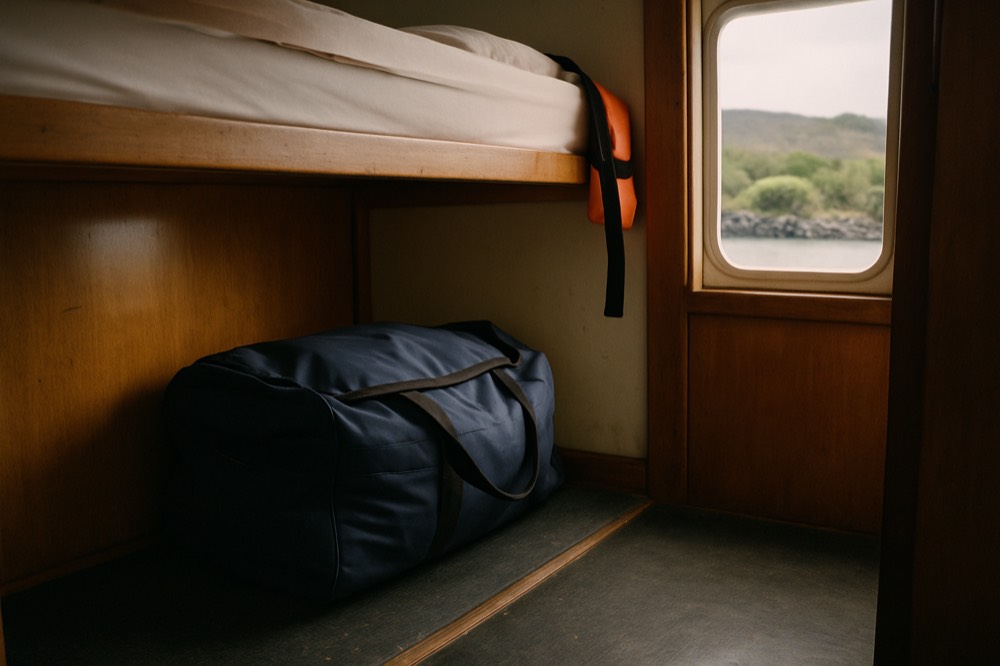
Plan on one soft bag per person of roughly 40 to 60 litres, plus a small daypack, and treat anything beyond that as a liability rather than a bonus. Cabins on liveaboards typically offer a half-closet, two shelves and under-bed space, and on many vessels the bag itself is stored under the berth. There is no single published weight limit for the archipelago, so the operator's stated allowance governs.
The honest constraint is cubic volume, not kilograms. A 48-litre duffel holds the entire list above with room for the items most people forget: a dry bag for Zodiac landings, a spare pair of prescription glasses or contacts, and a small quick-dry towel even though most boats supply cabin towels. What it will not hold is a second wardrobe, and it should not. Every item you pack competes with the one thing a liveaboard genuinely lacks, which is floor space.
If you are comparing how a cruise cabin changes the packing maths against a hotel-based trip, the difference is bigger than storage: a land package means you can buy forgotten items in Puerto Ayora or Puerto Baquerizo Moreno, while a liveaboard that has already left port cannot. Our cruise versus land package comparison breaks down the trade-offs beyond luggage.
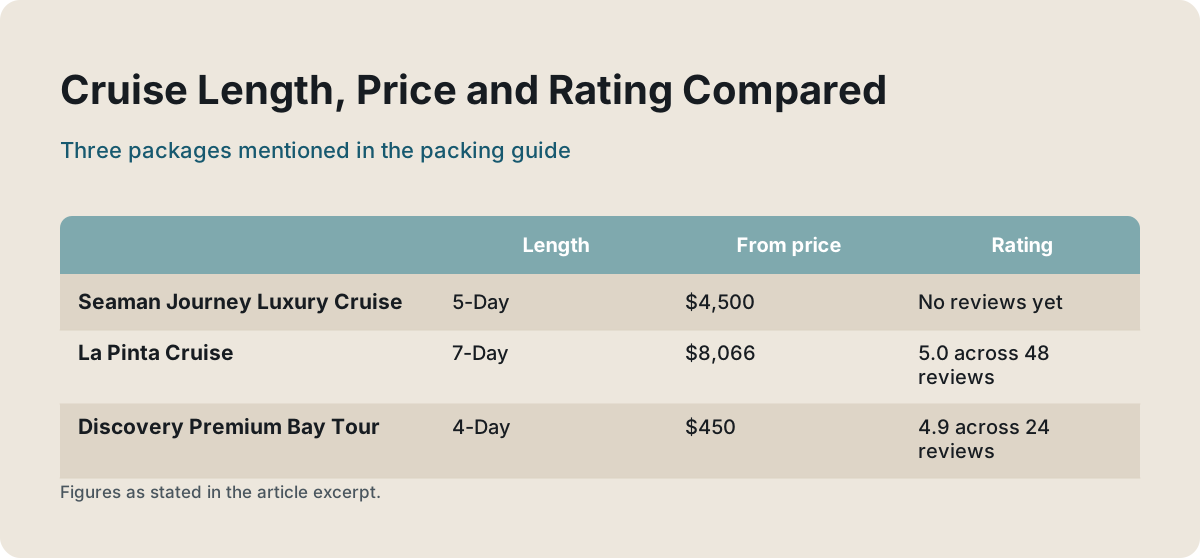
For travellers who want the cabin experience without owning any of the gear, full-board products shift the calculation. The 5-Day Seaman Journey Luxury Cruise runs from $4,500 per person with breakfast, lunch and dinner included and hotel pickup, though it has no reviews yet, so weigh the itinerary itself rather than any social proof. It is one of the packages where the operator's equipment list is worth requesting before you shop.
Among the three, the contrast is instructive for packing. The 7-Day La Pinta Cruise, rated 5.0 across 48 reviews and from $8,066, is a longer, more remote itinerary where laundry stays unavailable for a full week and the western waters run cooler. The 4-Day Discovery Premium Bay Tour, rated 4.9 across 24 reviews and from $450, is a short, Santa Cruz-based product where a lighter bag genuinely suffices. Longer and more remote means packing more deliberately, not packing more.
What Clothing Handles Wet Landings And Both Seasons?
Wet landings mean you step from the panga into ankle-deep water, so every shore outfit needs shoes that can get wet and dry fast, and quick-dry fabrics throughout. The two-season problem is solved with layers: swimwear and a rash guard under everything in the hot season, a fleece and rain shell over everything in the cool season, and a wetsuit question to settle before you leave home.
A wet landing is the standard arrival at many beaches in the national park. You swing your legs over the side of the inflatable, step into shallow surf, and walk ashore. Sandals with a heel strap, water shoes or trail runners you do not mind soaking are the footwear that works; flip-flops are the footwear that does not. Dry landings at rocky sites need closed shoes with grip, because lava is abrasive and occasionally sharp.
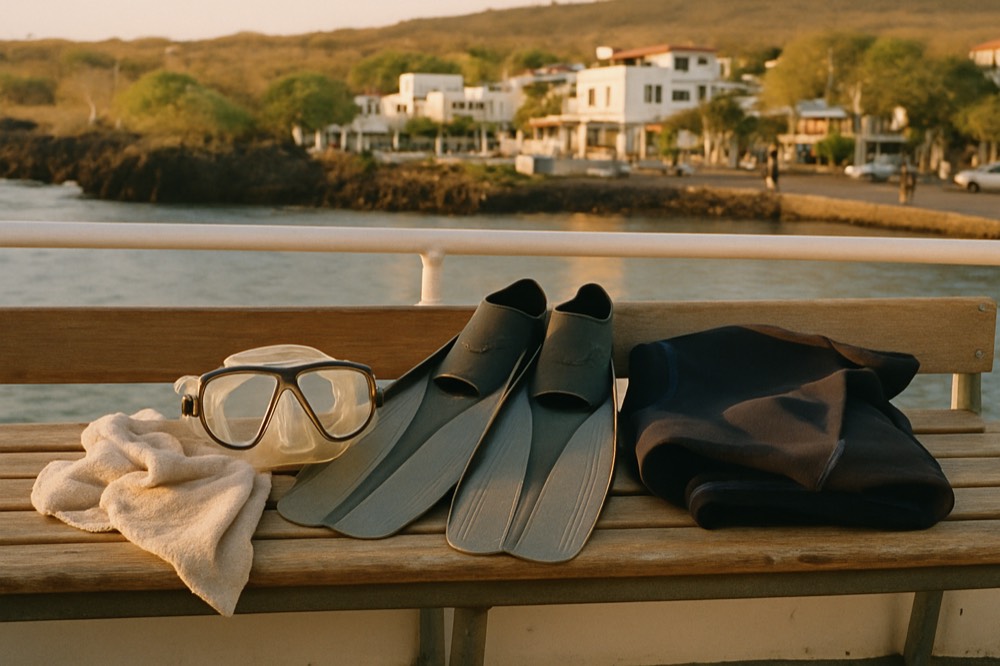
The wetsuit question is the one to ask the operator directly. Sea temperature at Puerto Ayora averages 25.7 °C in March but 21.5 °C in August and September, so a shorty wetsuit in the cool season is genuinely useful and in the hot season often unnecessary. Many boats rent wetsuits, and travellers on recent Galapagos trips report that rentals described as optional are effectively expected, so decide in advance whether to rent or pack your own. Personal snorkel gear is the other judgement call: mask and snorkel are worth bringing if you own them, since rental condition varies, while bulky fins are usually better borrowed from the boat.
Dressing for the garúa season deserves a specific note. From June to December the southeasterly winds strengthen, a shallow cloud layer sits on the windward highlands, and drizzle can persist for hours even when the lowlands stay dry. A light rain shell plus a fleece covers every cool-season scenario from a damp highland tortoise reserve walk to a windy evening deck. In the hot season, the same fleece still earns its slot for air-conditioned cabins and night crossings.
What Snorkel Gear And Water Items Should You Bring?
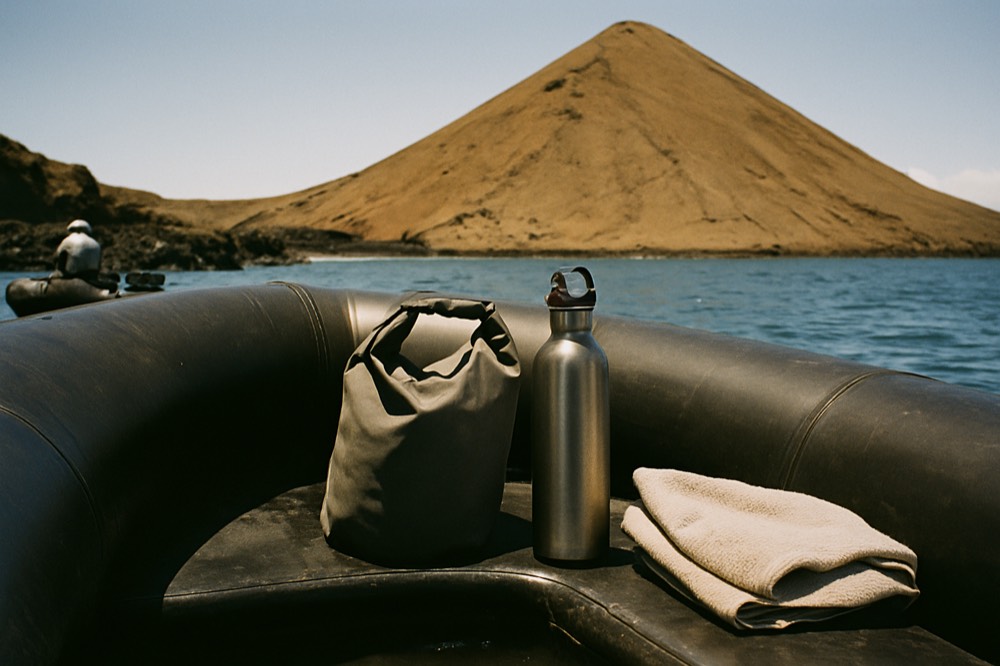
Bring your own mask, snorkel and a defog solution if you have them; rent or borrow fins and wetsuit unless you sail in the cool season and prefer your own; add a dry bag for the panga, a quick-dry towel, and motion-sickness medication started the night before departure. The boat usually supplies masks and fins of unknown condition, and the water is where most of your wildlife viewing happens.
The marine side of the trip is not an add-on. The Galapagos Marine Reserve covers 133,000 km², and 91 of the archipelago's 176 authorised visitor sites are marine, so on most itineraries you will be in the water daily. A mask that fits your own face is the difference between an hour with sea turtles and an hour of adjusting straps. Pack it in a padded pouch and carry it in your daypack, not checked luggage, if any leg involves a flight.
| Water item | Bring or borrow | Reasoning |
|---|---|---|
| Mask and snorkel | Bring if owned | Fit is personal; rental condition varies |
| Fins | Borrow from boat | Bulky; operators carry them |
| Wetsuit | Rent, or bring for cool season | Water 21.5 °C in August and September |
| Rash guard | Bring | Sun protection while snorkelling; doubles as a top |
| Dry bag, 10-20 L | Bring | Keeps camera and layers dry in the panga |
| Motion-sickness remedy | Bring | Start the night before; ferries are the roughest legs |
| Water shoes or strap sandals | Bring | Wet landings on volcanic sand and rock |
| Reef-safe sunscreen | Bring | Oxybenzone and octinoxate are restricted in the park |
On roughness: the cool season, June to December, is the windier half of the year by definition, and travellers consistently report the inter-island ferries as rougher than the cruise legs themselves. No reliable wave-height figure exists for the archipelago, and any site quoting one is guessing. What you can act on is season and medication timing: start tablets or a patch the night before the first crossing, and keep a buffer day after any ferry if your schedule allows.
What Toiletries And Sunscreen Are Allowed In The Park?
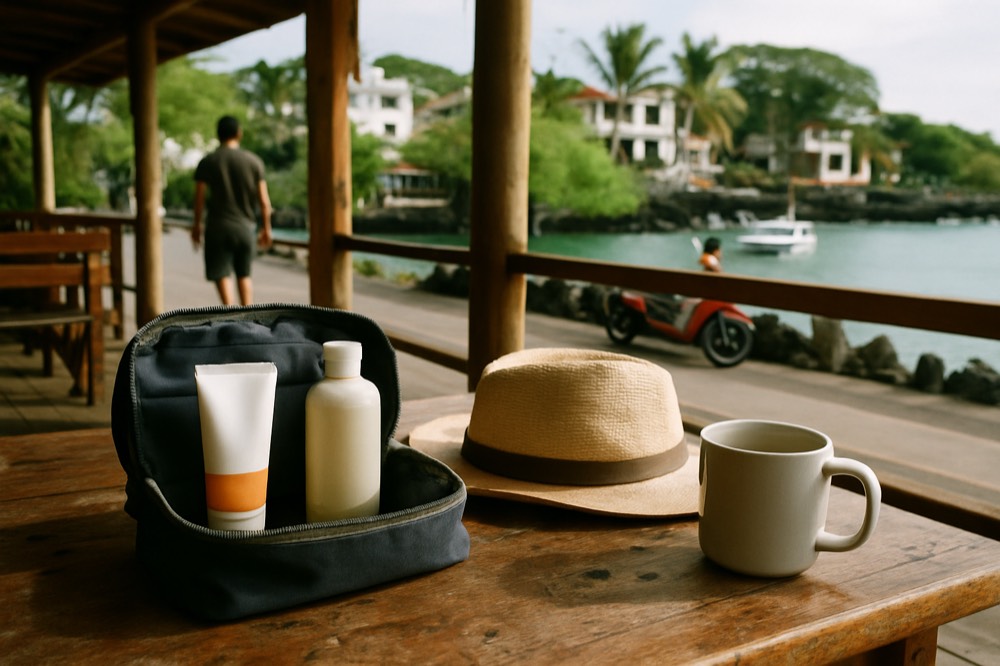
Pack biodegradable toiletries, a sunscreen without oxybenzone or octinoxate, a hat and UV clothing as your primary sun protection, and nothing aerosol if you can avoid it. The visit rules in force since August 2026 restrict those two sunscreen chemicals during water activities in the protected areas, and biosecurity rules at the mainland airports mean your toiletry bag gets opened and inspected before you fly.
The sunscreen rule is the one with legal teeth. Under the visit rules issued by the park directorate, products containing oxybenzone or octinoxate are restricted during water activities in the protected areas. Mineral sunscreens using non-nano zinc oxide or titanium dioxide are the safe choice, and UV-rated long sleeves and a wide-brim hat reduce how much sunscreen you need in the first place. Reapplication matters more than SPF number at the equator, where the sun is direct year-round.
The biosecurity inspection is the other half of the toiletry question. Before check-in at Quito or Guayaquil, the ABG, the Galapagos biosecurity agency, X-rays and may hand-inspect all checked and carry-on baggage, and the inspection repeats on arrival and again at inter-island docks. The agency maintains an official colour-coded list of permitted, restricted and prohibited products, and fresh produce sits firmly in the red category. Check the official ABG product list before packing snacks.
| Item | Verdict | Note |
|---|---|---|
| Mineral sunscreen (non-nano zinc) | Bring | Oxybenzone and octinoxate restricted in park waters |
| Biodegradable soap and shampoo | Bring | Boat greywater goes into the marine environment |
| Insect repellent | Bring | Highlands visits, especially in the hot season |
| Seasickness tablets or patches | Bring | Start the night before the first crossing |
| Personal medication, in original packs | Bring | Hand-carry; no pharmacy mid-ocean |
| Fresh fruit or vegetables | Leave | Prohibited by biosecurity rules |
| Seeds, plants, soil products | Leave | Prohibited; inspected at both ends |
| Aerosols | Avoid where possible | Inspection friction; roll-ons and pumps are simpler |
One practical note on quantities: small-ship cabins have equally small bathrooms, often wet rooms where the shower drains across the floor. Travel-size everything, and a hanging toiletry organiser that hooks over the door is worth more than any single premium product.
What Documents, Cash And Electronics Should You Carry?
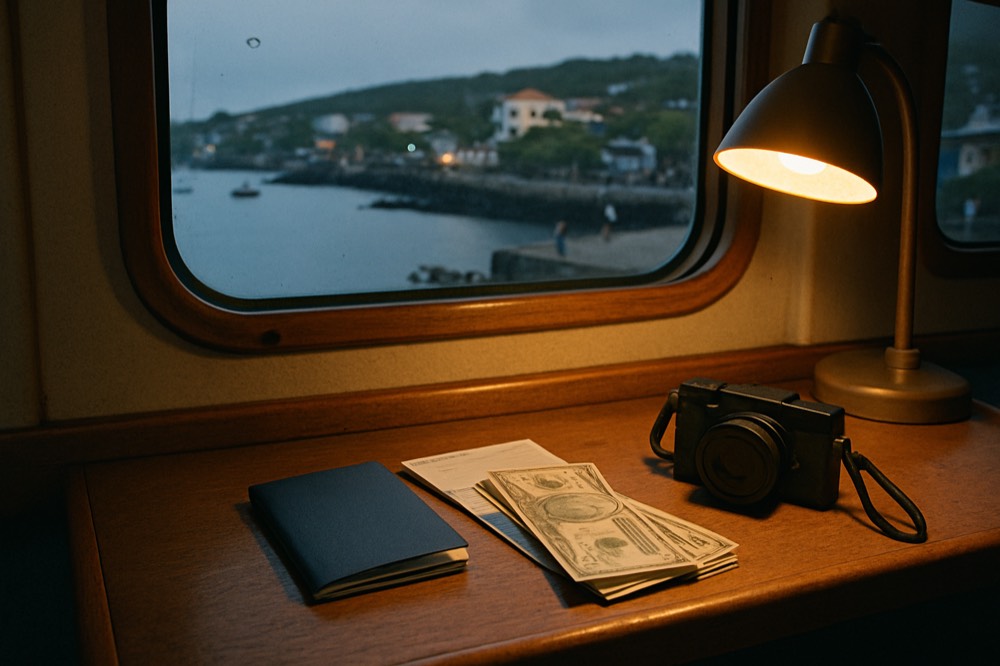
Carry your passport, the return ticket you are legally required to hold, $220 per person in clean US bills for the park fee and transit card, a small dry pouch for the Zodiac, and a spare battery, since cabins have limited outlets. The $200 park fee is paid in cash to rangers on arrival at Baltra or San Cristóbal, and the $20 transit card is bought at the CGREG counter in Quito or Guayaquil before check-in.
The cash is the item that catches people. There is no online prepayment portal for the park entrance fee; rangers collect it in US dollars at the airport, and cards are not reliably accepted, so the bills need to be clean and exact. The transit control card costs $20 per person and is bought at the Consejo de Gobierno counter at Quito or Guayaquil airport before airline check-in, with free online pre-registration available to speed the process. Advance purchase is limited to travel agencies, and many package operators handle it, which is worth confirming when you book. Our full breakdown lives in the flights, park fee and transit card guide.
For the fee itself, the official park fee page publishes the full schedule: $200 for foreign adults, $100 for foreign children under 12, and reduced rates for CAN and Mercosur nationals, Ecuadorian residents and students. Half of every dollar goes to managing the protected areas, the rest to local municipal services.
Electronics deserve restraint. One camera, one phone, a spare battery each, and a dry pouch. Charging outlets in cabins are limited and often a single 110V socket, so a small USB power bank keeps a phone alive through a day of shooting. Drones are prohibited without prior park authorisation, and professional filming rigs need permits, so leave anything that looks commercial at home. A headlamp or small torch earns its slot for moving around a dark deck at night.
What Should You Leave At Home?
Leave behind hard suitcases, drones, fresh food, oxybenzone sunscreen, more than two pairs of shoes, hair dryers and anything you would grieve losing to salt water. Cabin space is the scarcest resource on board, biosecurity rules ban plant and animal products, and the park prohibits drones, flash photography and single-use items that end up as marine debris.
The drone point trips up travellers who assume the archipelago is like anywhere else in Ecuador. Under the visit rules, drones and remote cameras require prior authorisation from the park directorate, and unauthorised aerial filming is simply prohibited. Flash photography is banned around wildlife. The same rules prohibit radios, speakers and phone audio on speaker, so headphones are the compliant option for long transits.
Everything you carry out of the protected area, you carry in. The rules require that all rubbish you generate leaves the park with you, which is why a small stuff sack for wrappers and tissues belongs in the daypack. Alcohol, tobacco and vapes are prohibited in the protected areas themselves, though most vessels permit them on board outside park boundaries; check the boat's policy rather than assuming.
| Leave at home | Why |
|---|---|
| Hard-shell suitcase | Does not fit cabin storage; punished by transfers |
| Drone | Prohibited without prior park authorisation |
| Fresh fruit, vegetables, meats | Prohibited by biosecurity rules; inspected twice |
| Oxybenzone or octinoxate sunscreen | Restricted during water activities |
| More than 2 pairs of shoes | Cabin space; wet and dry footwear is enough |
| Hair dryer, straightener | Boat power is limited; most vessels ban them |
| Speakers | Prohibited in the protected areas |
| Expensive jewellery or watches | Salt water, wet landings, no replacements |
How Does Packing Change For Longer And Land-Based Trips?
For cruises of seven days or more, add one complete spare of everything that gets wet daily and accept that laundry will not happen; for land-based island-hopping, you can pack lighter and buy forgotten items in the towns, but you must add inter-island ferry logistics and your own day-tour gear. The packing list bends around the package, not the other way round.
On a seven-night sailing, hand-washing becomes a real system rather than an emergency measure, so a travel clothesline and a small tube of gentle detergent earn their space. Products like the 7-Day Isabela II Natural Selection Journey, rated 4.9 across 31 reviews and from $6,137, cover San Cristóbal, Española, Floreana and Fernandina in one loop, which means a full week between laundry opportunities and the cooler western waters around Fernandina and Isabela.
Land-based packages invert the constraints. You sleep in hotels with real wardrobes, you can buy sunscreen or a hat in Puerto Ayora, and the weight limit matters mainly on the inter-island flights and ferries. The trade is that you organise day tours yourself or through the operator, and the rough ferry crossings are on your itinerary rather than absorbed into a ship's schedule. A mid-range hopping product such as the 4-Day Galapagos Complete Experience, rated 4.7 across 15 reviews and from $1,313 with breakfast and lunch included, shows the shape: lighter bag, more town time, and gear you can supplement locally.
Whichever format you choose, the documents and cash section does not change. The park fee, the transit card and the biosecurity inspection apply to every traveller arriving by air, whether the bed that night is a berth or a hotel. The official transit card FAQ is the page to check before flying, and it is also the source for the 60-day annual stay limit and the requirement that you hold a return ticket before you can even check in for the Galapagos leg.
Common Questions About Packing For A Galapagos Cruise
How Much Luggage Can I Bring On A Galapagos Cruise?
Plan on one soft duffel of 40 to 60 litres per person plus a small daypack. Cabins on liveaboards offer limited shelving, a half-closet and under-bed storage, and hard suitcases do not fit. If your itinerary includes inter-island flights, ask the operator for the carrier's checked-weight allowance in writing, since no single verified limit applies across the archipelago.
Do I Need A Wetsuit For Snorkelling In The Galapagos?
It depends on the month. Sea temperature at Puerto Ayora averages 25.7 °C in March but 21.5 °C in August and September, so a shorty wetsuit is genuinely useful in the cool season from June to December and often unnecessary from January to May. Most boats rent wetsuits, and travellers report that rentals described as optional are effectively expected.
Is Sunscreen Restricted In The Galapagos?
Yes. The visit rules in force since August 2026 restrict sunscreens containing oxybenzone or octinoxate during water activities in the protected areas. Bring a mineral sunscreen with non-nano zinc oxide or titanium dioxide, and rely on a wide-brim hat and UV clothing as your first line of protection.
How Much Cash Should I Carry?
At least $220 per person in clean US bills: $200 for the national park entrance fee, paid in cash to rangers on arrival at Baltra or San Cristóbal, and $20 for the transit control card, bought at the CGREG counter in Quito or Guayaquil before check-in. Cards are not reliably accepted for the fee, and there is no online prepayment portal.
What Kind Of Shoes Work For Wet Landings?
Sandals with a heel strap, water shoes, or trail runners you do not mind soaking. A wet landing means stepping from the inflatable into shallow surf, and flip-flops fail at exactly this moment. Bring one closed pair with grip for dry, rocky landings on lava, and that is all the footwear you need.
Can I Bring Food To The Galapagos?
Fresh fruit, vegetables, meats and other unprocessed plant and animal products are prohibited under biosecurity rules. Bags are X-rayed and may be hand-inspected at Quito or Guayaquil before check-in, inspected again on arrival, and inspected once more at inter-island docks. Check the official ABG product list before packing any snacks.
Can I Fly A Drone In The Galapagos?
Not without prior authorisation from the park directorate. Drones, remote cameras and professional filming rigs require permits, and unauthorised aerial filming is prohibited. Leave the drone at home; a good camera with a dry pouch serves the trip better.
The short version of this whole page: pack for a small cabin, two seasons, daily water and a cash-first arrival. For the wider planning picture, including how packages differ by length and price, start with Galapagos Islands Tour Packages and the cost guide linked from it.