Galapagos Packages From Quito And Guayaquil: Which Gateway To Choose
Every scheduled flight to the Galapagos leaves from the Ecuadorian mainland, and almost all of them leave from Quito or Guayaquil. That single fact shapes the package you buy more than most travellers expect.
Short answer
Quito and Guayaquil are the only mainland gateways with full Galapagos service, flown by Avianca and LATAM. Quito suits packages pairing the Galapagos with highland Ecuador; Guayaquil suits coastal routing and shorter travel days. Either way you pay a $200 park fee in cash on arrival and a $20 transit card at the mainland airport.
Quito Or Guayaquil: Which Gateway Should You Fly To Galapagos From?
Every scheduled passenger flight to the Galapagos departs from the Ecuadorian mainland, and the two gateways that matter are Quito (UIO) and Guayaquil (GYE). Avianca and LATAM operate the routes from both cities to Baltra and San Cristobal. Your package choice, your arrival airport and even your first night in Ecuador are all decided by which gateway you pick, so it is worth choosing deliberately rather than by habit.
The Galapagos Islands sit about 1,000 km off the South American coast, and no ferry or road connects them to the mainland. You fly, or you do not go. That makes the mainland city you route through a real decision point, not a formality. Quito, high in the Andes, is the capital and the natural base if your trip also includes the highlands, the equator line or a colonial-city stay. Guayaquil, at sea level near the coast, is the country's largest city and the busier Galapagos departure point by schedule frequency.
Neither gateway is wrong. The honest framing is that they serve different trips. A package that pairs the Galapagos with Quito sightseeing, or with Machu Picchu by way of a connecting flight to Peru, almost always routes through the capital. A package focused purely on the islands, especially a cruise that wants you at the dock early, often prefers Guayaquil for its sea-level location and greater number of departures.
One more gateway has recently joined the list. Since 31 March 2026, LATAM Ecuador has operated a Cuenca to Quito to Baltra route twice weekly, approved by Ecuador's civil aviation authority in November 2025. It is a niche option with a technical stop in Quito and no plane change, but it means a third mainland city now has direct Galapagos access. We cover it in detail further down.
For the full picture of how the two classic gateways compare in practice, read on. The sections below map out the packages that depart from each city, the airport procedures that are identical at both, and the airport procedures that are not.
How Do Quito And Guayaquil Packages Differ In Price And Structure?
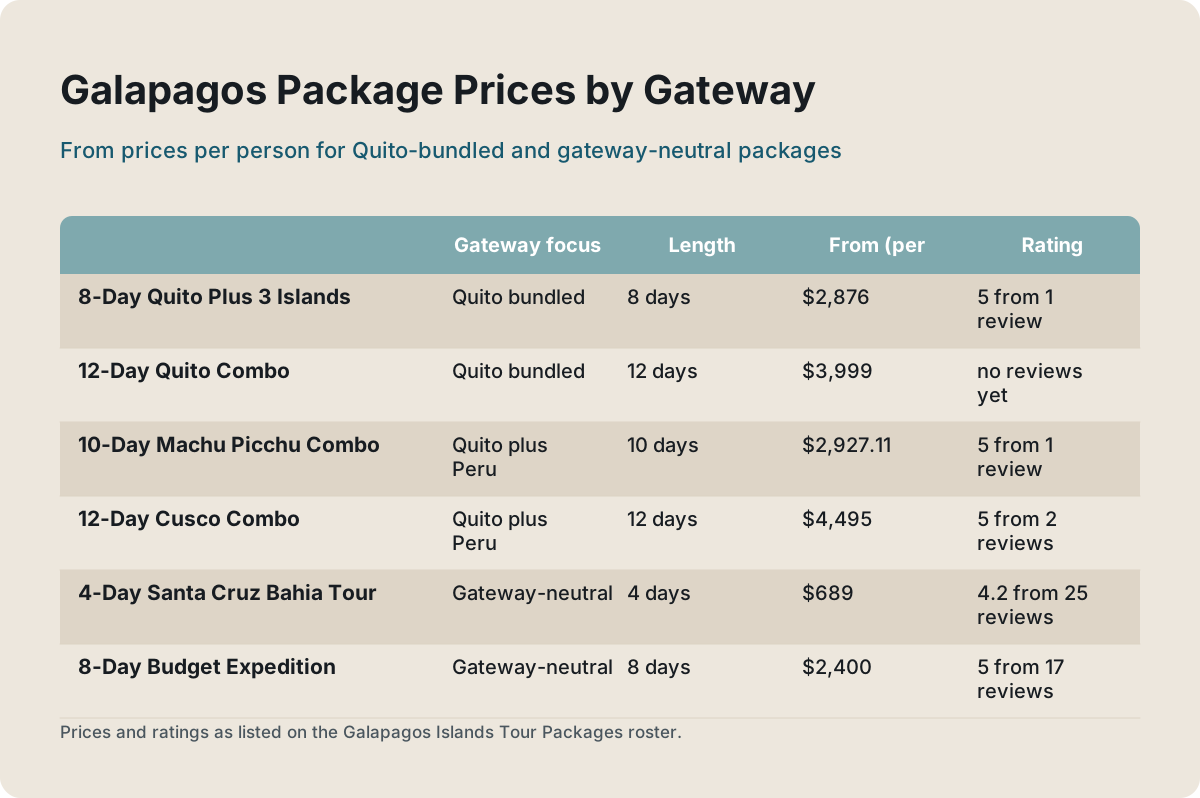
Quito packages tend to bundle the mainland into the itinerary, with hotel nights, city tours and sometimes Machu Picchu extensions built in, while Guayaquil packages tend to be island-focused with the mainland as a pure transit stop. On this roster, Quito-based combos run from $2,876 for an 8-day trip to $3,999 for a 12-day itinerary, and a 10-day Machu Picchu combo starts at $2,927.11.
Look at how the mainland-plus-Galapagos category is actually built. The 8-day Quito and three-islands package, rated 5 from a single review, starts at $2,876 and includes breakfast and lunch, hotel pickup and confirmed stops on Santa Cruz and Isabela, with Pinzon offered as one of several optional choices. The 12-day Quito combo starts at $3,999 with free cancellation, though it has no reviews yet, so there is no traveller signal to lean on. These are packages designed around the capital.
Guayaquil-anchored itineraries, by contrast, are usually the standard island-hopping and cruise packages that simply route through the coastal airport. A traveller flying from North America or Europe often finds Guayaquil the shorter connection, and several of the classic island-hopping packages on this roster, from $689 for a four-day Santa Cruz and Bahia tour up to $2,400 for an eight-day small-group expedition, are gateway-neutral: the operator meets you at Baltra or San Cristobal regardless of which mainland city you flew out of.
| Package | Gateway focus | Length | From (per person) | Rating |
|---|---|---|---|---|
| 8-Day Quito Plus 3 Islands | Quito bundled | 8 days | $2,876 | 5 from 1 review |
| 12-Day Quito Combo | Quito bundled | 12 days | $3,999 | no reviews yet |
| 10-Day Machu Picchu Combo | Quito plus Peru | 10 days | $2,927.11 | 5 from 1 review |
| 12-Day Cusco Combo | Quito plus Peru | 12 days | $4,495 | 5 from 2 reviews |
| 4-Day Santa Cruz Bahia Tour | Gateway-neutral | 4 days | $689 | 4.2 from 25 reviews |
| 8-Day Budget Expedition | Gateway-neutral | 8 days | $2,400 | 5 from 17 reviews |
The pattern to notice is that the price gap between a Quito combo and a gateway-neutral package is mostly the mainland content, not a Galapagos premium. Two extra nights in Quito, a city tour and a transfer each way add real cost and real value; whether you want them depends on whether Ecuador's mainland is part of your trip or just the corridor to it.
If you are weighing a combined itinerary against a pure cruise, the Galapagos cruise versus land package comparison breaks down the trade-offs, and the Quito and Guayaquil flight costs guide covers what you pay at each airport before you board.
If a bundled itinerary appeals, these three represent the range of mainland-inclusive and high-end options:
What Happens At The Mainland Airport Before A Galapagos Flight?
At Quito or Guayaquil you complete three steps before airline check-in: buy the $20 Transit Control Card at the CGREG counter, pass the biosecurity baggage inspection, and show your round-trip ticket. The Consejo de Gobierno recommends arriving three hours before the flight. Online pre-registration for the transit card speeds the counter visit but does not replace it for individual travellers.
The Transit Control Card, or TCT, is the Galapagos migration document, and it costs US $20 per person for every trip. The official procedure is that you buy it at the CGREG counter at Quito or Guayaquil airport before airline check-in. CGREG offers free online pre-registration, which fills the form in advance and saves time at the counter, but the counter itself is not optional for individual travellers: only travel agencies can purchase cards in advance, filing at least 48 hours ahead. The card must be shown on arrival and again on departure, so keep it for the whole trip.
Biosecurity is the second step, and it is the one that catches people out. The Galapagos Agency for Regulation and Control of Biosecurity (ABG) inspects all checked and carry-on baggage at the mainland departure airport, before check-in, and again on arrival in the islands. Fresh produce, meats and other unprocessed plant and animal products are restricted or prohibited to keep invasive species out of the archipelago. The official advice is to check the ABG regulated products list before you pack, and to complete the sworn goods declaration correctly on arrival.
The third requirement is less widely known and fully verified: you cannot fly to the Galapagos on a one-way ticket. CGREG requires a personal, non-transferable round-trip air ticket between the mainland and the province, with the return leg not exceeding the 60-day maximum tourist stay. The tourist stay limit in the Galapagos is 60 days per calendar year, non-extendable, and the transit card is paid again for each separate trip.
| Step | Where | Cost | Notes |
|---|---|---|---|
| Transit Control Card | CGREG counter, UIO or GYE | $20 per person | Pre-register online to save time; agencies can buy in advance |
| Biosecurity inspection | ABG room, before check-in | Free | Checked and carry-on bags; repeated on arrival |
| Round-trip ticket | At check-in | Fare varies | Required by CGREG; return leg within 60 days |
| Park entrance fee | Baltra or San Cristobal arrival | $200 foreign adult | Cash, US dollars, paid to park rangers |
The park fee deserves its own sentence because it is the figure people most often get wrong. It is US $200 for a foreign adult and US $100 for a foreign child under 12, collected in cash, in US dollars, by park rangers at Baltra or San Cristobal airport on arrival. There is no official online prepayment portal, so do not let anyone sell you one. The official park fee page publishes the full table, and the effective date of the current rates is 1 August 2024.
If your gateway decision is really a package decision, this is a good moment to check one of the Quito-inclusive options on its live listing.
Which Packages Actually Include The Mainland Nights?
On this roster, the mainland-inclusive packages are the 8-day Quito plus three islands trip from $2,876, the 12-day Quito island-hopping combo from $3,999, and the two Peru combos: a 10-day Machu Picchu itinerary from $2,927.11 and a 12-day Cusco itinerary from $4,495. All four include hotel pickup and breakfast-based meal plans, and all four route through Quito rather than Guayaquil.
The 12-day Quito combo is the clearest example of the format. Its official title is "GALÁPAGOS: Island hopping trip, including Quito, 12 days", it carries free cancellation, and it has no reviews yet, which is honest information rather than a warning: it simply means no traveller has left a public review on the listing. Its confirmed stops are San Cristobal, Santa Cruz, Isabela and Baltra, so the mainland segment is the Quito bookend around a three-island hop.
The Peru combos extend the same logic across a border. The 10-day Machu Picchu and Galapagos itinerary starts at $2,927.11 per person and confirms stops on Bartolomé, Santa Cruz, Isabela, Santa Fe and Española, while the 12-day Cusco version starts at $4,495 with breakfast, lunch and dinner all included and a tighter island list of Santa Cruz, Isabela and Baltra. Both are rated 5, from one review and two reviews respectively, so treat the ratings as thin signals rather than verdicts.
What these packages buy you is time efficiency. Quito's international connections arrive late in the evening more often than not, and a Galapagos flight the next morning means a hotel night in the capital either way. A package that includes that night, the transfer and a city tour converts a logistical necessity into part of the holiday. Doing it independently is entirely possible, but you carry the risk of a missed connection and the cost of a separately booked hotel.
Do Any Packages Include The Galapagos Flights Themselves?
Most packages on this roster leave the mainland flights out of the price, and a null in the listing means the flights were simply not mentioned, not that they are excluded. One clear exception exists: the 4-day highlights tour from $2,299 explicitly includes round-trip flights and free cancellation. Otherwise, assume you are booking the Quito or Guayaquil to Galapagos legs yourself unless the listing says otherwise.
The flight question matters because the flights are a significant line item on any Galapagos budget, and because the timing of your arrival matters to the package. A cruise that boards at Baltra in the early afternoon needs you off a morning flight; an island-hopping package with hotel pickup is more forgiving. When a listing does not state whether flights are included, ask the operator before booking rather than assuming either way. The wider set of guides lives on Galapagos Islands Tour Packages.
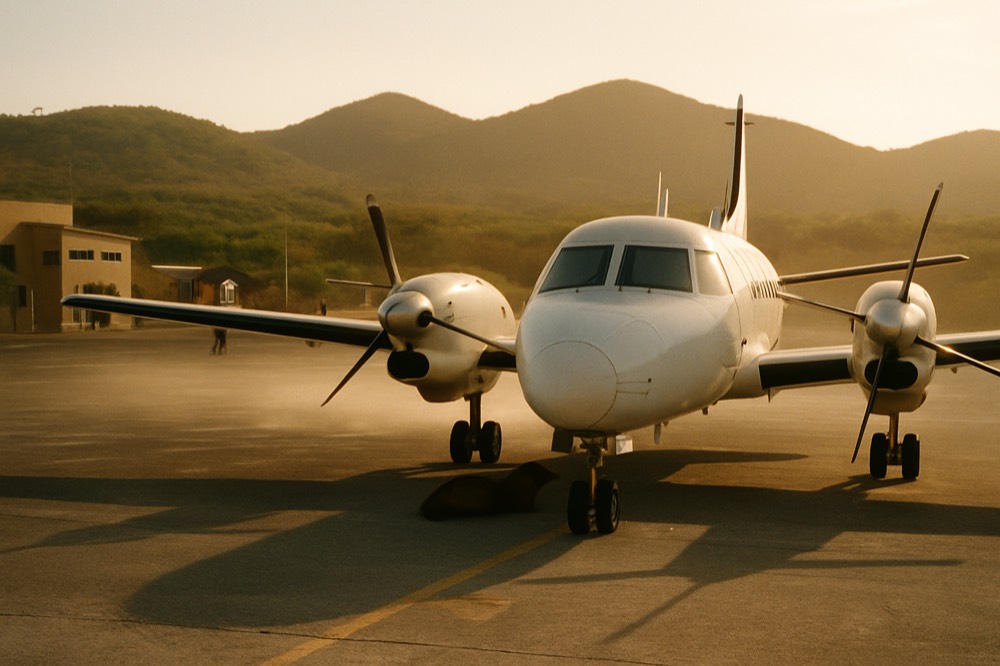
The one flight-inclusive package on the roster is instructive for what it trades away. The 4-day highlights tour includes round-trip flights and hotel pickup and confirms only San Cristobal as a stop, which suggests a compact, single-island itinerary built around the shortest possible trip. It is rated 5 from a single review. For a traveller whose time is the binding constraint, paying for the flights inside the package removes one booking step and one point of failure.
For everyone else, the practical sequence is: book the package, then book the mainland flights to match the package's stated arrival window, then pre-register the transit card online. The how to book a Galapagos package guide walks through that sequence in order, including which questions to ask the operator before paying.
Baltra Or San Cristobal: Which Island Airport Does Your Package Use?
In 2025, 71% of visitors arrived through Baltra (207,392 people) and 29% through San Cristobal (82,982), and the split was identical in the first half of 2026. Baltra serves Santa Cruz and the cruises that board there; San Cristobal serves the land-based packages based in Puerto Baquerizo Moreno. Your package's first confirmed stop usually tells you which airport you land at.
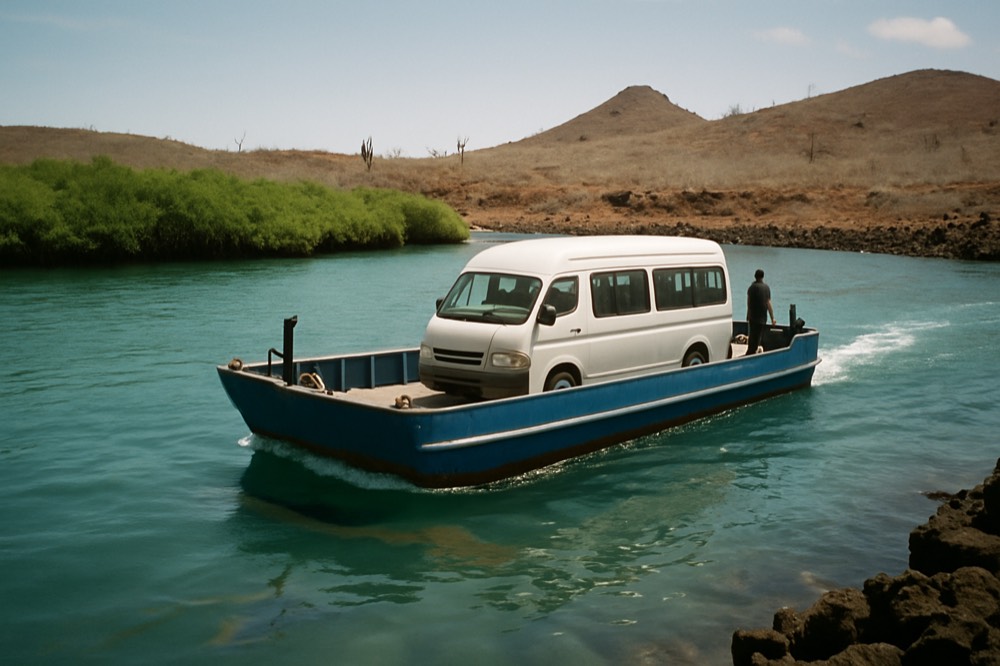
Baltra is not an inhabited island in the tourist sense; it is an airport island. The official arrival process, as described by the national park, is a free bus from the terminal to the Itabaca Channel, about 10 minutes, a barge across the channel for US $1.00, then either a public bus to Puerto Ayora for about US $2 and 45 minutes, or a shared taxi at about US $25 for the vehicle. The park itself recommends the bus over the taxi for conservation reasons, which is a small decision most travellers never know they are being asked to make.
San Cristobal is simpler on arrival: the airport is about 10 minutes from Puerto Baquerizo Moreno, and the bus or taxi costs US $1.50 to US $3. Packages that confirm San Cristobal as their first stop, which includes most of the classic island-hopping itineraries on this roster, land you there. Cruise passengers are met at Baltra airport by a naturalist guide who takes them to the boat, per the park's own arrival guidance, so cruise packages largely remove the transfer question from your hands.
| Arrival airport | 2025 arrivals | Share | Serves | Transfer on arrival |
|---|---|---|---|---|
| Baltra (GPS) | 207,392 | 71% | Santa Cruz, cruise boarding | Free bus, $1 ferry, then bus or taxi |
| San Cristobal (SCY) | 82,982 | 29% | Puerto Baquerizo Moreno, land packages | Bus or taxi, $1.50 to $3 |
The airport split also affects your flight choice at the mainland end, because not every departure serves both islands. Avianca and LATAM operate from both Quito and Guayaquil to both Baltra and San Cristobal in current schedules, but frequencies vary by route and season, and schedules are not fixed facts you can bank on months ahead. Check the airline directly for your dates rather than trusting a frequency claim on any website, including this one.
What About The New Cuenca Route?
Since 31 March 2026, LATAM Ecuador has flown Cuenca to Quito to Baltra twice weekly, on Tuesdays and Saturdays, with a technical stop in Quito, no plane change and through-checked baggage, on an Airbus A319. The route was authorised by Ecuador's civil aviation council in November 2025. It matters mainly to travellers already in southern Ecuador; for everyone else, Quito and Guayaquil remain the practical gateways.
Cuenca is Ecuador's third-largest city and a destination in its own right, but the route's real audience is narrow. If your trip already includes Cuenca, or you are flying domestically within Ecuador, the route saves a connection in Quito that would otherwise be a full stopover. The technical stop means the aircraft lands at Quito en route, but passengers stay on board and baggage is checked through, so the experience is closer to a direct flight than a connection.
For international travellers arriving from North America or Europe, Cuenca adds a domestic leg rather than removing one, so it rarely wins. The route also lands at Baltra only, not San Cristobal, which narrows the package types it can serve. Treat it as a genuine new option with a specific use case, not a change in how most Galapagos packages work.
No package on this roster currently departs from Cuenca, which is itself informative: operators build itineraries around the gateways with daily frequency and multiple island destinations. Two weekly frequencies do not support a package schedule that needs to guarantee an arrival window.
How To Choose Between Quito And Guayaquil For Your Package?
Choose Quito if the mainland is part of the trip: colonial-city nights, highland excursions, a Machu Picchu extension or an acclimatisation day at altitude before flying out. Choose Guayaquil if the islands are the entire trip and you want the shortest, lowest-hassle corridor. Then pick the package that confirms the islands you actually want, because the gateway is a means and the itinerary is the point.
The acclimatisation question deserves honest treatment. Quito sits high in the Andes, and travellers arriving from sea level often feel the altitude on the first night, which is one reason Quito-inclusive packages build in a night or two before the Galapagos flight. Guayaquil is at sea level, warm year-round, and its airport hotel options make a same-evening or early-morning connection straightforward. Neither city is a place to rush: the three-hour airport arrival recommendation from CGREG exists because the transit card, biosecurity and check-in genuinely take that long.
Cost is the last variable, and it is the one no website can quote honestly in advance, because mainland fares move constantly. What is stable is the structure: the park fee ($200 cash on arrival), the transit card ($20 at the mainland counter) and the round-trip ticket requirement are identical whichever gateway you choose. The Galapagos package cost guide breaks down the full budget line by line, and the best time for a Galapagos cruise explains why September, the annual arrivals trough, is also the month with the coolest seas.
A reasonable decision sequence looks like this. Decide whether the mainland is part of your holiday or just the corridor. If it is part, look at the Quito-inclusive packages and the Peru combos. If it is not, pick your package on its island itinerary alone, then book whichever gateway gives you the better flight schedule for your dates. The gateway is a two-day detail; the islands are the trip.
Whichever way you lean, these three itineraries span the range from a full Quito-inclusive hop to a top-end cruise:
Common Questions About Galapagos Packages From Quito And Guayaquil
Do You Have To Fly Through Quito Or Guayaquil To Reach The Galapagos?
Quito and Guayaquil are the two full-service gateways, served by Avianca and LATAM with flights to both Baltra and San Cristobal. Since 31 March 2026, LATAM also flies a Cuenca to Quito to Baltra route twice weekly, but for most international travellers Quito or Guayaquil remains the practical choice.
Is It Better To Fly To Galapagos From Quito Or Guayaquil?
It depends on the shape of your trip. Quito suits packages that bundle the mainland, the highlands or a Peru extension, and it gives you an acclimatisation night at altitude. Guayaquil is at sea level, closer to the coast, and often the shorter connection for island-only trips. Neither is cheaper by rule; fares move constantly.
What Do You Pay At The Mainland Airport Before A Galapagos Flight?
The Transit Control Card costs US $20 per person and is bought at the CGREG counter at Quito or Guayaquil before check-in. Free online pre-registration speeds the process, but individual travellers still complete the purchase at the counter. Only travel agencies can buy cards in advance.
Can You Fly To Galapagos On A One-Way Ticket?
No. CGREG requires a personal round-trip air ticket between the mainland and the province, with the return leg within the 60-day maximum tourist stay. The 60-day limit per calendar year is non-extendable, and the transit card is paid again for each separate trip.
Do Galapagos Packages Include The Flights From Quito Or Guayaquil?
Most do not, and when a listing does not mention flights, that means it did not state either way, not that they are excluded. One exception on the current roster is the 4-day highlights tour from $2,299, which explicitly includes round-trip flights. Ask the operator before booking if it matters to your budget.
How Early Should You Arrive At Quito Or Guayaquil Airport For A Galapagos Flight?
Three hours before departure, per the Consejo de Gobierno's own guidance. The transit card purchase, biosecurity baggage inspection and check-in all happen before you reach the gate, and the inspection is repeated on arrival at Baltra or San Cristobal.