Is It Safe To Go To Galapagos Right Now?
A clear-eyed look at Galapagos safety: what the official travel advisories actually cover, the real risks on the islands, health rules, sea conditions and how visitor numbers tell the story.
 By Oleg Galeev, Editor
Is It Safe To Go To Galapagos Right Now?
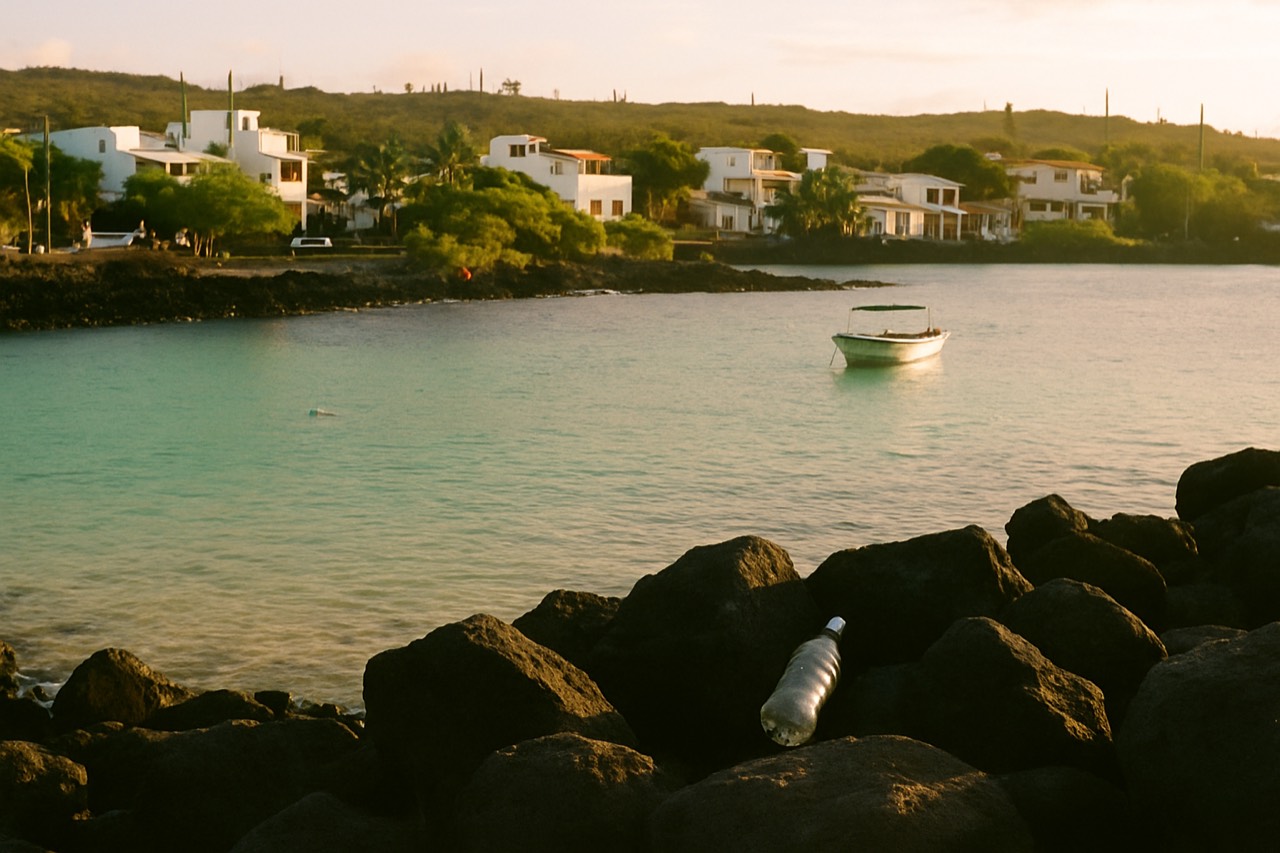
Yes, for the overwhelming majority of travellers the Galapagos Islands are a safe destination, and the evidence is in the arrival numbers: 290,404 tourists visited in 2025, up 4% on the year before, and the first half of 2026 ran a further 9% ahead of the same period in 2025. The islands sit about 1,000 km off the South American coast, which physically separates them from the security problems that make news on the Ecuadorian mainland.
That distance is the single most useful fact for anyone asking this question. UNESCO's own description of the World Heritage property notes the archipelago lies about 1,000 km from the continent, and that geography does real work: the crime patterns that drive headlines about mainland Ecuador do not travel across that much open ocean. The four inhabited islands, Santa Cruz, San Cristobal, Isabela and Floreana, are small communities where tourism is the dominant industry and where the Galapagos National Park Directorate and the Ecuadorian Navy maintain a visible presence.
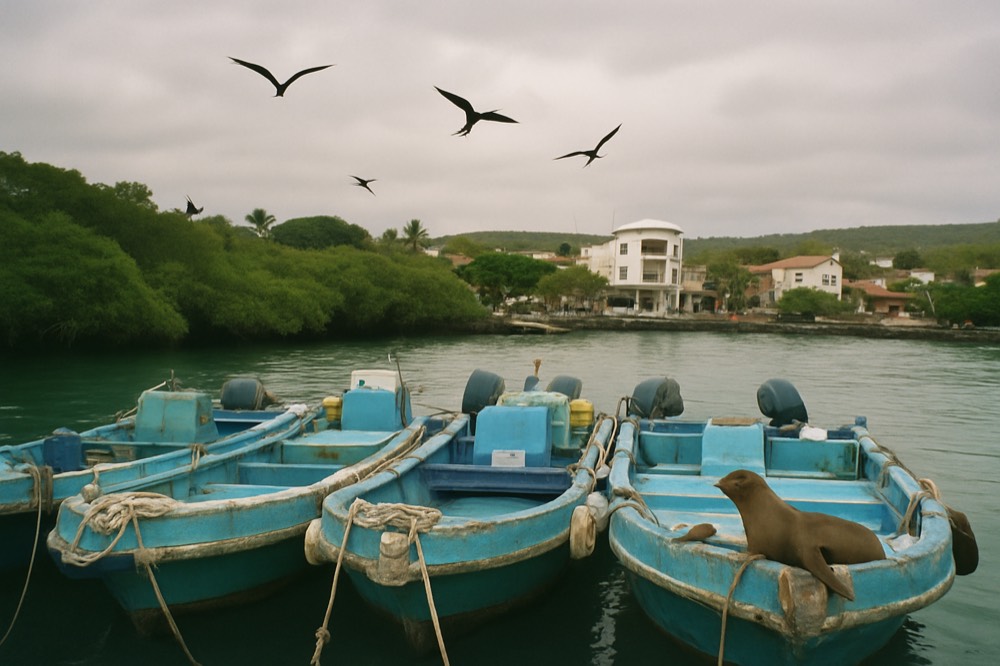
None of this means the islands are risk-free, and an honest answer has to cover the things that actually go wrong there: rough inter-island ferry crossings, sun and sea exposure, the strict wildlife rules that carry real penalties, and the occasional maritime incident. In February 2026 a local boat, the Lancha Spóndylus, sank on a route between populated islands with one fatality among the crew and 28 survivors, and the maritime route between Puerto Ayora and Tortuga Bay was subsequently suspended after Ecuador's oceanographic institute confirmed unsafe navigation conditions. Those events matter, but they are a different category of risk from the security questions people usually have in mind, and this article separates the two carefully.
The other thing worth saying early: the practical safety requirements in Galapagos are unusually well documented by the Ecuadorian government itself. The park fee, the transit card, the biosecurity inspection, the wildlife distance rules and the guided-visit requirement are all published in official instruments, which means you can prepare for almost everything in advance. The rest of this article walks through each layer, from what the travel advisories actually cover to what the sea conditions, health rules and visitor statistics tell you.
Is Mainland Ecuador's Security Situation The Same As The Galapagos?
No, and conflating the two is the most common mistake travellers make. Official advisories from the United States, the United Kingdom and Canada address Ecuador as a country, and their security cautions are overwhelmingly about mainland cities and land borders. Every Galapagos trip arrives by air through Quito or Guayaquil, and the UK authorities explicitly state there are no restrictions in place for anyone flying into Ecuador, which is the route every island package takes.
The three main source-market governments each publish their own guidance, and on the entry side they agree with each other completely. US citizens need no tourist visa for stays under 90 days in any 12-month period, a passport valid for 6 months, and no vaccinations, per the US Department of State's Ecuador page. The UK Foreign Office says the same about the 90-day visa-free stay, and adds one detail worth acting on: the criminal-record certificate requirement that made news in 2024 applies only to arrivals via land or river borders from Peru or Colombia, not to arrivals by air.
What this means in practice is that the security calculus for a Galapagos package is really a calculus about two mainland airports. Quito and Guayaquil are the only departure points for the islands, and both handle biosecurity inspection and the transit control card before you fly. A third gateway, Cuenca, was authorised in 2025 for a LATAM route to Baltra via Quito, but the overwhelming majority of visitors still pass through the two big hubs. If you are comfortable transiting a major Latin American airport, the security picture for the islands themselves is closer to a remote national park than to a city.
| Nationality | Visa-free stay | Passport validity | Vaccinations required |
|---|---|---|---|
| United States | Up to 90 days in any 12-month period | 6 months | None |
| United Kingdom | Up to 90 days in any 12-month period, extendable once | 6 months recommended | None |
| Canada | Up to 90 days per 12-month period | 6 months beyond departure date | None |
One practical note from the Canadian advisory deserves emphasis: make sure your passport gets stamped on arrival in Ecuador, because travellers without an entry stamp have faced significant problems on departure. It is a paperwork risk, not a safety risk, but it is exactly the kind of avoidable problem that sours an otherwise smooth trip. For everything about the airport process itself, the park fee and the transit card, our flights, park fee and transit card guide covers the sequence step by step.
What Are The Real Safety Risks In The Galapagos?
The genuine risks are environmental and logistical rather than criminal: rough seas on inter-island ferries, sun exposure at the equator, dehydration on hikes, and injuries from ignoring wildlife distance rules. Petty theft exists at the level of any tourist town, but the park's own rulebook, not crime, is what most often catches visitors out: touching wildlife, stepping off trails or using restricted sunscreen can end an excursion on the spot.
Start with the sea. The Charles Darwin Foundation defines the islands' two seasons by wind: the hot season from January to May, when the southeasterly trades weaken, and the cool season from June to December, when they strengthen. Stronger winds mean more sea state, so crossings and boat transfers are rougher in the second half of the year. Traveller reports consistently single out the public inter-island ferries, especially Santa Cruz to Isabela, as rougher than day boats or cruise legs, and people prone to motion sickness are repeatedly advised to start medication the night before rather than on the day. No wave-height figure can be published honestly, because the archipelago's own wave buoy is out of service and the nearby NOAA buoys measure tsunamis, not waves; the wind-and-season framing is what the data actually supports.
Sun is the other underestimated risk. The islands sit on the equator, and the park's visit rules restrict sunscreens containing oxybenzone or octinoxate during water activities in the protected areas. That makes sunscreen choice a compliance issue as well as a health one, and our article on what sunscreen you can use in the Galapagos explains the options.
| Risk | How real | What to do |
|---|---|---|
| Rough inter-island ferry crossings | Common in the cool season, June to December | Start motion-sickness medication the night before; book buffer days |
| Sunburn and heat | High at the equator year-round | Reef-safe sunscreen, hat, long sleeves for snorkelling |
| Wildlife-rule violations | The most common way excursions go wrong | Keep 2 m from animals in the water and on land, 4 m when kayaking |
| Petty theft | Low, comparable to any small tourist town | Normal precautions with valuables in Puerto Ayora and Puerto Baquerizo Moreno |
| Maritime incidents | Rare but real; one local vessel sank in February 2026 | Travel with licensed operators; heed route suspensions |
The wildlife distance rules are worth spelling out because they carry force. The visit rules in force since August 2026 set a minimum of 2 metres from wildlife while walking, snorkelling and diving, camera gear included, and 4 metres from the shore and the animals during kayaking, stand-up paddle and panga rides. For cetaceans the distances are 100 metres from whales and 50 metres from dolphins, doubled when calves are present, with a 25-minute cap on watching any one group. Touching, feeding or chasing wildlife is prohibited outright. These are not etiquette guidelines; they are the conditions of your presence in a national park that covers 97% of the archipelago's land area.
If the idea of managing all of this yourself sounds like work, that is the honest case for a package. A guided itinerary handles the licensed boats, the reservations and the compliance for you, and the combination trips are a good example: the 10-Day Machu Picchu and Galapagos Islands Tour, rated 5 from 1 review and priced from $2927.11 per person, strings Peru and Ecuador together with hotel pickup, breakfast and lunch included, which removes most of the independent-travel friction on both legs.
How Safe Is Getting There And Getting Around?
The logistics of reaching and moving around the islands are safe and unusually well standardised: Avianca and LATAM fly the routes from Quito and Guayaquil, 71% of 2025 arrivals came through Baltra, and the official transfer from Baltra to Puerto Ayora is a free bus, a $1 ferry and a $2 public bus, all described by the national park itself. The weak point is the inter-island ferry network, not the flights or airport transfers.
The official arrival process is worth knowing because it removes most of the uncertainty. At Baltra, a free bus runs from the terminal to the Itabaca Channel in about 10 minutes, the barge crossing costs $1.00 and takes about 10 minutes, and from there a public bus reaches Puerto Ayora for about $2 in roughly 45 minutes, or a shared taxi for about $25 for the vehicle. San Cristobal's airport is about 10 minutes from Puerto Baquerizo Moreno by bus or taxi for $1.50 to $3. If you arrive on a cruise booking, the park's own arrival page states a naturalist guide meets you at Baltra airport and takes you to the boat. These are small, well-trodden procedures, and the park publishes them precisely so travellers are not improvising.
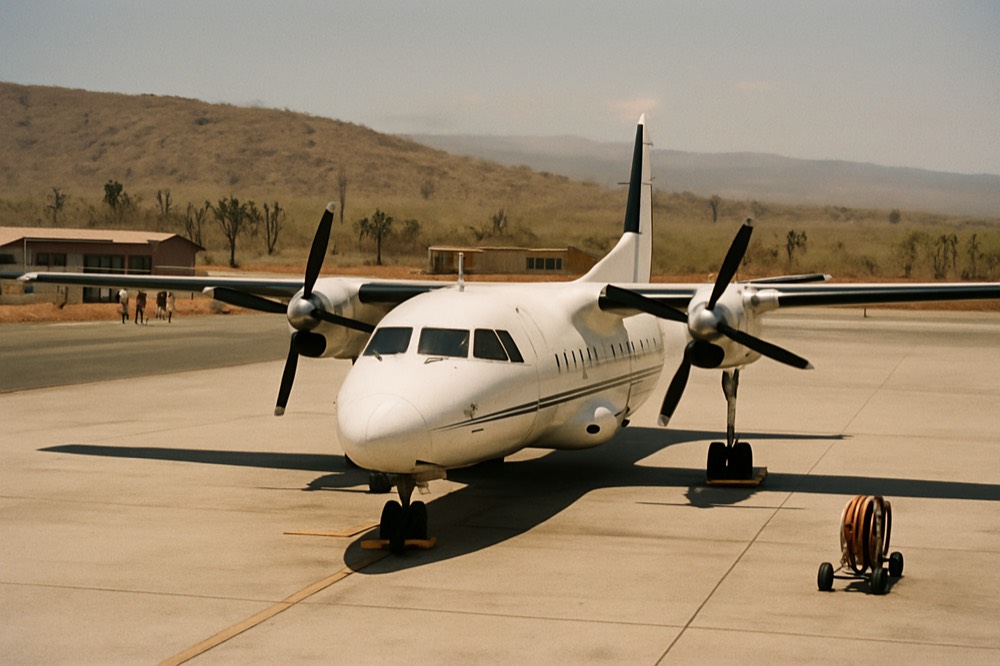
Biosecurity is the part of the journey that surprises people. Every bag, checked and carry-on, is inspected twice: once at the mainland departure airport in the ABG room before airline check-in, and again on arrival at Baltra or San Cristobal. The regulated products list is colour-coded, green for permitted processed items, yellow for restricted and red for prohibited, and the aircraft cabin is fumigated before landing with a product the park says is WHO-tested. Arrive 3 hours before your flight, the official recommendation, because the inspection and the transit control card counter both happen before check-in. Our article on what not to bring to Galapagos covers the packing side of this in detail.
The inter-island ferries are where the honest caveat lives. The February 2026 sinking of the Lancha Spóndylus and the subsequent suspension of the Puerto Ayora to Tortuga Bay maritime route after unsafe navigation conditions were confirmed are the clearest recent evidence that small-boat operations around populated islands carry a genuine, if small, risk. The response was also real: the first maritime safety committee in Galapagos was formed after the incident. If your itinerary involves public ferries, travelling with a licensed tour operator rather than independently puts you on vetted vessels with a guide who knows the alternatives, which is one of the quiet arguments for a package over self-assembly.
What Health Precautions Do You Actually Need?
Fewer than most people expect: the US State Department lists no vaccination requirements for Ecuador, no malaria prophylaxis is part of any official guidance for the islands, and the health rules that actually apply are the park's own, chiefly the sunscreen restriction and the wildlife distances. The practical health risks are sun exposure, motion sickness and dehydration, all of which you manage with preparation rather than medication.
The clean official answer on vaccinations comes straight from the State Department's Quick Facts block for Ecuador: none required. That covers the whole country for air arrivals, the Galapagos included. Passport validity of 6 months and one blank page per stamp are the only document requirements, alongside the 90-day visa-free stay. Nothing in the verified official guidance for the islands adds a health layer beyond what you would prepare for any equatorial outdoor destination. Other pages covering the same trip are gathered on Galapagos Islands Tour Packages.
What the park does regulate is your behaviour in the water and on the trails. The sunscreen restriction on oxybenzone and octinoxate products during water activities has been in the visit rules since August 2026, and it is enforced at sites rather than at the airport, so arriving with a compliant product matters. General visiting hours run from 06h00 to 18h00, diving until 17h00, and night diving only at designated sites between 18h00 and 22h00, which structurally keeps visitors out of the water in the dark. Camping needs a permit requested at least 48 hours in advance and is allowed only at authorised sites.
Motion sickness deserves a second mention because it is the health issue most likely to actually affect your trip. Traveller reports from 2025 and 2026 consistently describe starting scopolamine patches the night before or using oral medication early, and several people who did not reported spending chunks of longer crossings in their cabins. The cool season, when the trades strengthen, is the harder half of the year for this, and western itineraries toward Fernandina and Isabela draw more swell complaints than eastern and central routes. None of it is dangerous, but it can consume a trip if you are unprepared, and buffer days between ferry legs are a common regret-fix.
What About Volcanoes, El NiñO And Sea Conditions?
Volcanic risk to visitors is effectively nil: a seismic swarm under Fernandina in November 2025 produced no eruption and no thermal anomalies affecting aviation, and the islands' visitor sites are managed around volcanic reality rather than closed by it. The live natural variable is El Niño: scientists are warning of a strong 2026 event, which affects wildlife food supply and sea conditions rather than traveller safety directly.
The Fernandina episode is a good illustration of how the system works. The Ecuadorian Geophysical Institute recorded the seismic swarm in November 2025, flagged a possible magma intrusion, and documented no eruption and no thermal anomalies with aviation impact. Galapagos is volcanically active by nature, Isabela and Fernandina are the western volcanoes, and the park's 176 authorised visitor sites, 91 marine and 85 terrestrial, are the mechanism by which access is controlled. If a site is unsafe, it is simply not on an itinerary.
El Niño is the more consequential story for 2026. Researchers citing Charles Darwin Foundation data have warned of a potentially strong event, with risks to penguins, cormorants and boobies through reduced prey. For a traveller this translates to warmer water, possible changes in wildlife behaviour, and rougher or more variable conditions on the water, not to a safety advisory. The census history shows why scientists watch it: 413 Galapagos penguins and 762 flightless cormorants were counted in 2024, and in 2025 the counts were 391 penguins and 656 cormorants, with the earlier survey attributing the low juvenile share among penguins to poor breeding probably linked to food scarcity.
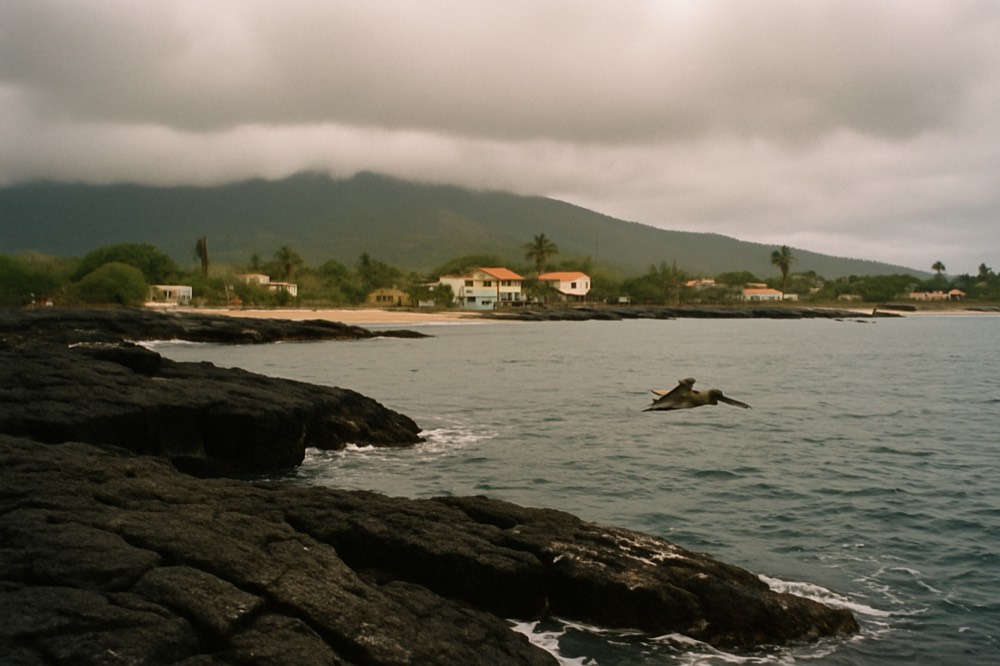
Sea conditions themselves are best understood through the two-season cycle rather than through numbers. Sea surface temperature at Puerto Ayora averages 25.7 °C in March against 21.5 °C in August and September over the 1991 to 2020 period, a roughly 4-degree swing that tracks the same wind pattern driving sea state. In practical terms: January to May offers calmer, warmer water for snorkelling, while June to December brings cooler water, more chop and the garúa drizzle on the windward highlands. Neither season is unsafe; they are different trips, and our cruise versus land package comparison goes into how the choice interacts with sea conditions and itinerary style.
What Do The Visitor Numbers Say About Safety?
The statistics argue for confidence: 290,404 arrivals in 2025, up 4%, with 79% of visitors staying on land rather than on vessels, and the first half of 2026 running 9% ahead of the same period last year. A destination whose arrivals grew through 2024 and 2025 and accelerated into 2026, with four out of five visitors on land-based trips, is one where problems are being managed rather than accumulating.
The detail inside those numbers is even more reassuring than the headline. The United States supplies 29% of all arrivals and 47% of the international market, about 83,000 people in 2025, with the UK, Canada, Germany and Australia next. These are precisely the nationalities whose governments publish detailed travel advisories, and their travel decisions respond to those advisories. Demand peaks twice, March to April for foreign visitors and August for Ecuadorians, with September the annual trough, which means the busiest periods are also the periods when the largest share of advisory-sensitive travellers are on the ground.
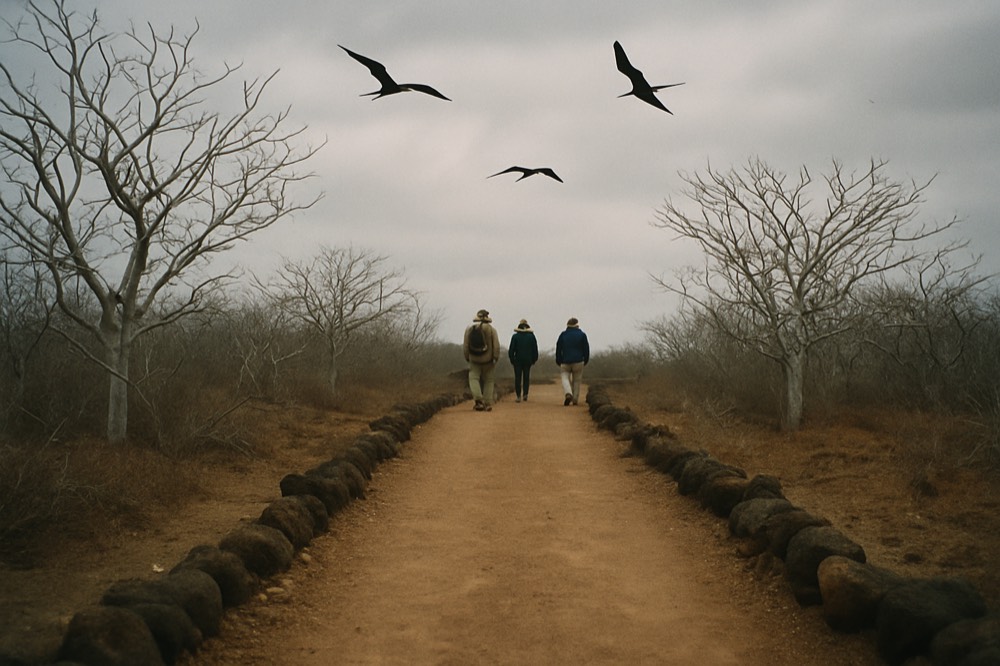
It is also worth noting what the numbers do not show. There is no collapse in any source market, no post-incident dip attributable to the February 2026 maritime events, and no official advisory singling out the islands. The park's monitoring apparatus, 54 priority visitor sites formally monitored in 2025 for biological, social and management indicators, is itself a safety system: it is how the directorate decides whether a site's rules need to change, and it is the mechanism that would catch a problem before it became a pattern.
Do You Need A Tour Or A Guide To Stay Safe?
In most of the national park, yes, a guide is compulsory: the visit rules in force since August 2026 state that visits to the protected areas may only happen in the company of a DPNG-accredited naturalist guide, except at sites expressly designated as not requiring one. Six popular sites now also require an advance QR reservation that only locally registered agencies can make, which means walking in on the day through an unregistered operator is no longer possible there.
The six reservation-controlled sites are the giant-tortoise breeding centres Fausto Llerena on Santa Cruz, Arnaldo Tupiza on Isabela and David Rodriguez on San Cristobal, plus Las Grietas, Volcan Chico and Minas de Azufre. Each reservation issues a single, non-transferable QR code tied to one group, one guide, one date and one time slot, checked at the entrance, and the system automatically verifies the named guide's credential. For an independent traveller this is a hard wall; for a booked package it is invisible, because your operator holds the reservation.
This is the structural safety argument for booking rather than improvising, and it is stronger in Galapagos than almost anywhere else. A licensed package puts you on permitted vessels, with accredited guides, on itineraries that the park has approved and that cannot be modified at will; a real approved itinerary resolution states the schedule may not be changed under any concept without express park authorisation, and only vessels under 20 passengers may change itinerary at all outside proven force majeure. The rules that keep the park intact are the same rules that keep visitors accounted for, on marked trails, within visiting hours and at managed sites.
The premium end of the market makes the same point with more comfort. La Pinta's 7-day Darwin's Legacy itinerary, rated 5 from 48 reviews and priced from $8066 per person, is the most reviewed product on this site's roster, and its confirmed route covers Santa Cruz, Isabela, Floreana, Fernandina, Baltra and Rabida, all under the permit structure described above. You are paying for access and stability, and the safety layer comes with it.
For travellers who want the islands plus the mainland in one booked, guided structure, the combination itineraries do the same job across two countries. The 12-Day Cusco, Machu Picchu and Galapagos Islands Tour, rated 5 from 2 reviews and from $4495 per person with breakfast, lunch and dinner included, keeps you inside guided logistics for the whole arc, which is the simplest way to keep the mainland-transit question off your plate entirely. Whatever you choose, the honest summary is that Galapagos safety is a preparation problem, not a security problem, and the preparation is unusually well documented by the authorities who run the place.
Common Questions About Galapagos Safety
Is It Safe To Go To Galapagos Right Now?
Yes. The islands sit about 1,000 km off the Ecuadorian coast, arrivals grew 4% in 2025 and another 9% in the first half of 2026, and the risks that matter are environmental and logistical: sea state, sun exposure and compliance with park rules, not crime.
Do I Need Vaccinations To Visit The Galapagos?
No. The US State Department's Quick Facts for Ecuador list no vaccination requirements, and the same applies to UK and Canadian guidance. The health preparation that matters is sun protection, motion-sickness planning and hydration.
Is The Galapagos Park Fee Safe To Pay On Arrival?
Yes, and it is the only way to pay it. The $200 foreign adult fee is collected in cash, US dollars, by park rangers at Baltra or San Cristobal airport on arrival, and there is no official online prepayment portal. The $20 transit control card is bought at the CGREG counter in Quito or Guayaquil before check-in.
Are The Inter-Island Ferries Dangerous?
They are the roughest part of most itineraries, especially Santa Cruz to Isabela in the June to December season when the trades strengthen, but they are not generally dangerous. A local vessel sank in February 2026 with one crew fatality, and the affected Tortuga Bay route was suspended after unsafe conditions were confirmed. Start motion-sickness medication the night before and travel with licensed operators.
Can I Visit Galapagos Sites Without A Guide?
Only at sites the park has expressly designated as not requiring one. Everywhere else in the protected areas, a DPNG-accredited naturalist guide is compulsory, and six popular sites, including all three giant-tortoise breeding centres, now require an advance QR reservation that only locally registered agencies can make.
Does El NiñO Make The Galapagos Unsafe?
No. A strong 2026 El Niño is a wildlife and sea-conditions story, warmer water, reduced prey for penguins and cormorants, and more variable seas, not a traveller-safety advisory. It may change what you see and how calm the water is, not whether you should go.