What Is The Most Luxurious Galapagos Cruise Ship?
The handful of hulls that genuinely sit at the top of Galapagos cruising, what the extra fare buys, and how the bookable luxury packages compare.
 By Oleg Galeev, Editor
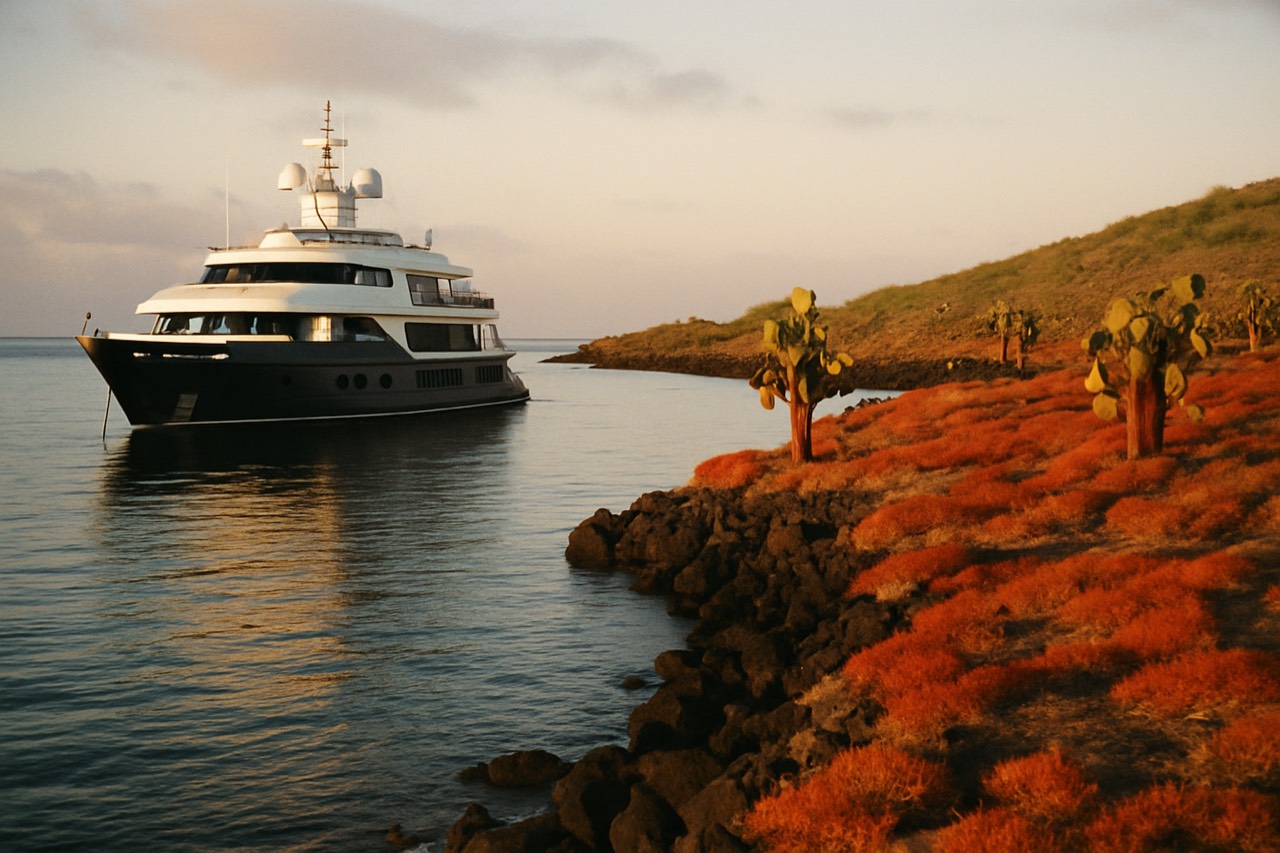
What Is The Most Luxurious Galapagos Cruise Ship?
There is no single winner, but the honest short list in 2026 is the 20-guest mega-catamaran Hermes, the 16-guest Aqua Mare, the 16-guest National Geographic Delfina, and the 12-guest Galapagos Explorer, with the 48-guest National Geographic Gemini as the largest hull that still qualifies. All of them visit the same 176 authorised park sites as every cheaper boat. What the fare difference buys is space, crew ratio and stability, not access.
The question sounds simple and the answer is genuinely not, because "luxury" in this archipelago means two different things that get confused constantly. The first is the hardware: the ship itself, its cabins, its chef, its spa. The second is the itinerary, and that is where the confusion starts, because the park, not the operator, decides where a ship may go. The Galapagos National Park authorises 176 visitor sites, 91 marine and 85 terrestrial, and every vessel, from a $450 bay tour to a $13,000 suite, works inside that same list.
So the genuinely luxurious hulls are the ones that take very few passengers and treat them well. The Hermes, a 50-metre mega-catamaran that launched in May 2025, carries 20 guests in 11 to 12 suites with a crew of 19 or 20, which works out close to one crew member per guest. The Aqua Mare carries 16. The National Geographic Delfina, which entered service in early 2025 after a refurbishment, carries 16 guests in 8 staterooms. The Galapagos Explorer, the yacht that andBeyond brought into the islands in early 2025, takes just 12 guests in 6 cabins with a 1:6 guide-to-guest ratio. These are the ships travel writers mean when they say luxury Galapagos.
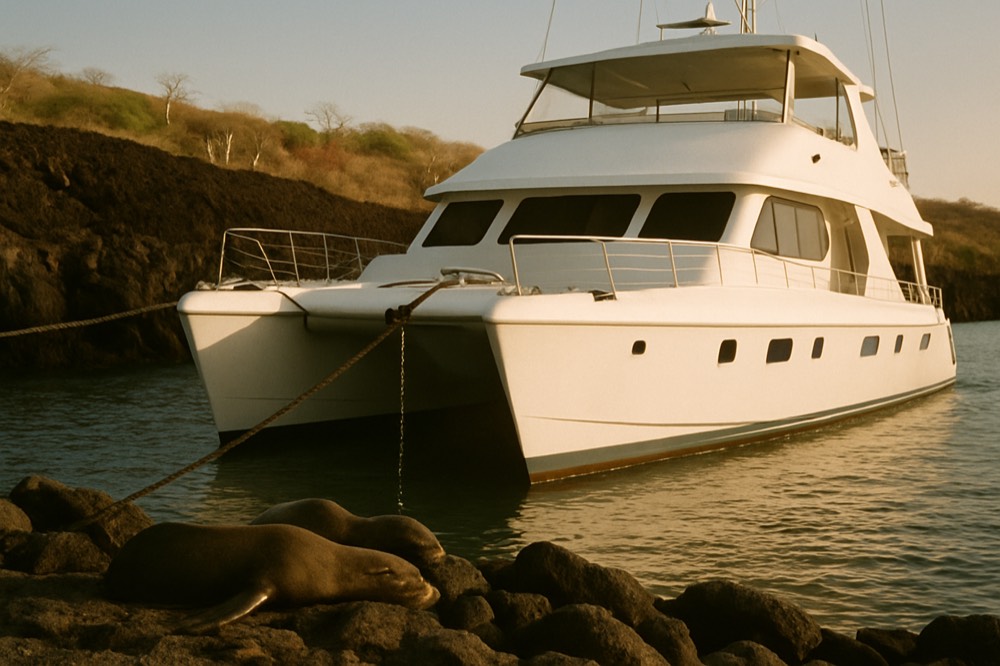
What complicates the ranking is that most of these top-tier hulls are sold through expedition companies and charter brokers rather than as bookable package listings. If you are comparing what you can actually reserve as a package today, the top of the bookable market is occupied by small-ship cruise products like the 7-Day Isabela II Cruise, which rates 4.9 across 31 reviews and runs from $6137 per person, and the 7-Day La Pinta Cruise, which rates a perfect 5 across 48 reviews and runs from $8066. Those two are the practical answer to this question for most travellers, and we come back to them below.
For context on how the whole market is moving, the fleet at the top has been growing quickly. Lindblad Expeditions bought two former Celebrity ships and relaunched them in early 2025, growing its Galapagos departures to more than 200 a year and adding roughly 45 percent capacity. Golden Galapagos has two new 16-guest mega-catamarans entering service, one with a maiden voyage in April 2026 and one in October 2026. The luxury end is the busiest segment of the fleet, which also means the premium is real and competitive.
What Does The Extra Fare Actually Buy?
The premium buys space and people, not wildlife. A luxury ship gives you a larger cabin, fewer fellow guests, a higher crew-to-passenger ratio, better food and more stability in open water. It does not buy entry to any site a mid-range boat cannot visit, because site access is set by park permits, and the wildlife rules, including the two-metre minimum distance from animals, apply identically to every vessel.
Start with space, because it is the single biggest difference. A 16-guest catamaran with 8 staterooms gives each couple roughly double the footprint of a 32-guest first-class yacht, and the difference compounds everywhere: at breakfast, at the snorkel ladder, in the pangas. On a 12-guest hull like the Galapagos Explorer, the guide-to-guest ratio of 1:6 means a naturalist can answer questions at the pace of a private tour. On a full 48-guest ship you share that guide with a much bigger group at every landing.
Then there is stability, which matters more here than in most cruise destinations. The cool season from June to December is the period when the southeasterly winds strengthen, and open-water transits, especially toward Fernandina and the western side of Isabela, are rougher then. Catamarans, and the Hermes in particular with a roughly 14-metre beam, are the design answer to that: two hulls roll less. Travellers who run prone to seasickness consistently report that hull type and cabin position matter more than any other hardware choice.
What the fare does not buy is a better park. The rules in force since August 2026, under park resolution MAE-PNG/DIR-2026-0044-RM, require a licensed naturalist guide at protected sites, keep every visitor at least two metres from wildlife, four metres while kayaking or on panga rides, and 100 metres from whales. A guest paying $12,000 and a guest paying $1,500 snorkel the same water under the same distances. The honest sales pitch for a luxury hull is comfort and attention, and any operator promising "exclusive wildlife access" is describing the same 176 sites everyone else uses.
The 7-Day Isabela II Cruise is the clearest bookable example of what the premium tier delivers on this site's roster. It runs a full seven-day loop through San Cristobal, Santa Cruz, Isabela, North Seymour, Floreana, Espanola and Fernandina, includes Baltra, and covers more of the archipelago's star islands than any other package listed here. It rates 4.9 across 31 reviews, which is one of the deeper review pools on the entire roster, and it starts from $6137 per person.
Which Hulls Sit At The Top In 2026?
The top tier in 2026 is the Hermes, the Aqua Mare, the National Geographic Delfina, the Galapagos Explorer and the National Geographic Gemini, plus two new 16-guest catamarans joining the Golden Galapagos fleet during 2026. Between them they hold fewer than 150 berths, which is why suites sell out far ahead of the season.
The Hermes is the newest flagship. Forbes reported on its May 2025 launch as the start of a new era for luxury in the islands: 20 guests in 11 to 12 suites, private balconies, in-suite Jacuzzis, a spa with a hammam, a gym, Starlink connectivity and a crew of about 20. It is permanently based in the Galapagos and runs four to eight day itineraries, with private charters reported in the region of $220,000 for a week. Forbes covered the Hermes launch in detail if you want the full spec.
The National Geographic Delfina and Gemini are the Lindblad pair, both acquired from Celebrity Cruises in a deal reported around $17 million and relaunched in early 2025 after refurbishment. The Delfina carries 16 guests in 8 staterooms, half with balconies; the Gemini carries 48. Lindblad publishes its own fleet pages, including the Delfina's launch story, with year-round itineraries of 10 days or longer.
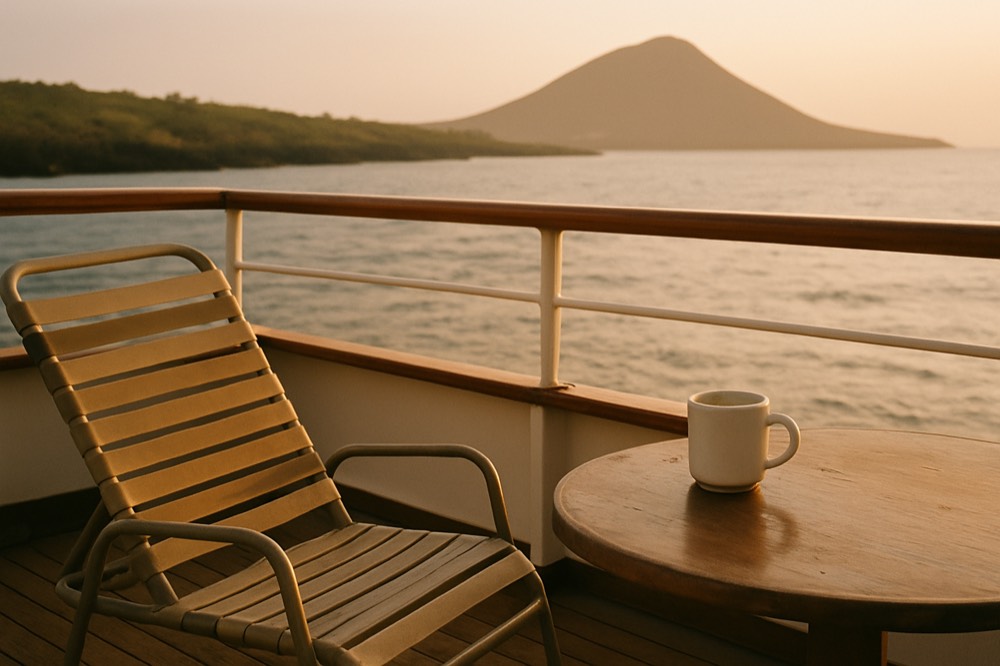
The Galapagos Explorer is the smallest of the tier: 12 guests, 6 cabins, run by andBeyond, the safari company, which markets it explicitly as a safari at sea with that 1:6 guide ratio. The Aqua Mare, operated by Aqua Expeditions since 2021, carries 16 and continued year-round operations after a 2025 ownership stake change. Below them sit the long-established first-class yachts, the Grace among them, whose 2026 eight-day rates run from $10,950 per person for a premium stateroom to $13,900 for the top suite, according to the operator's published rate page.
| Ship | Guests | Notable hardware | Entered service |
|---|---|---|---|
| Hermes | 20 | Private balconies, in-suite Jacuzzis, spa, ~1:1 crew ratio | May 2025 |
| Aqua Mare | 16 | Luxury expedition yacht, year-round operation | 2021 |
| National Geographic Delfina | 16 | 8 staterooms, half with balconies, Lindblad guides | Early 2025 |
| Galapagos Explorer | 12 | 6 cabins, 1:6 guide-to-guest ratio | Early 2025 |
| National Geographic Gemini | 48 | Largest hull in the top tier | Early 2025 |
| Grace | 16 | Classic 1950s hull, premium staterooms | Long-established |
Two more join during 2026: the M/C Monique and the M/C Grand Ocean Spray, both 16-guest luxury catamarans in the Golden Galapagos fleet, with maiden voyages in April and October 2026 respectively, positioned as carbon-neutral. The top of the market is not static, and a ship that was the flagship three years ago is mid-fleet today.
How Do The Bookable Luxury Packages Compare?
Among packages you can reserve as listings, the 7-Day La Pinta Cruise is the strongest luxury-tier product, rated 5 across 48 reviews and priced from $8066 per person, followed by the 7-Day Isabela II Cruise at 4.9 across 31 reviews from $6137. The 5-Day Seaman Journey, from $4500 with full board, is the entry point of the same tier.
The La Pinta product, running its Darwin's Legacy route from Friday to Thursday, is the deepest-reviewed premium cruise on this roster. A perfect 5 across 48 reviews is the largest review pool of any cruise package listed here, and the itinerary reaches Santa Cruz, Isabela, Floreana, Fernandina, Rabida and Baltra, which puts it squarely in the wildlife-rich western islands. At $8066 it sits near the top of the bookable range, well above the mid-tier land packages but below the charter-only hulls like the Hermes.
The Isabela II Natural Selection Journey covers even more ground: San Cristobal, North Seymour, Floreana and Espanola in addition to the western highlights, which is why it is the pick for travellers who want the fullest island loop without stepping up to charter pricing. Below them, the Seaman Journey offers a five-day full-board luxury cruise from $4500 with no reviews yet, which is honest information rather than a red flag: it simply has not built a track record on the listing yet.
| Package | Days | Rating and reviews | From, per person | Meals |
|---|---|---|---|---|
| 7-Day La Pinta Cruise | 7 | 5 across 48 reviews | $8066 | On board |
| 7-Day Isabela II Cruise | 7 | 4.9 across 31 reviews | $6137 | On board |
| 5-Day Seaman Journey, Full Board | 5 | No reviews yet | $4500 | Breakfast, lunch and dinner |
| Isabela II Western Route, Small Group | 5 | 5 across 24 reviews | $4604 | On board |
| Private 5-Day Cruise, Full Board | 5 | 4 across 1 review | $3560 | Breakfast, lunch and dinner |
One structural fact worth knowing when you compare these prices: a cruise ship's cabin count is a stack of permits, not a marketing choice. Park rules allow a maximum of 16 passengers per cruise permit and 64 per vessel, so a 64-berth ship is running four permits, and the same regulation caps liveaboard dive cruises at 16. Small-ship intimacy in the Galapagos is partly a legal artefact, which is also why genuinely tiny hulls command such a premium: scarcity is built into the system.
For a wider comparison of the ships across every tier, not just the luxury end, the best Galapagos cruise ships guide breaks the full fleet down by class, and the luxury Galapagos packages guide covers the land-based alternatives at the same price point.
Does A Luxury Ship Get Better Wildlife Access?
No, and this is the most useful thing to understand before paying the premium. Every cruise vessel, luxury or budget, draws from the same 176 authorised visitor sites, follows a fixed itinerary approved by the park that cannot be changed on the day, and operates under identical wildlife-distance rules. Luxury buys comfort on board, not different landings.
The park controls the routing. A cruise itinerary is approved day by day, morning and afternoon, and an approved itinerary may not be modified under any circumstances except with express park authorisation. Only vessels under 20 passengers may change itinerary at all, and even then only within the rules; larger ships deviate only in proven force majeure. The management plan contemplates vessels of up to 100 passengers, and foreign yachts are limited to itineraries of at most 15 days. What this means for a buyer is that the "better route" argument between two ships is really an argument about which approved route suits you, not about flexibility.
The wildlife rules are identical too. Since the visit rules in force from August 2026, every visitor stays two metres from animals while walking or snorkelling, four metres from shore and animals on kayak and panga rides, and boats keep 100 metres from whales and 50 metres from dolphins, doubled when calves are present, with a 25-minute cap on watching any one group. Sunscreens containing oxybenzone or octinoxate are restricted during water activities. Your suite does not change any of that.
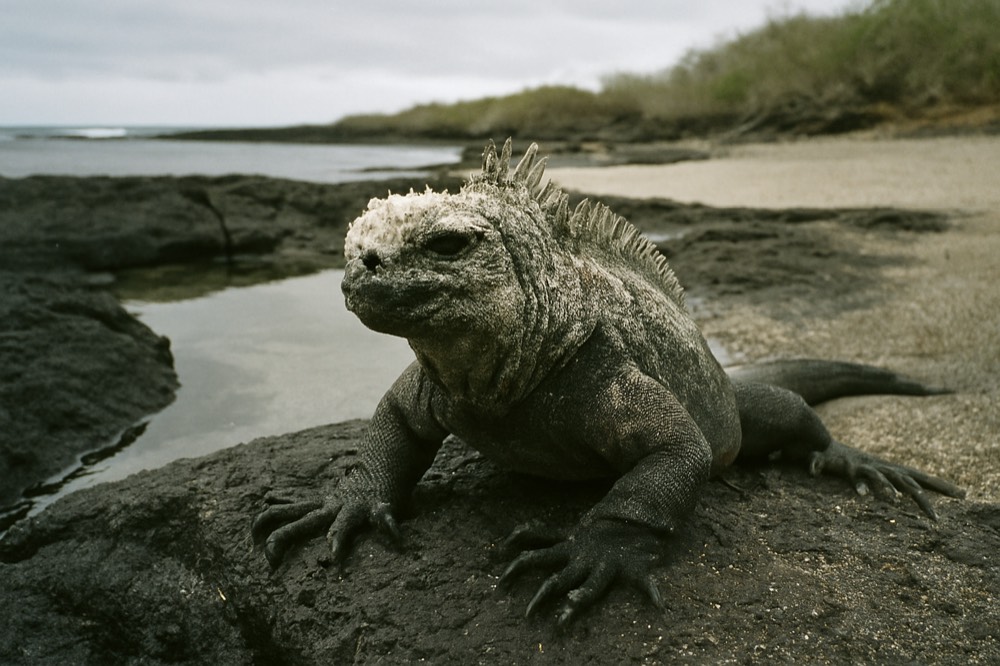
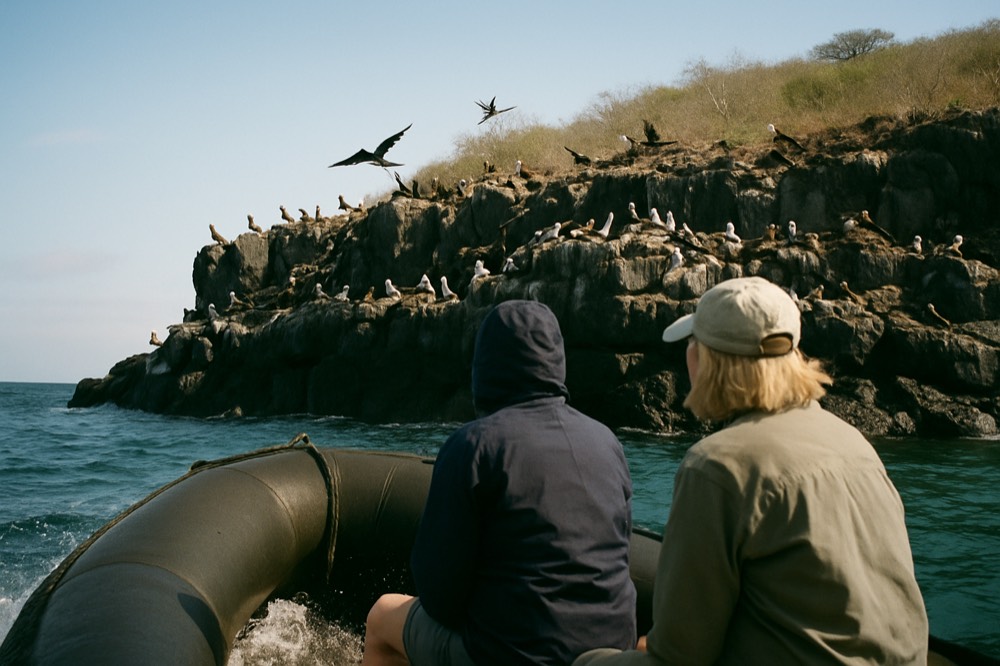
Where the tier difference does show up in the field is group size at the landing. A 16-guest vessel puts one panga of people on the beach; a 48-guest vessel lands them in shifts. Guests on smaller hulls spend less time waiting and more time with the guide, and recent traveller discussions on Reddit's Galapagos communities repeatedly describe the small-ship experience as the reason they would book the same way again. One poster who had done both a 10-day land-based trip and a 7-day cruise called the cruise "vastly superior in every way"; another preferred the land-based half for its freedom. Both are honest, and both point at the same trade-off: ships buy reach, land buys flexibility.
What Does A Luxury Galapagos Cruise Cost?
Charter-tier ships publish rates from roughly $6,600 to $13,900 per person for their longer itineraries, while the bookable luxury packages on this roster run from $3,560 to $8,066. The park fee of $200 and the $20 transit card are extra on most packages, and flights are separate unless the listing says otherwise.
At the published rack-rate end, the Grace charges from $10,950 per person for an eight-day cruise in a premium stateroom, rising to $13,900 for the top suite. The Horizon, a comparable first-class hull, lists its 2026 eight-day rate around $9,445, which includes meals, transfers, excursions and a carbon offset. Lindblad's brochure itineraries start around $6,600 to $6,900 for 10-day trips on its larger ships, with catamaran departures from roughly $9,450. These are operator-published rates and they move with the season, so treat them as a floor for planning, not a quote.
The bookable listings tell the same story at a lower rung. The La Pinta product from $8066 and the Isabela II from $6137 sit a tier below the charter hulls but deliver the same small-ship format, and both include the guided landings that make up the actual experience. Below them, a five-day luxury cruise like the Seaman Journey from $4500 shows how quickly the price falls when you shorten the sailing rather than downgrade the ship.
Budget for the extras that sit outside the fare. The park entrance fee is $200 per foreign adult, paid in cash US dollars to rangers on arrival at Baltra or San Cristobal, and there is no online prepayment portal for it. The transit control card is $20, bought at the airport counter in Quito or Guayaquil, with free online pre-registration that speeds the process up. Tips, wetsuit and snorkel rentals, drinks and inter-island transport are the other recurring extras travellers say they wish they had priced in advance. For a fuller cost breakdown across every tier, see how much a Galapagos cruise costs.
Is A Luxury Ship Worth The Money?
It is worth it if you measure the trip by comfort, food and crew attention, and it is not if you expected it to buy better animals. Travellers who regret premium cruises usually regret the price only when the itinerary was short; the recurring advice in first-hand reports is to book the longest sailing you can afford on whichever hull you choose.
The pattern in recent traveller reports is consistent. People who sailed small ships overwhelmingly say they would do the same again, and the regrets cluster around practical details rather than the tier itself: lower-deck cabins near the engine drew repeated complaints about noise and fuel smell, so upper-deck and midship cabins are worth requesting. Motion-sickness medication started the night before beats medication started at the dock. And short itineraries came up more than once as the thing people would change, because the western islands, Fernandina especially, are where the archipelago feels least like anywhere else.
That last point argues for length over luxury at a fixed budget. A seven-day route on a very good ship beats a four-day route on a spectacular one, because the extra days are what carry you to the remote sites day trips cannot reach. The full comparison of those two formats is laid out in the Galapagos cruise vs land package guide, and the trade-off is real: 79 percent of visitors now stay on land, and the cruise minority is buying reach.
For most readers the practical answer to this page's question is therefore two-step. If you want the ceiling of the market and are booking far ahead through an expedition company, the Hermes, the Aqua Mare, the Delfina and the Galapagos Explorer are the hulls that define it. If you want to reserve a luxury-tier package as a listing this year, the La Pinta and Isabela II products are the strongest on this roster, and this site, Galapagos Islands Tour Packages, lists both with live availability.
Common Questions About The Most Luxurious Galapagos Cruise Ship
What Is The Most Luxurious Galapagos Cruise Ship?
There is no single winner. The top tier in 2026 is the 20-guest Hermes, the 16-guest Aqua Mare and National Geographic Delfina, and the 12-guest Galapagos Explorer, with the 48-guest National Geographic Gemini as the largest hull that qualifies. Among bookable packages, the 7-Day La Pinta Cruise, rated 5 across 48 reviews from $8066, and the 7-Day Isabela II Cruise, rated 4.9 across 31 reviews from $6137, lead the market.
Does A Luxury Galapagos Ship Visit Better Sites Than A Cheaper One?
No. Every vessel works from the same 176 authorised visitor sites, and itineraries are fixed by park approval. Luxury buys cabin space, crew attention and stability, not different landings.
How Much Does The Most Luxurious Galapagos Cruise Cost?
Published rack rates for the top hulls run from roughly $6,600 per person for longer Lindblad itineraries to $13,900 for the Grace's top suite on an eight-day sailing. Private charters of the Hermes have been reported around $220,000 for a week. The $200 park fee and $20 transit card are extra.
Which Cabin Should You Choose On A Small Luxury Ship?
Upper-deck or midship. Lower-deck cabins near the engine draw repeated complaints in traveller reviews about noise and fuel fumes, and midship positions move least in a swell.
Is A Luxury Cruise Better Than A Land-Based Luxury Package?
They buy different things. A cruise reaches remote sites like Fernandina that day trips cannot; a land-based package buys flexibility and space ashore at a lower price, and 79 percent of Galapagos visitors now choose it.