What Is The Best Cruise Line To Go To The Galapagos Islands?
Galapagos has almost no cruise lines in the ordinary sense: a fleet of individual boats, many family-owned. Here is how to pick the right hull, guide and itinerary instead of a brand name.
 By Oleg Galeev, Editor
What Is The Best Cruise Line To Go To The Galapagos Islands?
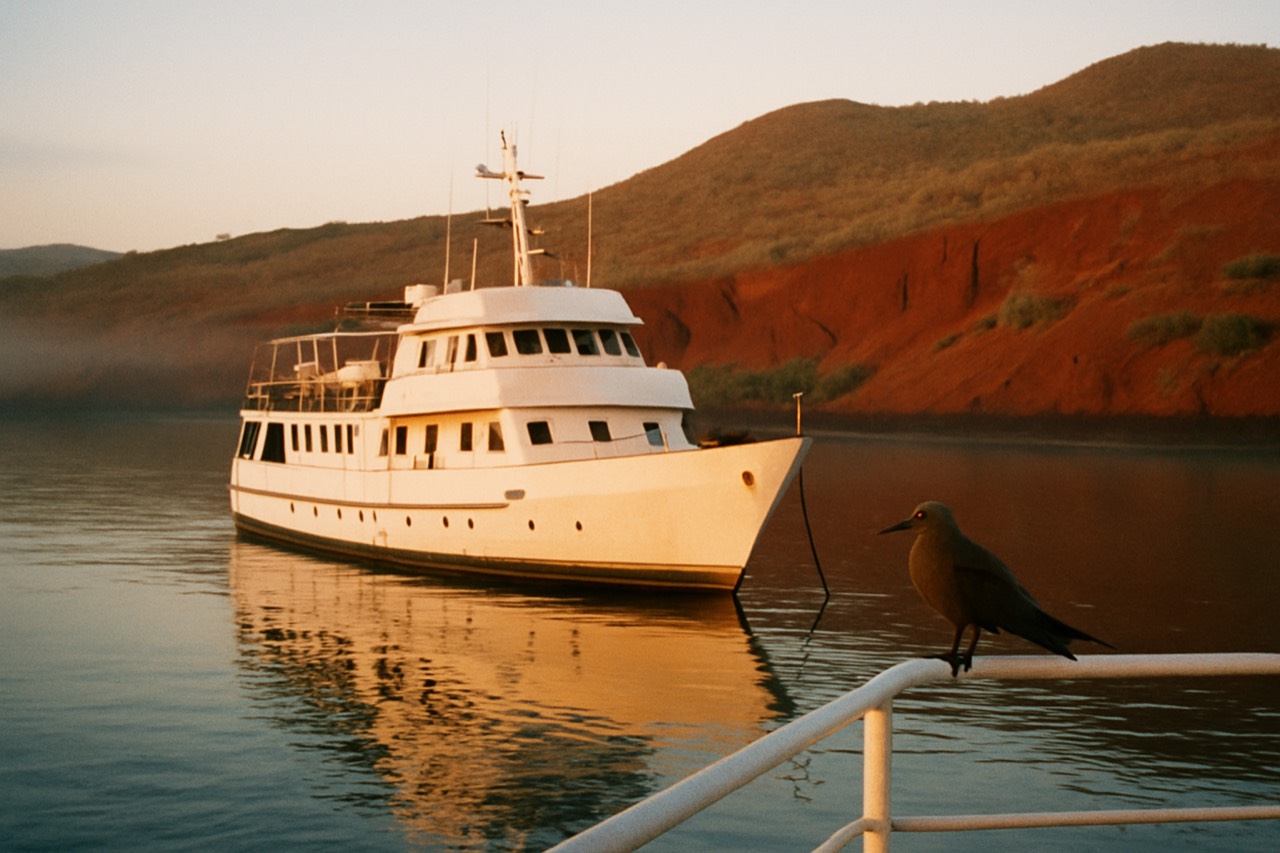
There is no single best cruise line for Galapagos, because the archipelago barely has cruise lines in the ordinary sense. It has a fleet of individual small boats, many family-owned, each licensed by the national park on its own permit. The right question is which boat, which guide and which itinerary suit you, and the honest answer is that the hull and the naturalist guide matter more than any brand name on the bow.
That answer surprises people who have cruised in the Caribbean or the Mediterranean, where a handful of giant brands dominate. Galapagos works differently. The park's own tourism regulation caps a cruise vessel at 64 passengers and a permit at 16, so even the largest licensed ships carry fewer people than a single deck of an ordinary cruise liner. The result is a market of small, mostly Ecuadorian-owned vessels: family-run yachts, catamarans and motor sailors, plus a few international expedition brands that operate their own small ships in the islands.
The practical consequence for a buyer is good news. You are not choosing between marketing departments. You are choosing between specific hulls, and a specific hull is something you can actually research: its size, its cabin layout, its itinerary and the guide who will be on your landings. A mediocre brand with a great guide and a great route will beat a famous brand with a poor route almost every time.
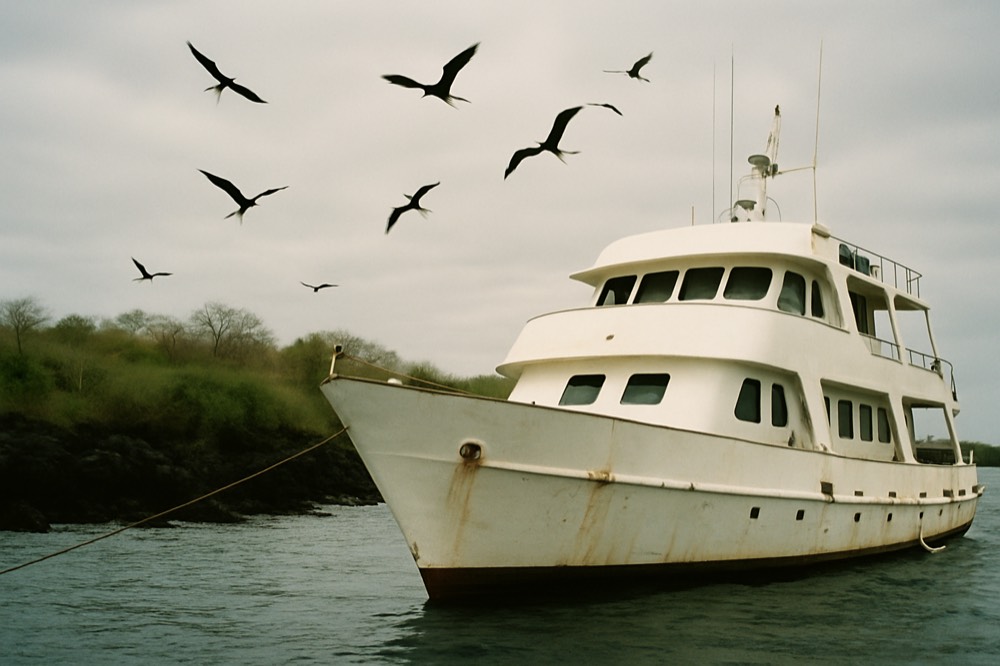
If you want a starting point rather than a theory, these three packages show the spread of the market: a well-reviewed small-ship week, a longer luxury itinerary, and a short land-based bay tour for comparison.
Why Galapagos Has Boats Instead Of Cruise Lines
Galapagos has boats rather than cruise lines because its tourism is built around a permit system, not a fleet system. The national park's tourism regulation allows a maximum of 16 passengers per permit and 64 per cruise vessel, and every itinerary is fixed by the park in advance and cannot be modified. That structure keeps vessels small, keeps ownership local and keeps the question of brand secondary to the question of which specific boat holds which permit.
The legal backbone is worth understanding before you spend money. The Reglamento Especial de Turismo en Areas Naturales Protegidas, in force since 2016, sets the passenger limits per tourism modality: 16 passengers per permit for a navigable cruise, with a vessel allowed to stack permits up to 64 passengers. A 64-berth ship is therefore not a marketing product, it is a stack of four permits. The park also fixes itineraries in advance. A real approved itinerary resolution from the park states that the day-by-day schedule may not be modified under any concept, except with express park authorisation. Only vessels under 20 passengers may change itinerary at all, and larger ships only in proven force majeure.
This is why the fleet looks the way it does. A family that owns a 16-passenger motor yacht holds one permit and runs one fixed route. It cannot scale into a "line", and it cannot swap your landing sites if the weather is poor. The buyer-facing consequence is that two boats run by the same operator can offer completely different experiences, because each hull carries its own permit, its own route and its own crew. Researching "the best Galapagos cruise line" the way you would research a Caribbean line leads to the wrong decisions.
It also explains the price spread. On this site's roster, cruise packages run from $3,560 to $8,066 per person, and land-based packages sit far below that. The median land-based package is much cheaper than the top cruise, and the difference is not brand premium, it is the cost of running a small licensed vessel around a fixed park itinerary. For a fuller cost breakdown, see the Galapagos package cost guide.
Which Operators Are The Closest Thing To Cruise Lines?
The closest things to Galapagos cruise lines are a handful of operators that run more than one vessel: Lindblad Expeditions with National Geographic, Golden Galapagos, Quasar Expeditions, Via Natura and Metropolitan Touring among them. None of these is a mass-market line. Lindblad's Galapagos fleet, for example, grew to four vessels in 2025 with about 206 berths in total, which tells you how small the whole market is.
The international name most often cited as "the best cruise line for Galapagos" is Lindblad Expeditions, sailing in partnership with National Geographic. It acquired two former Celebrity vessels in a deal reported at around $17 million, refurbished them, and put them into service in early 2025 as the National Geographic Delfina, carrying 16 guests, and the National Geographic Gemini, carrying 48. Its fleet now runs more than 200 departures a year, and its 2026 brochure lists 10-day itineraries from roughly $6,605 per person. That is a genuine brand with genuine standards, but it is still four small ships, not a fleet in the Caribbean sense.
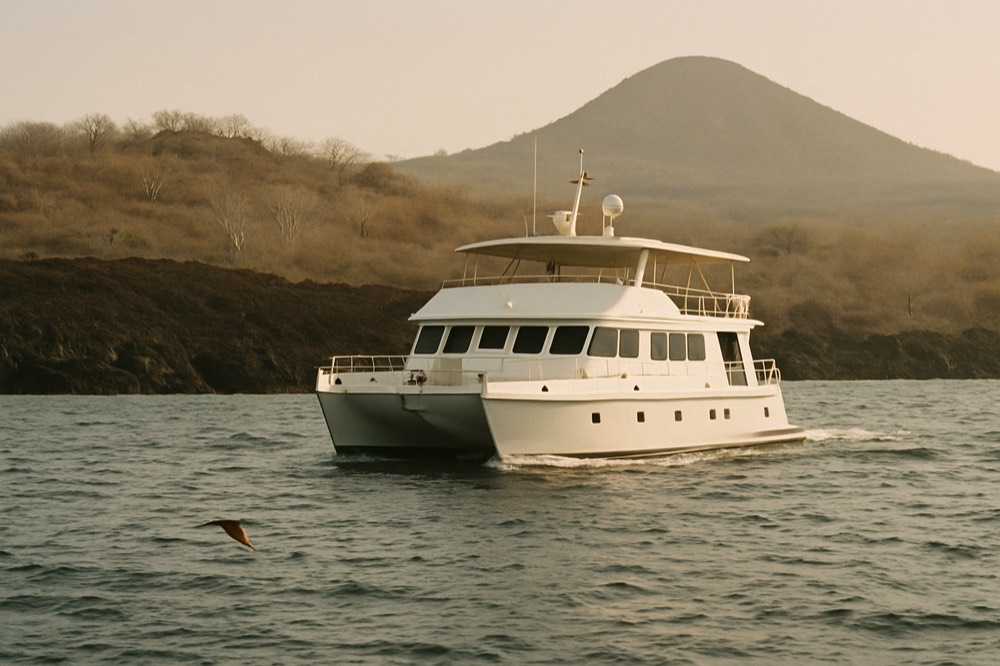
Below that tier sits a layer of Ecuadorian operators that most first-time buyers have never heard of, which is exactly the point. Golden Galapagos by GET runs a fleet of luxury mega-catamarans and added the M/C Monique, with its maiden voyage in April 2026, and the M/C Grand Ocean Spray following in October 2026. Via Natura launched the Hermes, a 20-guest ultra-luxury catamaran, in May 2025. Quasar Expeditions retrofitted one of its yachts with hybrid-electric propulsion. These are serious operations, and a week on any of them can outclass a bigger name, because in Galapagos the deliverable is the itinerary and the guide, not the loyalty program.
| Operator family | Vessels and scale | What the record shows |
|---|---|---|
| Lindblad / National Geographic | 4 vessels, about 206 berths | Two former Celebrity ships refurbished and relaunched in 2025 as Delfina (16 guests) and Gemini (48 guests) |
| Golden Galapagos by GET | Fleet of luxury catamarans, 16 guests each | Added M/C Monique (maiden voyage April 2026) and M/C Grand Ocean Spray (October 2026) |
| Via Natura | Hermes mega-catamaran, 20 guests | Launched May 2025, ultra-luxury positioning, about 1:1 crew-to-guest ratio |
| Quasar Expeditions | Small yachts, 32 guests and fewer | Hybrid-electric propulsion retrofit announced in 2026 sources |
A word of caution about any "best cruise line" ranking you read elsewhere: the vessel rosters in this market go stale quickly, ships change hands, and a newly launched ship can be sold on within a couple of seasons. The Celebrity Xpedition and Xploration were sold out from under that brand in a single deal. Whatever you book, check the specific vessel named on your confirmation, not the brand on the advertisement.
What Matters More Than The Brand: Hull, Guide And Itinerary
Three things matter more than the brand: the specific hull, the naturalist guide, and the fixed itinerary. The hull sets your comfort and your seasickness risk, the guide sets what you actually see and understand on every landing, and the itinerary sets which islands and which of the park's 176 authorised visitor sites you reach at all. A famous brand with a weak route loses to an unknown boat with a strong route.
Start with the itinerary, because it is the one thing you cannot change after booking. The park authorises 176 visitor sites, 91 marine and 85 terrestrial, and each vessel's route is fixed in advance. Western routes that reach Fernandina and the wild side of Isabela are the ones experienced travellers tend to covet, because those sites cannot be reached on a day trip from a hotel. Eastern and central routes are calmer and often cheaper. Before comparing any two packages, lay the landing schedules side by side and ask which named sites each one actually visits. Our Galapagos cruise itineraries guide walks through this comparison in detail.
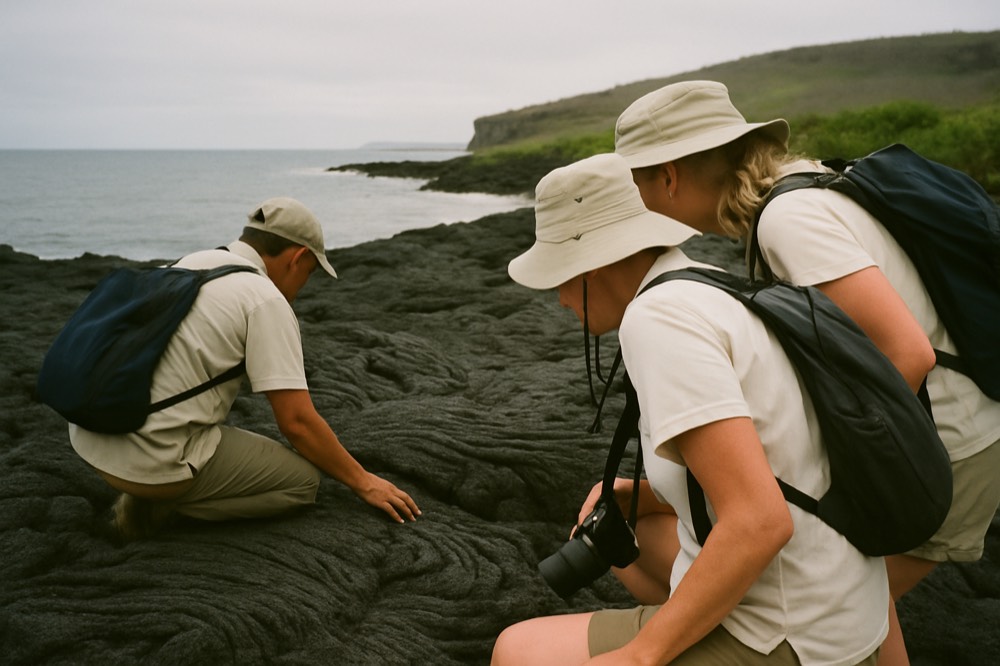
Then the guide. A Galapagos naturalist guide is licensed and trained by the park itself, which runs scientific briefings for its guide corps, and a guide is legally compulsory on visits to the protected areas under the visit rules in force since August 2026. Guides vary enormously in field skill and in English fluency. Traveller reports repeatedly credit or blame the guide, not the boat, for how much wildlife was actually spotted and explained. If an operator will tell you the guide's category and experience level before you pay, that tells you something about the operator too. More of these guides are collected on Galapagos Islands Tour Packages.
Then the hull. Cabin position is the single most repeated regret in traveller reviews: lower-deck cabins near the engine draw complaints about noise and fuel smell, while upper-deck and midship cabins are preferred for motion, view and air. Ask for the deck plan, not the brochure photo. Catamarans are often praised for stability in bays, though they can still roll in open water, and the cool season from June to December is the rougher half of the year because the southeasterly trades strengthen, as the Charles Darwin Foundation's own season definition makes clear. No reliable wave-height figure exists for these waters, so treat any "calm seas guarantee" as marketing rather than data.
How Do You Compare Galapagos Cruise Packages In Practice?
Compare Galapagos cruise packages on five checks: the named itinerary and its visitor sites, the vessel's size and cabin layout, the guide, the meal and inclusions list, and the true total cost including the $200 park fee and the $20 transit card, which are extra on most packages. Ratings matter too, but always read the review count beside the rating, because pools here are small.
The total-cost point catches more buyers than any other. The park entrance fee is $200 per foreign adult, paid in cash US dollars to rangers on arrival at Baltra or San Cristobal, and the transit control card is $20 per person, bought at the counter at Quito or Guayaquil airport. There is no official online prepayment portal for the park fee, so arrive with clean notes. On this site's roster, the listings mostly do not state whether the park fee is included, which means "not stated", not "included". Ask before you book. The flights, park fee and transit card guide covers the mechanics.
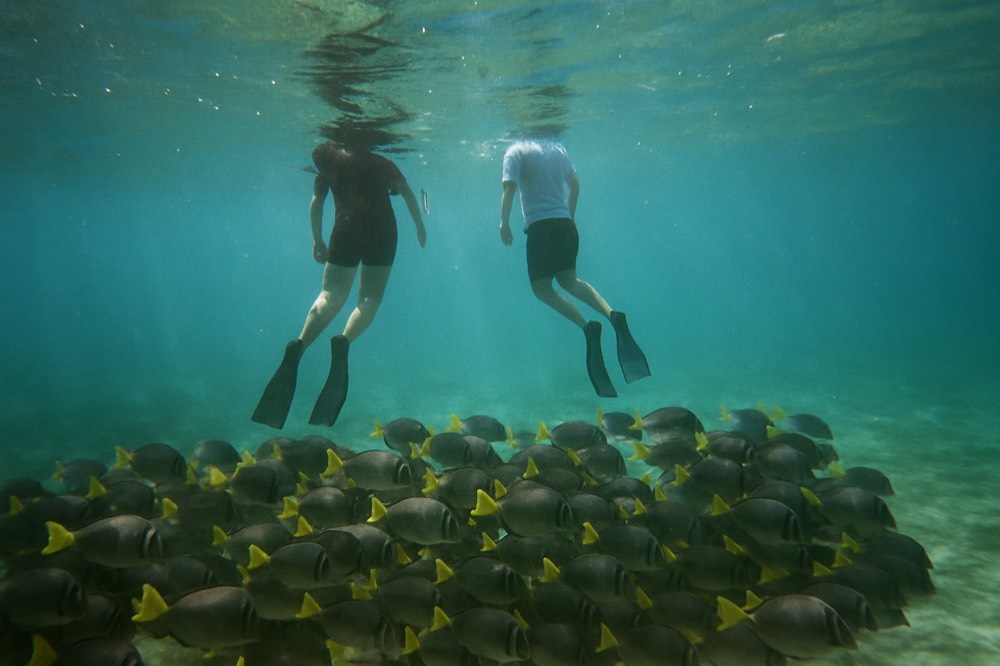
Ratings deserve honest handling. The whole Galapagos package market carries small review pools: across the 50 products on this roster, 381 reviews in total, and the largest single pool is 56. A 5.0 from three reviews is a rating from three people, not a verdict. A 3.0 from 3 reviews is a warning, not a dealbreaker, but it must be read as what it is. When a package has no reviews at all, that is honest information, and it should make you lean harder on the itinerary and the operator's track record instead of imagined consensus.
| Check | What to look for | Why it matters |
|---|---|---|
| Named itinerary | The specific visitor sites, day by day | Itineraries are park-fixed and cannot be swapped after booking |
| Vessel and cabin | Deck plan, cabin position, vessel age | Lower-deck cabins near engines draw repeated complaints |
| Guide | Category, experience, language | A guide is compulsory and shapes every landing |
| Inclusions | Meals, transfers, snorkel gear, wetsuits | Rentals and extras are frequently charged separately |
| True total | Package price plus $200 park fee plus $20 transit card | Both fees are extra on most packages and paid on the ground |
Two packages from the roster show how this works. The 7-Day La Pinta Cruise, rated 5.0 across 48 reviews and from $8,066, is the largest review pool among the cruise products here and reaches Santa Cruz, Isabela, Floreana, Fernandina, Rabida and Baltra, a route weighted to the western islands. The 5-Day Seaman Journey, from $4,500 with no reviews yet, is a reminder that price alone tells you nothing about quality: it may be excellent, but the record does not say, so the itinerary and the operator have to carry the argument.
Is A Cruise Even The Right Choice, Or Should You Stay On Land?
Roughly four out of five Galapagos visitors now stay on land rather than on a vessel: the park's own 2025 report puts the split at 79% land-based against 21% on board, unchanged from 2024. A cruise still reaches the remote western sites a hotel trip cannot, but land-based packages are cheaper and more flexible. The honest answer is that both are good, and the choice is about which islands you want, not which is "best".
The 79/21 figure comes from the park's annual visitor report, derived from transit-card pre-registration data, and it is the single most useful statistic in this whole debate. It means the "cruise versus land" question is not a fringe decision, it is the decision most visitors make, and most of them now choose land. Land-based packages on this roster run from $450 to $2,898, against $3,560 to $8,066 for the cruise products, and the gap buys you flexibility: you can add days, change hotels and pick day trips on the spot.
But the cruise case is real, and travellers who have done both say so in both directions. One traveller on a Galapagos forum wrote that the cruise was "vastly superior in every way" after doing ten days land-based and seven on a boat; another in the same thread preferred the land portion for its freedom. The mechanism behind the cruise argument is geography: Fernandina and the western coast of Isabela, home to flightless cormorants and the richest marine life, are effectively unreachable as day trips. If those sites are your priority, a boat is not a luxury, it is the only access. Our cruise versus land package comparison works through the trade-offs, and the island hopping packages guide covers the land side.
So Which Boat Should You Actually Book?
Book the boat whose fixed itinerary covers the islands you care about, whose cabin layout suits your budget and stomach, and whose guide record you can verify. Treat the brand as a tiebreaker, not a deciding factor. If you want a concrete benchmark, the 7-Day Isabela II Cruise, rated 4.9 across 31 reviews and from $6,137, shows what a strong route looks like: seven islands including Espanola and Fernandina in one fixed schedule.
Work backwards from your own priorities. If the western islands and their wildlife density are the point, filter for itineraries that include Fernandina and Isabela's west coast, and accept that those routes cost more and run rougher water in the cool season. If comfort and calm matter more than remoteness, an eastern or central route on a catamaran is the better buy. If budget rules, a short land-based package plus one or two targeted day trips will often beat a cheap cruise with a weak route, because a bad itinerary wastes the one resource you cannot buy more of, which is park-fixed landing slots.
Whatever you choose on this site, the same three checks apply, and they apply to every product in the market, from the $450 bay tour to the $8,066 luxury week. Verify the named itinerary, verify the cabin, ask about the guide. The brand on the bow is the least informative of the three.
For a final side-by-side, here are the three packages again: the small-ship week, the longer luxury route, and the short land-based contrast.
Common Questions About The Best Galapagos Cruise Line
What Is The Best Cruise Line To Go To The Galapagos Islands?
There is no single best line, because Galapagos has individual licensed boats rather than cruise lines. Operators like Lindblad with National Geographic, Golden Galapagos, Quasar and Via Natura each run small vessels, but the park caps vessels at 64 passengers and fixes every itinerary in advance. Choose by itinerary, hull and guide rather than brand.
Are There Big Cruise Ships In The Galapagos?
No. The tourism regulation allows a maximum of 64 passengers per cruise vessel, and the park's management plan contemplates 100 as an absolute ceiling. Even the largest vessels feel like expedition ships, not cruise liners, and only vessels under 20 passengers may change itinerary at all.
Do I Need A Guide On A Galapagos Cruise?
Yes. Under the visit rules in force since August 2026, visits to the protected areas may only be made with a park-accredited naturalist guide. On a cruise the guide is part of the package, and the quality of that guide shapes every landing.
Is A Galapagos Cruise Worth It Compared To Staying On Land?
It depends on your priorities. Cruises reach remote sites such as Fernandina that day trips cannot, while land-based packages are cheaper and more flexible. The park's 2025 data shows 79% of visitors now stay on land, but the 21% who cruise are the ones reaching the western islands.
How Much Does A Galapagos Cruise Cost?
On this site's roster, cruise packages run from $3,560 to $8,066 per person, and the $200 park entrance fee plus the $20 transit card are extra on most packages. Land-based packages start far lower, from $450 for a short bay tour.
Can A Galapagos Cruise Itinerary Change After Booking?
Almost never. The park approves each itinerary day by day and states it may not be modified without express authorisation. Only vessels under 20 passengers may change route at all, and larger ships only in proven force majeure, so book the route you want, not the one you hope for.