What Is The Best Galapagos Cruise For Seniors?
A practical comparison of Galapagos cruises for older travellers: which ships and itineraries suit slower walkers, what the landings involve, and what the trip actually costs.
 By Oleg Galeev, Editor
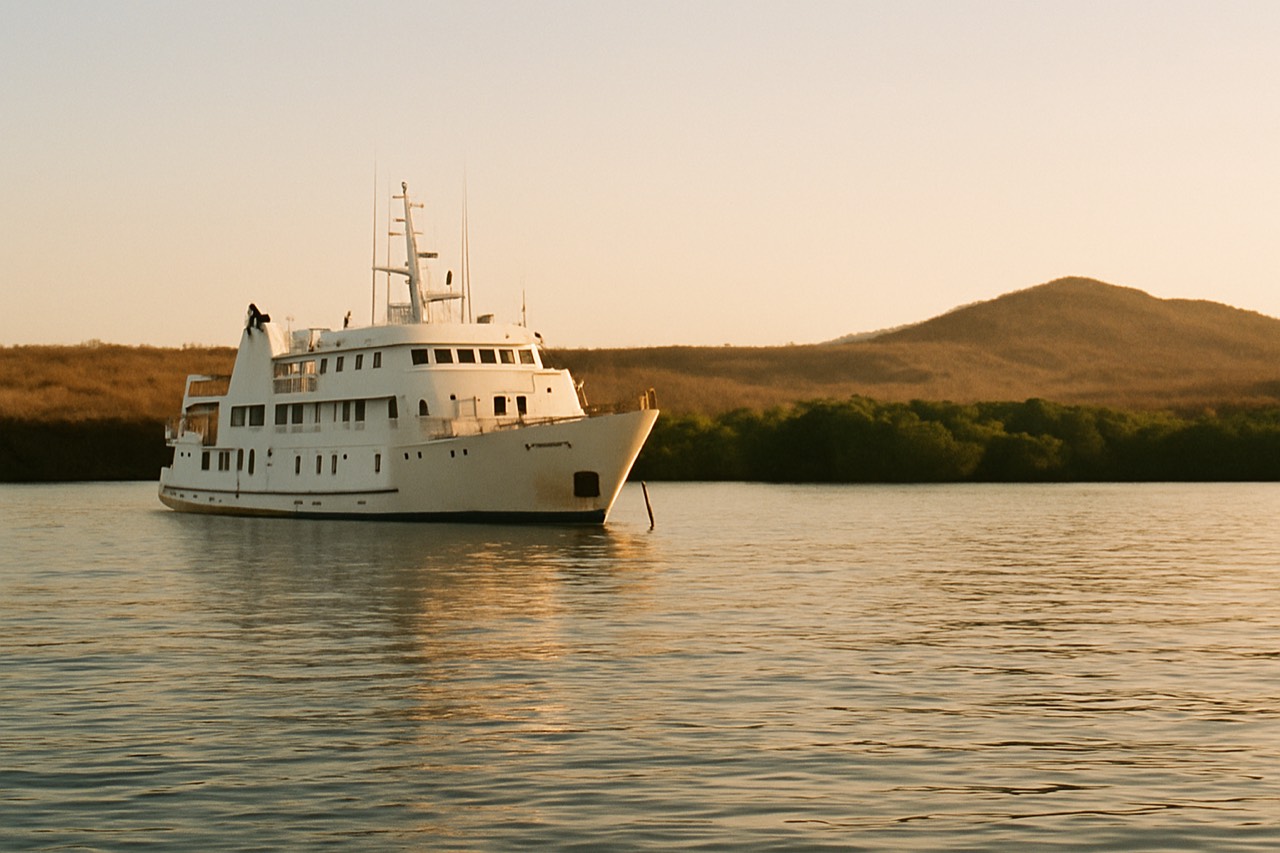
Galapagos trips are sold on wildlife photographs, which rarely show the part that matters most to older travellers: the wet landing on a rocky beach, the staircase between the sun deck and the dining cabin, and the two-hour walk over broken lava that sits between you and the colony of animals you came to see. Choosing a cruise for the archipelago in your sixties or seventies is mostly a question of matching a boat and an itinerary to your knees and your stamina, and the good news is that several options do that well.
The market itself leans older than people assume. Of the 290,404 visitors who arrived in Galapagos in 2025, the majority were not backpackers: the Ecuadorian market peaks in August, families travel in the school holidays, and small-ship cruising in particular draws a largely retired clientele. Operators know this, and the better ones have quietly adapted, running slower walking groups, offering panga rides instead of shore excursions where a landing is genuinely hard, and publishing honest descriptions of each visitor site.
This article sorts the question the way a careful planner would: first by ship, because stairs and tenders matter more than brochure photographs, then by itinerary, because some landings are steep and others are gentle strolls, then by season and cost. Along the way it names specific packages from the site's roster, with their real ratings and review counts, so you can see exactly what you are comparing.
What Is The Best Galapagos Cruise For Seniors?
For most older travellers, the best Galapagos cruise is the Private 5-Day Cruise, from $3560 per person, which lets one party set its own pace across San Cristobal, North Seymour, Floreana and Espanola. If you prefer a small-group alternative, the 5-day Isabela II Western Route, rated 5.0 across 24 reviews from $4604, covers the western islands with a full naturalist programme.
Those three answer different versions of the same question, which is why they sit side by side below. A private charter is the gold standard for pace control: when the boat belongs to your group, the guide walks as slowly as the slowest person, and nobody is holding up nineteen strangers. The trade-off is price, and on this roster the private option carries a modest review pool, 4.0 from a single review, so it is a choice you make on structure rather than on crowd consensus.
The Isabela II Western Route is the strongest small-group cruise on the roster for confidence: 24 reviews at a perfect 5.0 is a real body of opinion, the ship runs a fixed five-day loop through Bartolome, Santa Cruz, Isabela, Fernandina, Santiago and Baltra, and small-group operation means the guide ratio stays workable for a slower group. The western islands are the wildest scenery in the archipelago, and Fernandina in particular is a flat, extraordinary landing rather than a scramble.
The Discovery Premium Bay Tour is the value outlier: from $450 per person for four days with all meals included, rated 4.9 across 24 reviews, it is a land-and-bay combination built around Santa Cruz, with arrival through the airport island of Baltra. It is not a liveaboard in the classic sense, and that is precisely why it suits some older travellers: you sleep in a hotel bed, you board a boat only for day excursions, and the hardest day can be skipped without wasting a night at sea.
What Should Seniors Look For In A Galapagos Cruise Ship?
Three things matter more than anything else on the ship itself: the number of stairs between decks, whether landings happen by dry dock, panga or wet beach, and whether the operator runs a slower walking group on shore. Cabin location is the fourth factor, and midship on a lower deck reduces both motion and the distance you climb. A ship with an elevator does not exist in this market, so stair mobility is effectively an entry requirement.
Start with stairs. Galapagos cruise vessels are small by law: the tourism regulation caps a cruise permit at 16 passengers and a cruise vessel at 64, so even the largest boats in the market are a fraction the size of a mainstream cruise ship. That is good news for walking distances and bad news for elevators, because none of these vessels carry one. Every deck change is a staircase, often narrow and often with a high step, and the dining area is rarely on the same level as the cabins. If you can manage a flight of stairs several times a day, the whole fleet is open to you. If you cannot, a land-based package with day boats, like the 8-Day Galapagos Adventure in San Cristobal, Santa Cruz and Isabela, 4.9 across 12 reviews from $2363, is the honest answer.
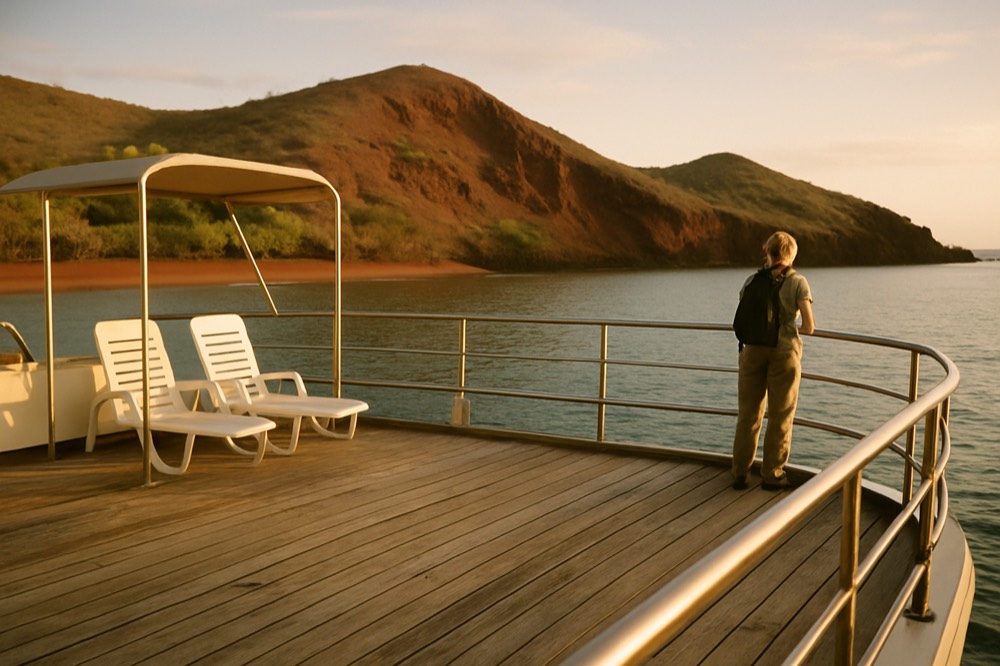
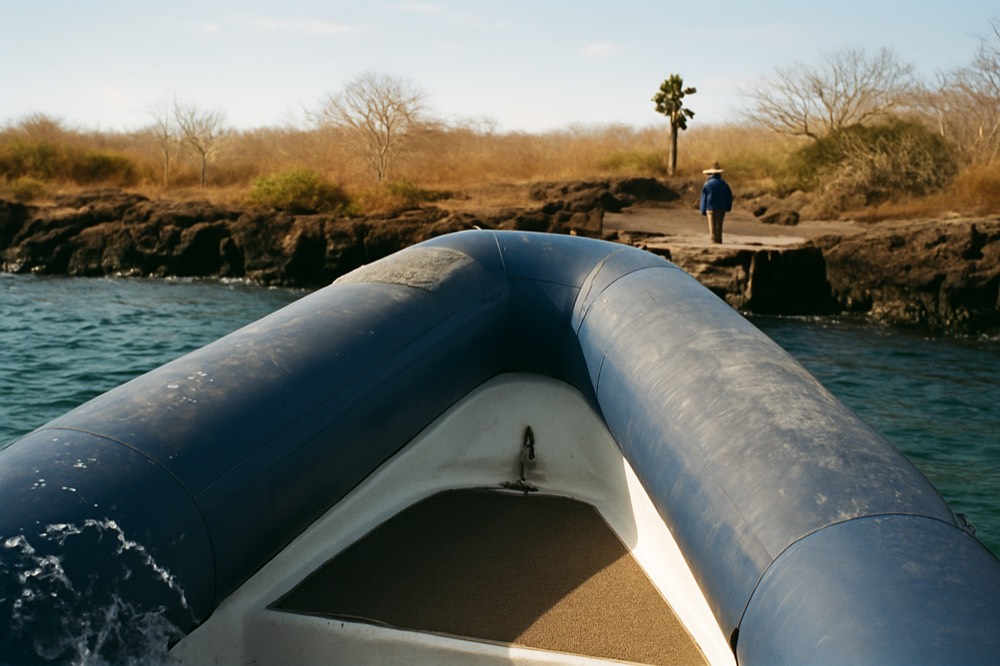
Next, landings. Every shore visit in the national park happens at one of 176 authorised visitor sites, and each site has a defined style of access: a dry landing onto a dock or rock ledge, a wet landing onto a beach where you step out of the boat into shallow water, or a panga ride where you stay in the boat and watch from the water. Wet landings are the ones that catch older travellers out, because they involve wading ashore with shoes in hand. If that is a deal-breaker, ask the operator before booking which sites on your itinerary are wet landings, and whether the panga option is offered there. Guides are used to the question.
The third factor is group pace, and here the regulation helps you: a Galapagos cruise permit carries at most 16 passengers, so even a full boat is a small group. Still, ask the operator directly whether they run a slower walking subgroup. Most established operators do, and the difference between a 40-minute stroll and a 90-minute forced march over the same lava field is the difference between a good day and a miserable one.
One structural point worth knowing before you book anything: Galapagos itineraries are fixed by the park, not by the captain. A real 2021 park resolution authorising a vessel's itinerary states that it may not be modified under any concept without express park authorisation, and only vessels under 20 passengers may change itinerary at all outside proven force majeure. So you cannot ask the crew to swap a hard landing for an easy one on the day. The itinerary you book is the itinerary you get, which makes the pre-booking questions above genuinely important rather than polite.
The private option is where those questions answer themselves. The Private 5-Day Cruise runs full board with breakfast, lunch and dinner included, across San Cristobal, Santa Cruz, North Seymour, Floreana and Espanola, and because the whole boat is one party, the daily pace is set by you. It carries a 4.0 rating from 1 review, so treat it as a structure decision rather than a crowd-tested one, and check the live listing for current dates. Check availability
Which Itineraries Skip The Hardest Landings?
The gentlest itineraries concentrate on the central and southern islands: Santa Cruz, North Seymour, Floreana, Espanola and San Cristobal offer flat beaches, short loops and abundant wildlife without long lava walks. The hardest landings and walks cluster in the west, around Isabela and Fernandina, and on Bartolome's summit trail, which is a long wooden staircase. A senior-friendly itinerary is one that either avoids those or offers the panga alternative at each stop.
This is where the itinerary matters more than the ship. Two identical vessels can deliver completely different physical experiences depending on which visitor sites they visit. The 7-Day Isabela II Natural Selection Journey, 4.9 across 31 reviews from $6137, loops through San Cristobal, Santa Cruz, Isabela, North Seymour, Floreana, Espanola and Fernandina, which mixes genuinely easy days with a couple of harder ones. The 7-day La Pinta Darwin's Legacy cruise, 5.0 across 48 reviews from $8066, the deepest review pool on the whole roster, covers Santa Cruz, Isabela, Floreana, Fernandina, Rabida and Baltra.
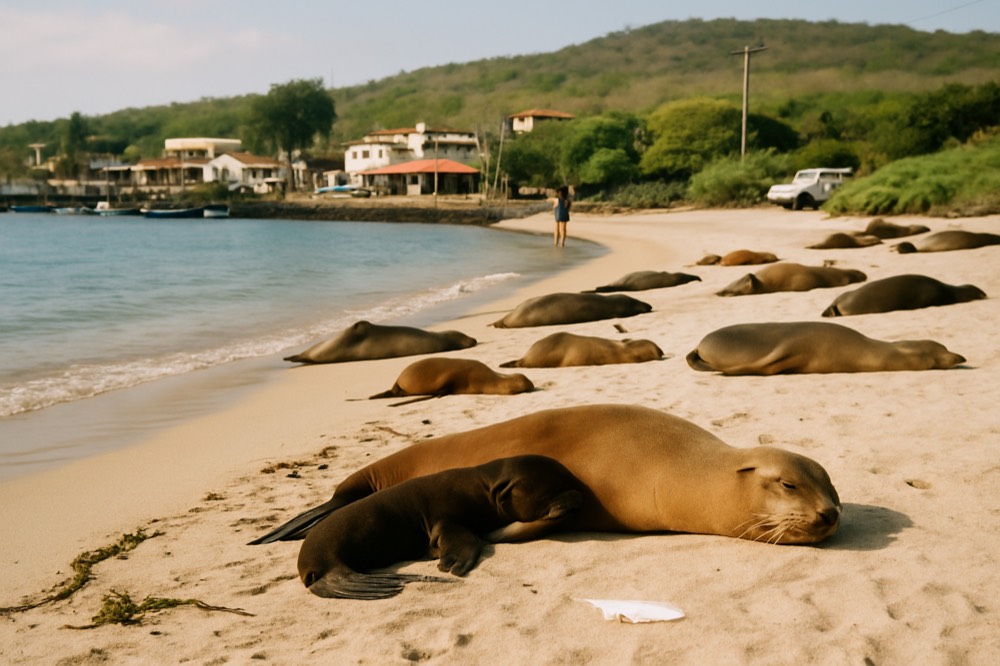
The site-by-site reality looks like this, and it is worth reading before you commit to any route:
| Visitor site | Landing type | Physical demand | What you see |
|---|---|---|---|
| North Seymour | Dry | Easy, flat loop | Frigatebirds, blue-footed boobies, sea lions |
| Espanola, Punta Suarez | Dry | Moderate, uneven rock | Albatross colony, Nazca boobies, blowhole |
| Floreana, Post Office Bay | Wet | Easy beach walk | Historic barrel, snorkelling |
| Santa Cruz, highlands | Dry | Easy, short walks | Giant tortoises in the wild |
| Bartolome summit | Dry | Hard, long wooden staircase | The archipelago's signature viewpoint |
| Isabela, Tagus Cove | Dry | Moderate climb | Penguins, historic graffiti, views |
| Fernandina, Punta Espinosa | Dry | Easy, flat lava field | Marine iguana colonies, flightless cormorants |
Two honest notes on that table. First, Espanola's albatross colony is the single most requested sight in the archipelago for many older travellers, and adults arrive there from March, with eggs laid from mid-April to late June, so timing your trip to those months gets you the birds at a site that is rocky but walkable at a slow pace. Second, the blue-footed booby, which everyone wants to see, has no season at all: verified research describes breeding in the large colonies as aseasonal and fairly continuous in normal years, so you do not need to chase a month for boobies, and any operator who promises you a "booby season" is guessing.
If the western route still appeals, and it should, because Fernandina is extraordinary, then the 5-day Isabela II Western Route is the roster's strongest version of it: 5.0 across 24 reviews, from $4604, small-group, with Bartolome, Santa Cruz, Isabela, Fernandina, Santiago and Baltra confirmed on the itinerary. A slower group can skip the Bartolome staircase and take the panga around Pinnacle Rock instead, and the guide will not think twice about it.
How Rough Are The Seas, And When Is The Calmest Time To Go?
The calmest seas run from January to May, the hot season, when the southeasterly trade winds weaken. From June to December the winds strengthen and crossings get choppier, especially the open-water legs toward the western islands. Traveller reports consistently flag the inter-island ferries, not cruise legs, as the roughest rides, so a cruise can actually be gentler than a land-based trip that relies on public ferries.
There is no honest wave-height number to give you, and any site that prints one is inventing it: the archipelago's own wave buoy is out of service for maintenance, and the two American buoys in Galapagos waters are tsunami monitors, not wave sensors. What is verified is the mechanism. The Charles Darwin Foundation defines the January-to-May hot season as the period when the southeasterly winds weaken, and the June-to-December cool season as the period when they strengthen. Stronger wind means more sea state, so the second half of the year is the rougher half, and the water is also colder then: sea temperature at Puerto Ayora averages 25.7 degrees Celsius in March against 21.5 in August and September. The rest of the planning pages sit on Galapagos Islands Tour Packages.
For a senior traveller this cuts two ways. The hot season gives you calmer water, easier wet landings and warmer snorkelling without a thick wetsuit, but it also brings the year's peak foreign demand in March and April, so prices and availability tighten. The cool season is rougher and colder but quieter, and September is the annual trough for arrivals, which means empty visitor sites. Demand peaks twice in the year, once for foreign visitors in March to April and once for Ecuadorian visitors in August, according to the park's own 2025 visitor report.
The practical seasickness advice from travellers who have done it recently: start medication the night before the first crossing, not the morning of, and choose a midship lower-deck cabin, where motion is least. One repeated complaint in recent reviews concerns lower-deck cabins next to the engine, with noise and fuel smell, so when you book, ask for midship rather than simply low. If you want a deeper comparison of the seasonal trade-offs, the site's guide on the best time for a Galapagos cruise works through the wildlife calendar month by month.
What Does A Senior-Friendly Galapagos Cruise Cost?
On this site's roster, cruise packages run from $450 per person for a four-day bay tour to $8,066 for a seven-day small-ship expedition, with the private five-day charter at $3,560. On top of every package price, budget the $200 park entry fee and the $20 transit control card, both paid separately, plus flights and tips. The median land-based package sits far below the top cruise figure.
The price spread is enormous, and it is worth seeing the whole ladder at once:
| Package | Days | From, per person | Rating | Meals |
|---|---|---|---|---|
| Discovery Premium Bay Tour | 4 | $450 | 4.9 from 24 reviews | All meals |
| Private 5-Day Cruise | 5 | $3,560 | 4.0 from 1 review | All meals |
| Isabela II Western Route | 5 | $4,604 | 5.0 from 24 reviews | Small-group |
| Isabela II Natural Selection Journey | 7 | $6,137 | 4.9 from 31 reviews | Small-group |
| La Pinta Darwin's Legacy | 7 | $8,066 | 5.0 from 48 reviews | Standard |
Every price in that table is per person, taken from each tour's own listing, and each is verified as of the current roster. Review counts are printed beside every rating deliberately: a 5.0 from 48 reviews, as La Pinta carries, is a strong signal, while a 4.0 from 1 review is simply one traveller's experience, honest but thin. The site's guide to Galapagos package costs breaks the extras down line by line.
Two costs sit outside every package price and catch people out at the airport. The Galapagos National Park entry fee is $200 for a foreign adult, paid in cash, in US dollars, to park rangers on arrival at Baltra or San Cristobal airport, and there is no official online prepayment portal, so arrive with clean notes. The Transit Control Card is $20 per person, bought at the government counter at Quito or Guayaquil airport before check-in; free online pre-registration speeds up the counter visit, but individual travellers still complete the purchase at the airport, and only travel agencies can pay in advance. The official fee schedule is published by the park directorate, and the transit card process is explained in the government's own FAQ.
Whether a cruise is worth the premium over a land-based package is a fair question at any age, and the honest answer is that most visitors do not cruise at all: 79% of Galapagos visitors in 2025 stayed on land and only 21% stayed on board a vessel, a split the park reports as unchanged from the year before. But for older travellers specifically, the cruise case is stronger than that statistic suggests, because a cruise removes the two hardest parts of a land-based trip: hauling luggage onto inter-island ferries, which travellers consistently report as the roughest rides in the archipelago, and re-checking into a new hotel every two nights. The site's comparison guide on cruise versus land packages works through the trade-off in full.
What Practical Steps Make The Trip Easier For Older Travellers?
Arrive at the mainland airport three hours before the flight, carry $220 per person in clean US cash for the park fee and transit card, pre-register the transit card online to save time at the counter, and book a midship cabin. Start motion-sickness medication the night before the first crossing, and pack your own snorkel mask if rental fit matters. A naturalist guide is compulsory at protected sites, so you are never left to make a landing alone.
The airport sequence deserves a walk-through, because it is the part of the trip where older travellers most often feel rushed. At Quito or Guayaquil, before airline check-in, you pass a biosecurity inspection where all baggage is scanned for fresh produce, seeds and other restricted items, and the government recommends arriving three hours early precisely because of this process. You then buy the transit card at the government counter, check in, and fly. On arrival at Baltra or San Cristobal you pay the park fee in cash to the rangers, and your bags may be inspected again. The official biosecurity standards are published by the inspection agency itself, and the packing rule that follows from them is simple: leave fresh fruit, vegetables and seeds at home.
Once you are in the islands, the rules work in your favour. Visits to protected areas must be made in the company of a park-accredited naturalist guide, and the current visit rules, resolution MAE-PNG/DIR-2026-0044-RM of 12 August 2026, also set a minimum distance of two metres from wildlife on walks and snorkels, and four metres during panga and kayak rides. You are not permitted to touch or chase animals, and equally, nobody is permitted to rush you through a site. The visiting day in the park runs from 06h00 to 18h00, with diving ending at 17h00, so every excursion is a daylight activity.
A few rules are genuinely useful to know rather than restrictive. Six popular sites now require an advance QR reservation through the park's system, including the Fausto Llerena tortoise centre on Santa Cruz and Las Grietas, and only agencies registered in Galapagos can make those reservations, which is one more reason to book through an established operator rather than a walk-in shop in Puerto Ayora. Sunscreens containing oxybenzone or octinoxate are restricted during water activities in the protected areas, so pack a mineral-based alternative, and the site's blog post on what sunscreen you can use covers the detail.
Finally, the pacing advice that experienced older travellers give most often: book one more day than you think you need, and build a buffer after the flight in. The archipelago rewards slow travel, the wildlife is habituated to people and will come to you if you sit still, and the single most common regret in recent traveller reports is not the boat or the cost but the itinerary that felt compressed. A five or seven-day cruise at a gentle western or central route, with a midship cabin and a slower walking group, is the version of this trip that most senior travellers come home describing as the best week of their lives.
Common Questions About Galapagos Cruises For Seniors
What Is The Best Galapagos Cruise For Seniors?
For pace control, the Private 5-Day Cruise, from $3560 per person with all meals included, lets one party set its own walking speed. For a small-group option with the deepest review pool, the 7-day La Pinta cruise runs 5.0 across 48 reviews from $8066. For a gentler and cheaper entry, the 4-day Discovery Premium Bay Tour, 4.9 across 24 reviews from $450, keeps the sailing short and the beds on land.
Are Galapagos Cruises Suitable For People With Limited Mobility?
Partly. No Galapagos cruise vessel carries an elevator, so you must be able to manage staircases between decks several times a day. Wet landings, where you step from the boat into shallow water, are common, though guides usually offer a panga ride as an alternative. If stairs or wading are a problem, a land-based package with day boats is the better fit.
Is A Cruise Or A Land-Based Package Better For Older Travellers?
It depends on the sea, not the scenery. Land-based trips rely on inter-island ferries, which travellers consistently report as the roughest rides in the archipelago, and they involve repeated hotel changes. A cruise unpacks once and moves at night, but costs more. In 2025, 79% of visitors stayed on land, so both styles are mainstream choices.
How Rough Is The Sea On A Galapagos Cruise?
The January-to-May hot season is the calmer half of the year, when the southeasterly winds weaken. June to December is rougher, especially on open-water legs toward the western islands. No reliable wave-height figure exists for the archipelago, so treat any number you read elsewhere with suspicion. Start motion-sickness medication the night before a crossing.
What Extra Costs Should Seniors Budget Beyond The Package Price?
Budget $200 per person in cash for the park entry fee, paid to rangers on arrival, and $20 for the transit control card, bought at the Quito or Guayaquil airport counter. Neither is included in most package prices. Add flights, tips for the crew and guide, and any wetsuit or snorkel rentals, which some boats charge separately.
Which Galapagos Landings Are The Hardest?
The Bartolome summit trail is a long wooden staircase, and some western Isabela sites involve moderate climbs over uneven lava. The easiest landings are the flat loops at North Seymour, the beaches of Floreana, and the tortoise highlands of Santa Cruz. Ask your operator which landings on your chosen itinerary are wet, and whether a panga alternative is offered.