Is Galapagos Liveaboard Worth It?
A dive liveaboard in Galapagos is worth it for one reason: Darwin and Wolf. Here is what those two islands actually deliver, what the trip costs, and who should stay land-based instead.
 By Oleg Galeev, Editor
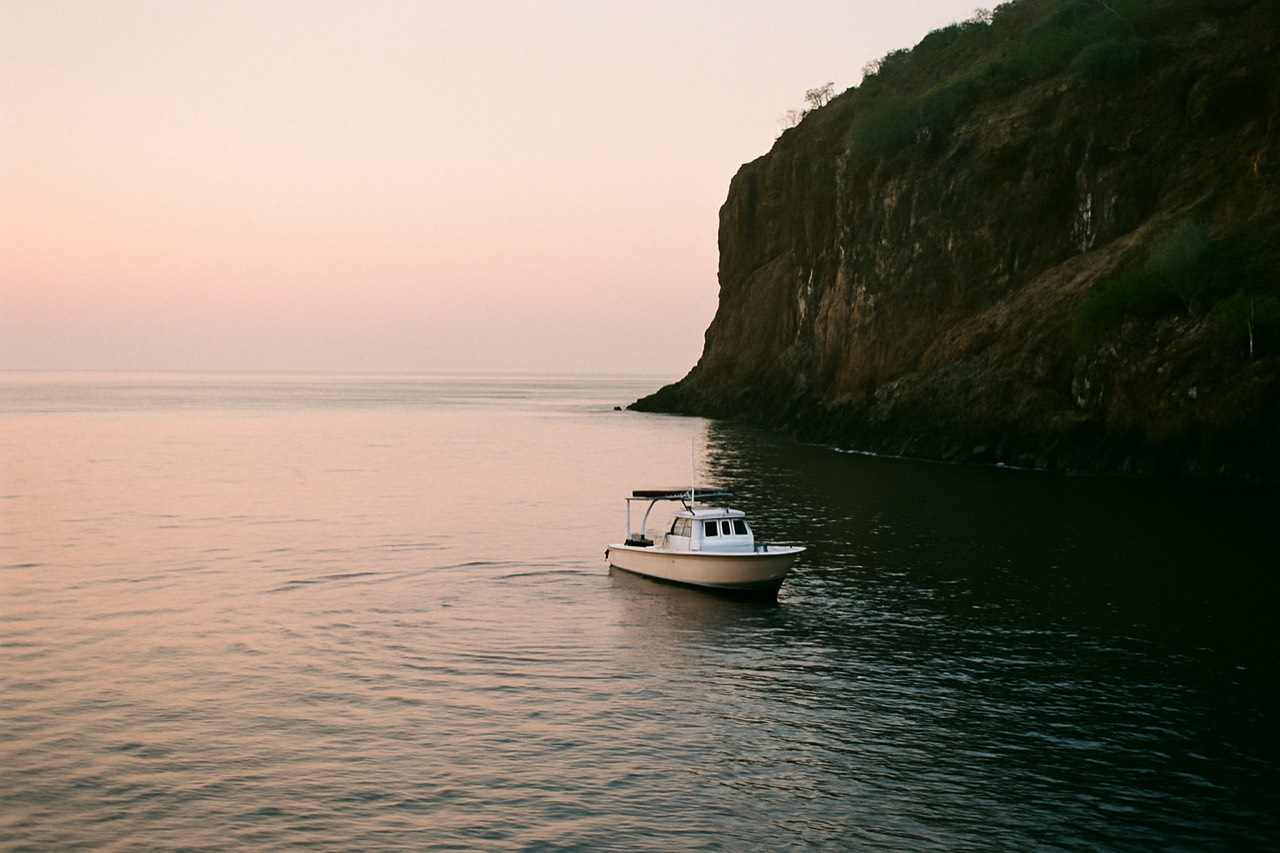
Is Galapagos Liveaboard Worth It?
A Galapagos liveaboard is worth it for one specific traveller: the diver whose whole reason for the trip is Darwin and Wolf. Those two remote northern islands, with their schooling hammerheads and whale shark sightings, are the only dive sites a liveaboard reaches that a land-based package cannot. If Darwin and Wolf are not the point, a land-based dive package delivers comparable diving for less money and less discomfort.
The honest answer starts with geography. The Galapagos archipelago is made up of 127 islands, islets and rocks, and almost everything a visitor associates with it, the giant tortoises, sea lions, marine iguanas and penguins, lives within easy reach of the four inhabited islands. A land-based package anchored on Santa Cruz or Isabela can put you in the water at sites like North Seymour, Santa Fe and Pinzon with a short boat ride each morning. You do not need a liveaboard for any of that.
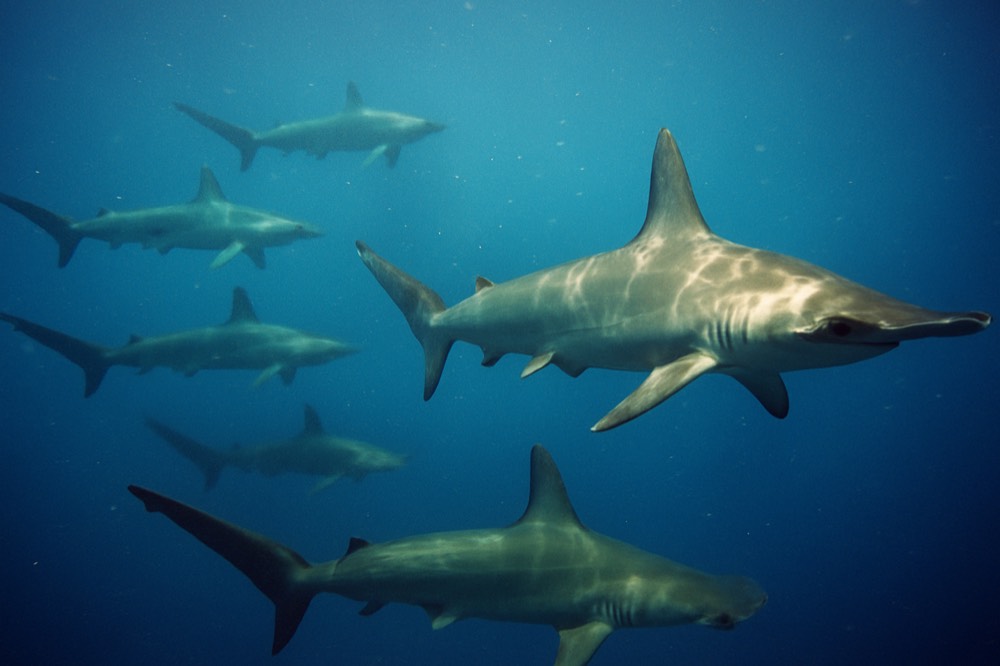
Darwin and Wolf are different. They sit at the far northern edge of the marine reserve, roughly a full day of open-water crossing from the central islands, and no day boat reaches them. Only liveaboard dive vessels run itineraries there, and that exclusivity is the entire case for the format. The waters around the two islands are where the archipelago's famous big-animal diving concentrates: large schools of scalloped hammerheads, Galapagos sharks, and whale sharks that show up in numbers the central islands rarely match.
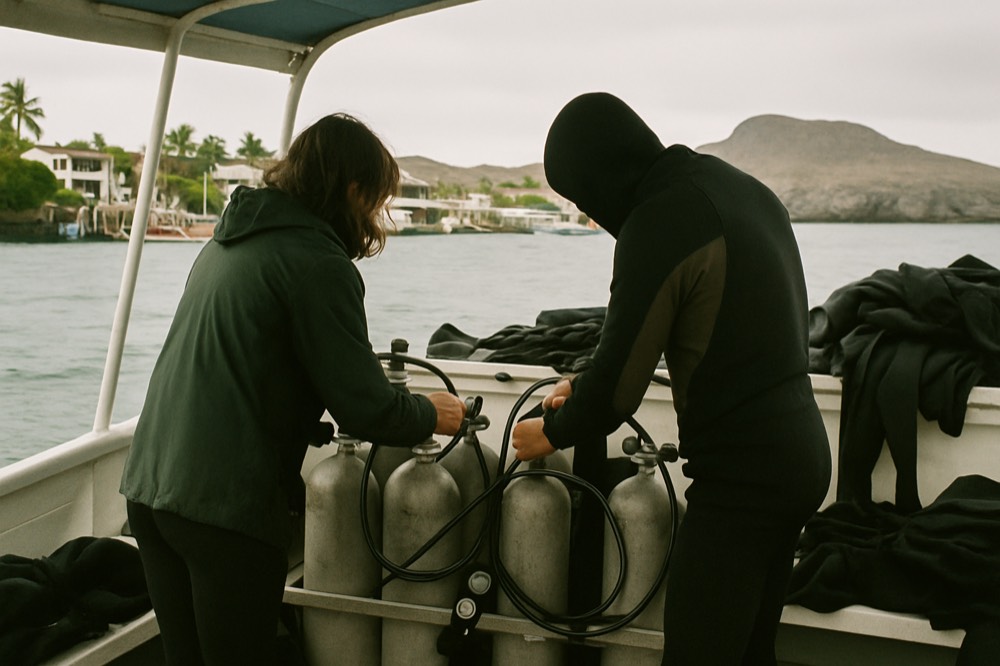
The second half of the case is a warning. The crossing to Darwin and Wolf is genuinely rough, and the dive conditions there are demanding even by Galapagos standards. Travellers who have done the trip consistently describe long transit legs, strong currents, cold thermoclines and surge around the islands themselves. This is a trip for experienced divers with many logged dives, not a first liveaboard.
So the question is really two questions. Do you specifically want Darwin and Wolf, and are you comfortable paying a premium and enduring the crossing to get them? If both answers are yes, the liveaboard earns its price. If either is no, the money is better spent elsewhere, and there are strong alternatives, which this site covers in depth in its Galapagos diving packages guide.
If you are weighing the format, these three packages frame the real choice: a land-based dive-and-hike combination, a shorter land-based diving itinerary, and a top-end small-ship cruise for comparison.
What A Liveaboard Actually Reaches That Nothing Else Does
Darwin and Wolf are the liveaboard's unique product. The park counts 176 authorised visitor sites across the archipelago, 91 marine and 85 terrestrial, and the vast majority of the marine ones are reachable from land via day boats. The northern islands are the exception: no day tour, ferry or land-based operator runs there. If a trip lists Darwin or Wolf, it is a liveaboard, and if it does not, it is not.
That exclusivity is worth spelling out, because a lot of marketing blurs it. Some land-based packages advertise "Darwin and Wolf style" diving or promise hammerheads, and hammerheads do appear at central-island sites. But the concentrated big-animal experience, the famous scenes of hundreds of hammerheads stacked in a current line, happens overwhelmingly at the two northern islands, and the only way to dive them is to sleep on a boat that has made the crossing.
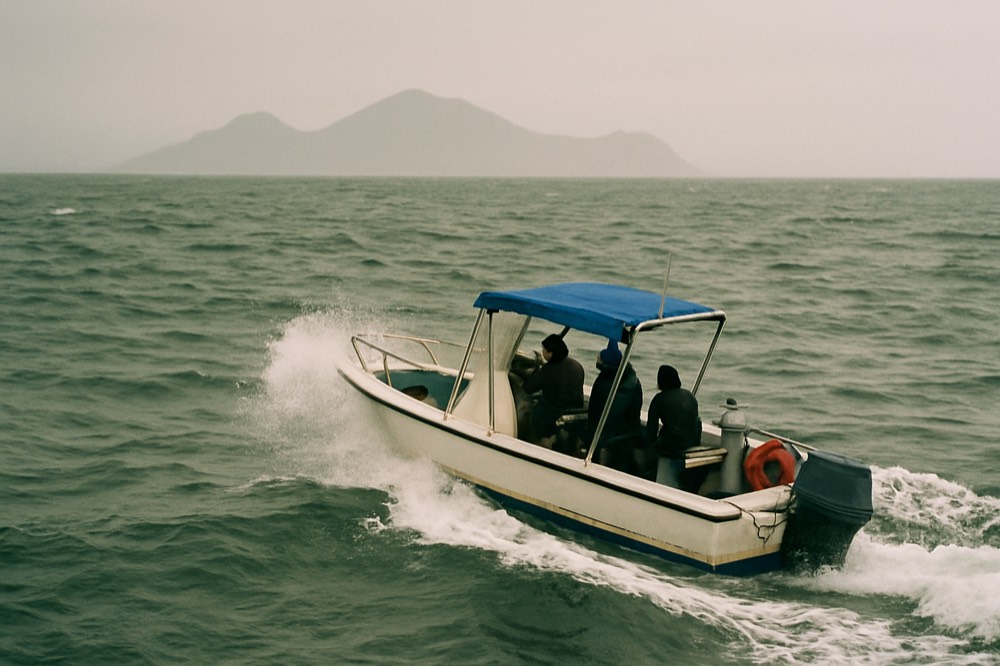
The trade-off is what surrounds those dives. A Darwin and Wolf itinerary typically means one to two days of transit each way, often in choppy water, with the best diving packed into the middle days. Traveller reports on the Galapagos subreddits describe the crossing as the roughest legs of any Galapagos trip, worse than the inter-island ferries, and several say they spent the transit days in their cabins. The cool season from June to December brings stronger southeasterly winds, and the Charles Darwin Foundation defines that season precisely by those strengthened trades, so the second half of the year is the rougher half for the crossing.
There is also a rule structure behind every Galapagos boat that a buyer should understand. Under the national tourism regulation for protected areas, a liveaboard cruise permit carries at most 16 passengers and a cruise vessel at most 64, while a day dive tour is capped at 12 passengers per permit and vessel. A liveaboard is not a floating resort with a flexible schedule: itineraries are approved by the park and cannot be modified, so the day-by-day plan you book is the plan you sail, weather aside.
For divers who want the big-animal experience without committing to the full liveaboard format, the land-based options are genuinely strong. The 7-Day Diving and Hiking on the Galapagos Islands Tour is the strongest of them on this roster: it rates 5 across 3 reviews, runs from $2600 per person, and lands on Santa Cruz, Isabela and Bartolome, with Santa Fe or North Seymour offered as a choice of excursion, pairing daily dives with hikes. It is a small-group trip, and you can also see its full details on the tour page or Check availability.
What A Liveaboard Costs Against Land-Based Diving
A Galapagos dive liveaboard is the most expensive way to dive the archipelago. On this site's roster, liveaboard-adjacent cruise packages run from $3,560 to $8,066 per person, while land-based dive packages run from $1,545 to $2,600. The gap buys you Darwin and Wolf, and nothing else. The $200 park fee and the $20 transit card are extra on top of either format.
The price comparison is stark once you line up what each format includes. A land-based dive package typically bundles hotels, breakfast and lunch, daily guided dives or snorkels and airport pickups, and you sleep ashore. A liveaboard bundles the boat, all meals and the full itinerary, and you sleep aboard. Neither format reliably bundles the flights from the mainland, and the park fee is collected in cash on arrival either way.
| Package | Format | From (per person) | Rating | Days |
|---|---|---|---|---|
| 7-Day Diving and Hiking on the Galapagos Islands Tour | Land-based, small group | $2600 | 5 across 3 reviews | 7 |
| 6 Days Galapagos Island Hopping With Diving | Land-based | $1545 | 5 across 1 reviews | 6 |
| 8 Day Galapagos Island Hopping For Divers | Land-based | $1941 | 5 across 1 reviews | 8 |
| 5 Day Seaman Journey Galapagos Luxury Cruise | Liveaboard cruise | $4500 | no reviews yet | 5 |
| La Pinta Darwin's Legacy (Fri-Thurs) | Liveaboard cruise | $8066 | 5 across 48 reviews | 7 |
Two caveats on that table. First, the liveaboard cruise prices shown here are general small-ship cruises rather than dedicated dive liveaboards; specialist dive liveaboards in Galapagos generally price above the land-based packages on this roster, and their exact fares move season to season, so treat the listing price as the source of truth when booking. Second, the review pools are small across this whole category, which is honest information rather than a red flag: a 5 from 3 reviews tells you three people loved it, not that the market has voted.
Hidden extras are a real factor in either format, and travellers report them consistently: wetsuit and snorkel rentals that look optional but effectively are not, crew and guide tips, drinks and Wi-Fi aboard, and inter-island transport on land-based trips. Budget for those on top of the headline price. The park fee itself is paid in cash, US dollars, to rangers at Baltra or San Cristobal airport, per the official park fee page, so arrive with clean notes.
The Crossing, The Conditions And The Comfort Question
The Darwin and Wolf crossing is the single biggest reason people regret the format, and the second is the cabin. Traveller reports describe multi-day transits in rough water, cold water diving with strong currents, and lower-deck cabins near the engine drawing complaints about noise and fuel smell. None of this is a reason not to go, but it is a reason to be honest about your sea legs before you pay.
The roughness has a documented seasonal shape. The cool season, June to December, is defined by the Charles Darwin Foundation as the period when the southeasterly trade winds strengthen, and those winds are what make the open-water legs choppy. The hot season, January to May, is when those winds weaken. Divers who want calmer transits and warmer water lean toward the early months of the year, while divers chasing the biggest big-animal aggregations often accept rougher conditions in the second half. No reliable wave-height figure exists for these waters: the archipelago's own wave buoy is out of service and the nearby NOAA buoys measure tsunamis, not surf, so any number you read on a booking page is a guess.
The practical advice that comes up again and again in traveller reports is simple and cheap. Start motion-sickness medication the night before the crossing, not the morning of. Choose an upper-deck or midship cabin over a lower-deck one, and ask the operator direct questions about which cabins sit near the engine before you book. Bring your own snorkel and mask if you care about fit, since rental quality varies. And keep a buffer day after the trip before your international flight home, because a delayed return crossing can otherwise wreck an itinerary.
Diving fitness matters as much as sea legs. The marquee dives at Darwin and Wolf are current dives: you descend, hook into the rocks or hold position, and watch the action pass. That demands comfort in current, good air consumption and the discipline to stay with your group. If your dive log is mostly calm reef dives, a land-based package with gentler sites is the better first Galapagos experience, and the Galapagos cruise versus land package guide walks through that comparison in full.
Who Should Skip The Liveaboard Entirely
Skip the liveaboard if Darwin and Wolf are not your specific goal, if you are prone to seasickness, if your dive experience is limited, or if the budget would force compromises elsewhere in the trip. In all of those cases a land-based dive package delivers most of the same marine life, better sleep, more flexibility and a materially lower price. The regret pattern in traveller reports is people who booked the format for status rather than for the sites.
The marine life argument for staying land-based is stronger than most people expect. Sea lions, marine iguanas, green turtles, reef sharks, rays and Galapagos sharks appear at central-island dive sites reachable on day boats from Santa Cruz, Isabela and San Cristobal. The 2025 park monitoring counted 26,336 marine iguanas and 6,936 sea lions across the archipelago, and those animals are everywhere there is coastline. What the central islands do not deliver is the northern big-animal density, and that is the honest line between the formats.
Land-based packages also give you evenings in town, the option to skip a dive if you are tired, and easier exits if the sea is unkind. The 8 Day Galapagos Island Hopping For Divers package is a good example of the format done well: it runs from $1941 per person, rates 5 across 1 reviews, and covers San Cristobal, Santa Cruz, Isabela and North Seymour with dives threaded through a hotel-based week. It is a standard-format trip with breakfast and lunch included.
If you want the same land-based idea but with more variety and a small-group structure, the dive-and-hike combination is the stronger pick. It stretches to seven days, adds Bartolome and Santa Fe to the island list, and swaps two hotel-based dive mornings for highland hikes, which is where the giant tortoise encounters actually happen on land-based trips. For a diver who wants a full week with both fins and boots in use, it is the more complete package on this roster.
Between those two, the 7-day dive-and-hike trip is the more complete package: more islands, a small-group format and a hiking component that gets you into the highlands, where the giant tortoises actually live. The park estimates around 60,000 giant tortoises across the archipelago, and the highland reserves on Santa Cruz are the easiest place to see them. A week that pairs a morning dive with an afternoon tortoise hike is, for many travellers, a better Galapagos trip than four days of transit for two legendary dive sites.
The Rules And Fees That Apply Whichever Way You Go
Every Galapagos visitor pays the same entry costs and follows the same park rules regardless of format. The park entrance fee is $200 for foreign adults, the transit control card is $20, and the current visit rules mandate two metres minimum distance from wildlife, four metres from the shore while kayaking or in a panga, and no touching or feeding of any animal. The liveaboard buys you different sites, not different rules.
The fee mechanics catch people out. The park fee is paid in cash, in US dollars, to rangers at the airport on arrival, and there is no official online prepayment portal, so do not believe a page that says otherwise. The transit card is bought at the counter in Quito or Guayaquil airport before check-in; free online pre-registration speeds up the counter visit, but individual travellers cannot complete the purchase online in advance, only travel agencies can. The official visitor-sites page is the park's own index of where tourism is authorised, and it is worth a look before choosing any package.
| Item | Cost | When and where |
|---|---|---|
| Park entrance fee, foreign adult | $200 | Cash, on arrival at Baltra or San Cristobal |
| Park entrance fee, foreign child under 12 | $100 | Cash, on arrival |
| Transit control card | $20 per person | CGREG counter at Quito or Guayaquil, before check-in |
| Itabaca Channel ferry, Baltra to Santa Cruz | $1 | On arrival, about 10 minutes |
| Maximum tourist stay | 60 days per year | Non-extendable |
The visit rules in force since August 2026 also matter to divers specifically. Sunscreens containing oxybenzone or octinoxate are restricted during water activities in the protected areas, so pack a reef-safe mineral alternative, and the site's sunscreen guide covers exactly what that means. General visiting hours in the park run from 06h00 to 18h00, with diving until 17h00 and night diving only at designated sites. Guided visits are compulsory at protected sites, which is why every package on this roster, land-based or liveaboard, is built around a licensed naturalist guide.
How To Decide In One Sitting
Decide on three questions. First, is Darwin and Wolf the reason you are flying to Ecuador? Second, do you have the dive experience and sea legs for a rough crossing and current dives? Third, does the budget absorb the premium without cutting the rest of the trip? Three yeses means book the liveaboard. Any no means a land-based dive package gives you a better trip for less money, and this site's Galapagos Islands Tour Packages roster includes strong ones.
It helps to see the decision as a fork rather than a ranking. The liveaboard is not a better version of a land-based dive trip; it is a different trip with a different objective. The land-based diver sees more islands, sleeps still, spends evenings in Puerto Ayora or Puerto Villamil and dives a rotation of central sites. The liveaboard diver trades all of that for the two northern islands and the animals that concentrate there. Neither is wrong, and the worst outcomes come from buying one while wanting the other.
If you are leaning liveaboard, book early and read the itinerary carefully, since park-approved itineraries cannot be changed once issued. Ask the operator direct questions about cabin location, the number of dives per day, what rental gear costs and what the cancellation terms are. If you are leaning land-based, the packages below are the strongest on this roster for divers: the dive-and-hike combination, the shorter diving hop and the top-end cruise for comparison.
Common Questions About Galapagos Liveaboard Trips
Is Galapagos Liveaboard Worth It?
Only if Darwin and Wolf are the point. Those two northern islands are the sole dive sites a liveaboard reaches that no land-based package can, and they hold the archipelago's densest big-animal diving. If that is your goal and you can handle the rough crossing, it is worth it. If not, a land-based dive package from $1,545 delivers comparable marine life for less.
How Rough Is The Crossing To Darwin And Wolf?
Rough, and rougher in the second half of the year. The cool season from June to December is defined by strengthened southeasterly trade winds, and traveller reports consistently describe the northern transit as the roughest legs of any Galapagos trip. No reliable wave-height figure exists for these waters, so treat any number on a booking page with suspicion. Start motion-sickness medication the night before.
Do I Need To Be An Experienced Diver For A Galapagos Liveaboard?
Yes, effectively. The marquee dives at Darwin and Wolf are current dives in cold, surge-prone water, and the days are long. Most operators expect a substantial number of logged dives. If your experience is mostly calm reef diving, a land-based package with gentler central-island sites is the better first Galapagos trip.
Is The Park Entrance Fee Included In A Liveaboard Or Dive Package?
Usually not. The $200 park fee for foreign adults is paid in cash, US dollars, to rangers on arrival at Baltra or San Cristobal airport, and there is no official online prepayment portal. The $20 transit control card is bought at the Quito or Guayaquil airport counter. Check your package's listing to see whether it states inclusion; where it does not say, assume you pay these yourself.
Can I See Hammerheads Without A Liveaboard?
Sometimes, yes. Hammerheads appear at central-island sites like North Seymour and around Isabela, and land-based dive packages dive those sites regularly. But the large, concentrated schools the northern islands are famous for are a liveaboard-only experience, since no day boat reaches Darwin and Wolf.