Are Galapagos Cruises Worth It?
An honest comparison of Galapagos cruise prices against land-based island hopping, with real package figures, park rules and traveller reports, to help you decide whether the cruise premium is worth paying.
 By Oleg Galeev, Editor
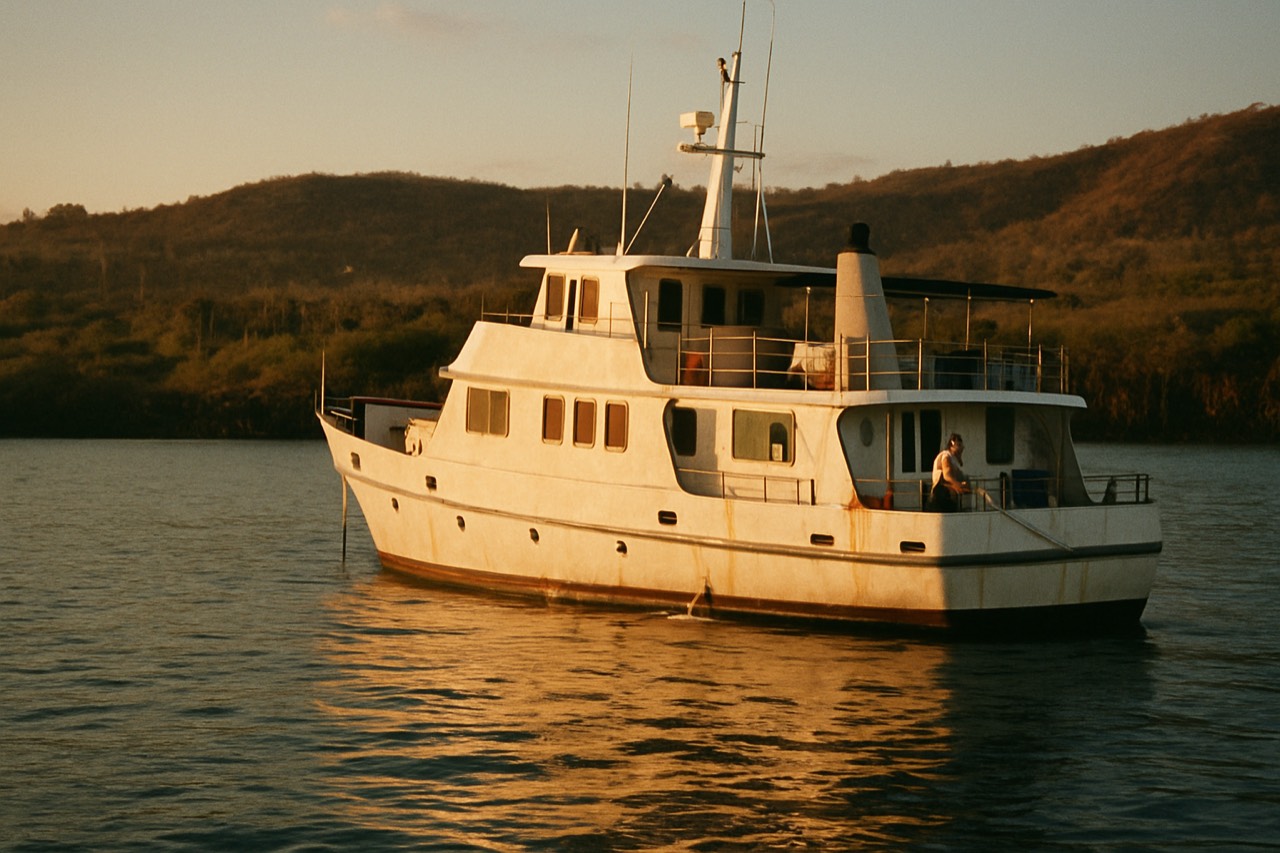
For most travellers, a Galapagos cruise is worth the premium only if remote islands, wildlife density at dawn and dusk, and unpacking once matter more to you than money. A land-based package covers the same headline animals for roughly half the price. The park's own numbers show 79% of visitors now stay on land, and 21% sleep on a vessel. The cruise is not the default, and it is not automatically better. It is a specific purchase for a specific kind of trip.
The question gets answered badly almost everywhere, because most of the people answering it are selling one side. Cruise operators publish pages explaining why land trips are inferior. Land-tour operators publish the mirror image. Neither quotes real numbers from both columns of the ledger. This page does, using verified package prices from this site's own roster and the park's published statistics, and it names the two or three traveller types for whom the cruise genuinely is not worth it.
Start with the one number that reframes the whole debate: the Galapagos National Park's 2025 visitor report counted 290,404 arrivals, and its breakdown of where those visitors sleep, drawn from transit-card registrations, has 79% staying on land and 21% staying on board. That split was identical in 2024. The land trip is not the budget consolation prize the cruise brochures imply. It is what four out of five visitors, including plenty of people who could afford either, actually choose.
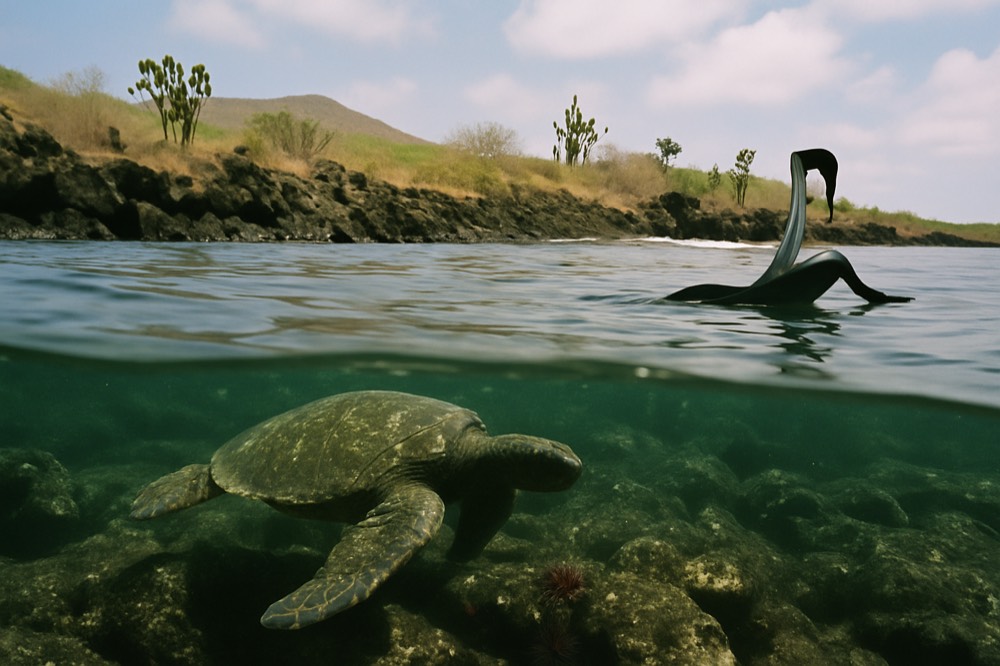
If you already know you want the cruise, the short version is this: a small-group cruise is worth it for wildlife density, remote western islands and total logistics relief. Here are the three packages that best represent the cruise argument at three different price points.
What Does A Cruise Cost Against A Land Trip, In Real Numbers?
On this site's roster, cruise packages run from $3,560 to $8,066 per person, while land-based packages covering four to eight days run from $450 to $2,898, so a cruise typically costs substantially more than a comparable land trip. The exact gap depends on trip length and package tier, but the price ranges above give you a direct basis for comparison. A five-day small-group cruise such as the Isabela II Western Route starts at $4,604. A five-day land package visiting three islands, the intensive island-hopping tour, starts at $1,399 and carries a 4.7 rating across 56 reviews, the largest review pool on the roster. The cruise costs roughly three times as much for a similar number of days, and no cruise on the roster comes close to the land format's entry price.
That gap is the entire debate. Everything else, the wildlife, the cabins, the food, is downstream of whether you will pay roughly three times more for the same week. And the gap does not close when you add the extras, because the extras hit both sides equally: the $200 park entrance fee paid in cash on arrival, the $20 transit control card bought at the Quito or Guayaquil airport counter, and the flights from the mainland, which the park's arrival guidance treats identically regardless of where you sleep.
Here is the honest ledger, using only prices verified from live listings.
| Package | Type | Days | From (per person) | Rating |
|---|---|---|---|---|
| La Pinta, Darwin's Legacy | Cruise, standard | 7 | $8,066 | 5.0 from 48 reviews |
| Isabela II Natural Selection Journey | Cruise, small group | 7 | $6,137 | 4.9 from 31 reviews |
| Isabela II Islands of Fire, Western Route | Cruise, small group | 5 | $4,604 | 5.0 from 24 reviews |
| 5-Day Seaman Journey | Cruise, standard | 5 | $4,500 | No reviews yet |
| 8-Day Multisport, all meals | Land, small group | 8 | $2,363 | 4.9 from 12 reviews |
| Intensive 5 days, 3 islands | Land, standard | 5 | $1,399 | 4.7 from 56 reviews |
| 4-Day Complete Experience | Land, standard | 4 | $1,313 | 4.7 from 15 reviews |
| Discovery Premium Bay Tour | Land, standard | 4 | $450 | 4.9 from 24 reviews |
Read the table twice, once for price and once for proof. The cruise column's ratings are real but rest on small pools: 48 reviews is the largest cruise pool here. The land column's 56-review intensive tour is the most-reviewed product on the entire site. Neither side of the market carries the kind of review volume a hotel in Rome accumulates, so a bare star rating tells you less than the count beside it.
The other thing the table shows is that the cruise floor is high. The cheapest cruise here, a private five-day full-board charter, starts at $3,560 and carries a 4.0 from a single review. Meanwhile the land floor is $450 for the four-day Discovery Premium Bay Tour, which includes all meals and a 4.9 rating across 24 reviews. If your budget sits anywhere near the land column's ceiling, the cruise question answers itself before any wildlife argument begins.
The extras deserve their own line of sight, because they are the same for everyone and they are not small. Every visitor pays the park entrance fee in cash on arrival and the transit card at the mainland counter, and most packages leave flights, tips and gear rentals to you. Here is what hits both formats equally.
| Extra cost | Amount | Applies to |
|---|---|---|
| Park entrance fee, foreign adult | $200, cash US dollars, to rangers on arrival | Every visitor, cruise or land |
| Transit control card (TCT) | $20, at the CGREG counter in Quito or Guayaquil | Every visitor, cruise or land |
| Mainland flights to Baltra or San Cristobal | Not stated on most listings, book separately | Every visitor, cruise or land |
| Snorkel and wetsuit rental | Varies by operator, often extra | Both formats, check the listing |
| Tips for guide and crew | Varies, budget travellers report it as a real line | Both formats |
There is a middle case worth naming: last-minute cruise deals sold from Puerto Ayora offices, which travellers report in the $1,250 to $2,000 range. Those exist, but they are a gamble on dates, boat and itinerary, and recent traveller threads are full of people who found the savings not worth the uncertainty. If your holiday dates are fixed around flights already booked, that market is not really available to you.
If the cruise side of the ledger is the one you want to explore, the western route below is the roster's clearest example of what the premium buys: Fernandina, the youngest island, and the sites land trips cannot reach.
What Does A Cruise Reach That A Land Trip Cannot?
A cruise reaches Fernandina and the far western waters around Isabela, plus outer islands like Española on longer itineraries, which no day tour from a hotel can visit, and it puts you on visitor sites at dawn rather than mid-morning. That is the whole of the cruise's structural advantage, and it is a real one. Fernandina, the most pristine island in the archipelago, has no hotels, no airport and no ferry. The only way to stand on it is to arrive by vessel.
Look at the confirmed stops and the difference is blunt. The Isabela II Western Route lists Bartolomé, Isabela, Fernandina, Santiago and Santa Cruz. The seven-day La Pinta itinerary adds Floreana and Rábida to that western route. Now look at the land packages: even the longest land tours on the roster, the eight-day and ten-day hopping tours, work San Cristóbal, Santa Cruz, Isabela, Santa Fe, North Seymour, Española on one and Bartolomé on the other, but Fernandina appears on their stop lists only as a speedboat day trip from Isabela, which is a long, often rough crossing each way.
The timing advantage is less famous and matters just as much. Park visiting hours run from 06h00 to 18h00, and a boat anchored at the site puts you ashore at the opening of that window. A land tour drives to the dock, boards a day boat, crosses, and lands mid-morning, alongside every other day boat from every other hotel. Recent traveller reports from people who have done both formats repeatedly make the same point: the cruise was superior for wildlife because the animals were seen at the right hours and at the uncrowded sites.
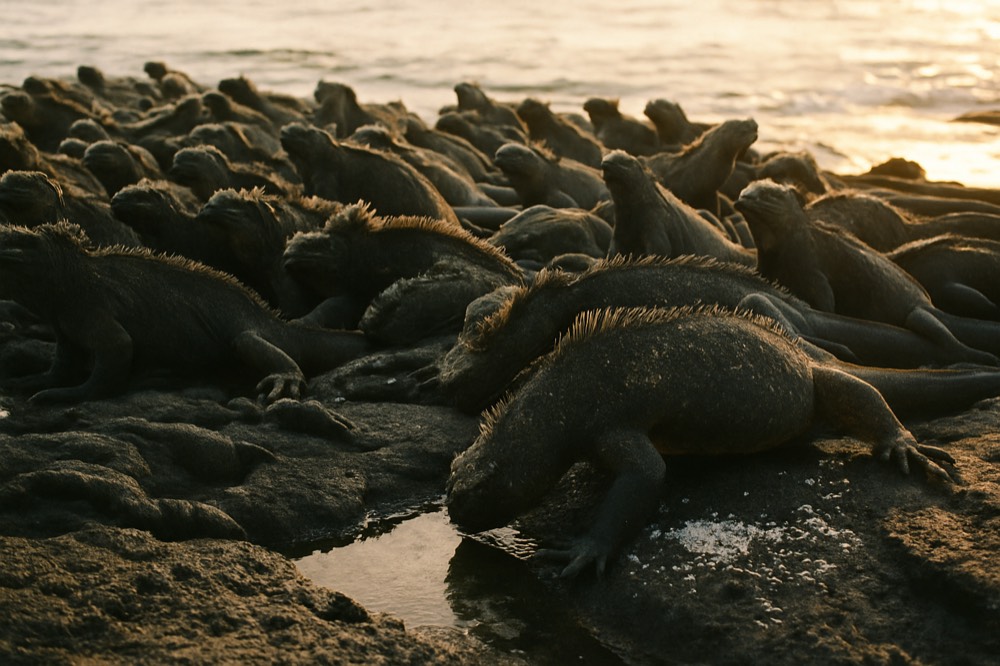
There is also a legal dimension most buyers never hear about. Cruise itineraries in the Galapagos are fixed instruments, approved day by day by the park, and an approved itinerary cannot be modified, a condition the park prints verbatim on its authorisation resolutions. Only vessels carrying fewer than 20 passengers may change itinerary at all, and larger ships only in proven force majeure. The practical translation: when you book a cruise, the printed island sequence is contractual in a way a land tour's day plan is not. That cuts both ways, it protects the remote sites you booked, and it means no swapping a rough day for a calm one.
One more structural fact from the park's regulations: a cruise vessel operates on a stack of permits allowing at most 16 passengers per permit and 64 per vessel, and visits to protected areas are only permitted with a park-accredited naturalist guide. So the cruise is a tightly rationed product by law, which is part of why its floor price stays high. For more on how the two formats split, the site's cruise versus land package guide works through the same comparison in planning detail.
Who Should Skip The Cruise Entirely?
Three traveller types should stay on land: budget travellers under about $2,000 for the week, anyone who gets seasick, and families or groups who want schedule freedom, because a fixed 15-day-rotation itinerary and a moving vessel serve none of them well. This is the part of the answer most cruise content will not give you, so it is worth being specific.
The budget case is arithmetic, covered above. The seasickness case is physical. The cool season from June to December is the period when the southeasterly trade winds strengthen, which is the park's own climate definition, and stronger winds mean more sea state. Traveller reports consistently single out the inter-island public ferries, especially Santa Cruz to Isabela, as rougher than cruise legs, but a cruise means sleeping on water every night for a week. One recent report describes a traveller who spent much of an eight-day cruise in the cabin and still said it was worth going, which tells you both things at once: it is survivable, and it is not nothing.
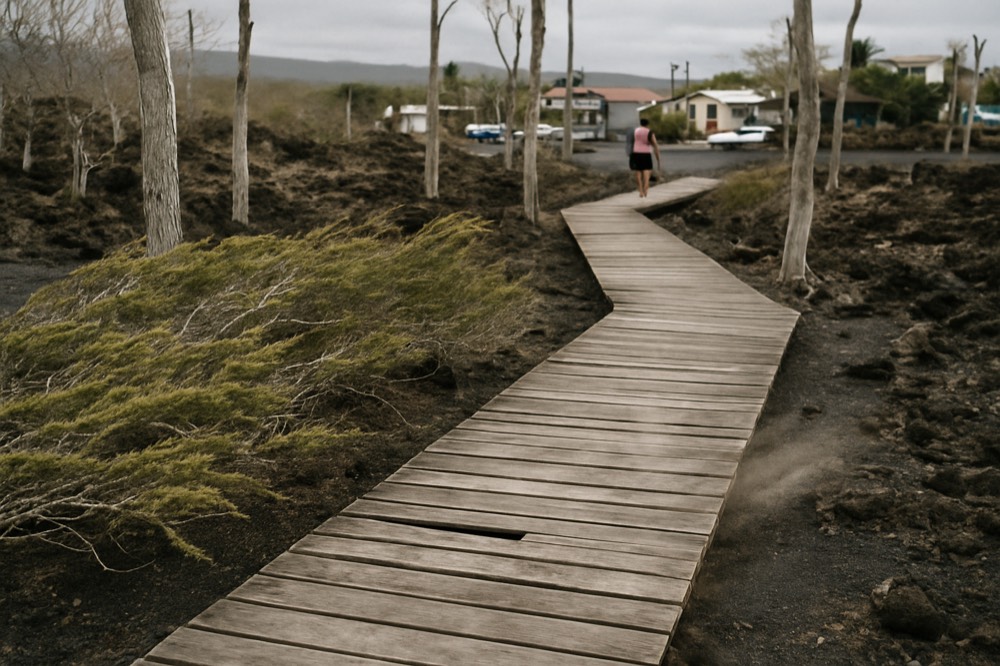
The freedom case is the least obvious. A cruise is a closed loop on a fixed schedule: you board on the boat's start day, not yours, and you disembark where and when the itinerary says. Land packages flex. The roster's four-day options alone include a tourist-class hopping tour from $1,313, a full-board land tour from $1,020, a small-group San Cristobal tour from $813 and an express tour from $714, and several run on more start dates than any single vessel can. If your dates are awkward, your group is mixed-age, or you want a lazy beach day in the middle, the land format accommodates that and the cruise does not.
For the freedom-minded, the land side of the roster has genuinely strong options rather than consolation prizes. The eight-day multisport adventure, rated 4.9 from 12 reviews from $2,363, includes all meals and hotel pickup across San Cristobal, Santa Cruz and Isabela. At the shorter end, the four-day Discovery Premium Bay Tour stays on Santa Cruz, arriving via Baltra, with all meals included from $450, rated 4.9 across 24 reviews, and free-cancellation land options exist too, including a private seven-day hopping tour rated 4.9 from 25 reviews.
What Do Travellers Who Did Both Actually Say?
Travellers who did both say the reports split almost evenly, and the split follows priorities exactly: those who wanted maximum wildlife and remote sites say the cruise was worlds better, while those who wanted flexibility, local towns and lower cost preferred the land portion of the trip. This is drawn from recent, dated traveller threads, not operator copy, and it is the most honest evidence available, because nobody in those threads was selling anything when they wrote their account of doing both formats back to back.
One traveller who did ten days land-based and a seven-day cruise wrote that the cruise was vastly superior in every way. Another in the same thread wrote that both were wonderful but they preferred the land portion for its flexibility and freedom, finding some ship excursions less interesting than expected. A third, a repeat small-ship cruiser, said they would do the same again because the archipelago is best understood from the water. These three positions, not two, are the real map: cruise-dominant, land-dominant, and cruise-with-eyes-open.
The regret patterns are more useful than the preferences. Travellers repeatedly say they wish they had booked longer cruises rather than shorter ones, because short itineraries miss the remote sites that justify the cruise premium in the first place. They report lower-deck cabins near the engine as a recurring disappointment, with noise and fuel smell in one detailed review of a small yacht, and they advise researching the specific vessel's deck layout rather than trusting photos. They also report hidden extras stacking up on both formats: wetsuit and snorkel rentals, drinks, tips, and the park fee and transit card that no package price includes.
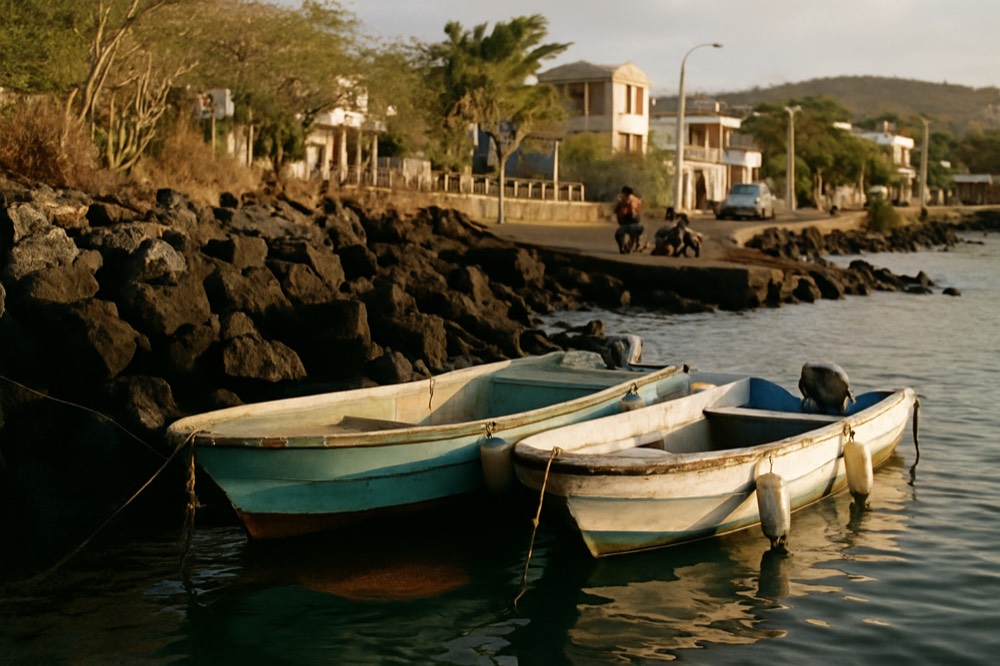
What the reports do not contain is anyone who regretted the land trip on wildlife grounds alone. The land-based regret, where it appears, is about ferry logistics and rough crossings between islands, which is a scheduling and seasickness problem, not a wildlife one. If you want to dig into the money side further, the site's Galapagos package cost guide breaks the full budget down line by line, and the island hopping packages guide covers the land format's own range.
So When Is The Cruise Premium Worth Paying?
Pay the cruise premium when three conditions line up: your budget clears about $4,500 per person for five days, Fernandina or the far western islands are a must for you, and you accept a fixed itinerary in exchange for dawn landings and full logistics relief. When only one or two of those three hold, the land package wins on value, and the money saved buys a longer trip, which travellers consistently say matters more than the format.
The wildlife case for the cruise is strongest in the west. The Galapagos penguin, the only penguin living on the equator, and the flightless cormorant, the only cormorant that lost flight, both concentrate around Fernandina and Isabela, where the cold Cromwell Current upwells. The park's 2025 monitoring counted 391 penguins and 656 cormorants across their range, small populations in absolute terms, which is exactly why access to those waters is the cruise's crown argument. A land day trip from Isabela can reach the general area, but the visitor sites themselves are the vessel itineraries' territory.
The relief case is underrated. On a cruise, every transfer, every meal, every landing and every guide is handled, and the park's own arrival guidance notes a naturalist guide meets cruise guests at Baltra airport. On a land trip you manage ferry tickets, port inspections and hotel moves, which is fine for confident travellers and tiring for everyone else. The site's Galapagos Islands Tour Packages home page lays out the full range of both formats if you want to compare beyond the tours named here.
If you decide the cruise is worth it, length matters more than luxury. Longer does not mean more islands here: the five-day Seaman Journey covers six islands against the seven-day La Pinta's five, so the case for seven days is more time at each visitor site, not new landings. The ratings, 5.0 from 48 reviews on La Pinta and 4.9 from 31 on the seven-day Isabela II journey, are real signals from small but consistent pools. Book the longest itinerary your budget allows rather than the fanciest cabin on the shortest one.
Whichever way you lean, the three formats below span the whole decision: the small-group western cruise that is the cruise argument at its purest, the seven-day luxury itinerary that is its ceiling, and the $450 land tour that is the honest alternative at a fraction of the price.
Common Questions About Galapagos Cruises
Are Galapagos Cruises Worth It?
For travellers who can spend $4,500 or more per person and whose priority is remote islands and dawn wildlife landings, yes. For budget travellers under about $2,000, anyone prone to seasickness, and groups wanting schedule freedom, no, a land-based package delivers the headline wildlife for roughly half the price. Four out of five Galapagos visitors now stay on land.
How Much More Does A Cruise Cost Than A Land Trip?
On this site's roster, cruises run from $3,560 to $8,066 per person while land packages of four to eight days run from $450 to $2,898. A five-day small-group cruise starts at $4,604 against $1,399 for a five-day, three-island land tour, roughly three times the price for the same number of days.
Can A Land-Based Trip See The Same Animals As A Cruise?
Most of them, yes: giant tortoises, sea lions, marine iguanas, blue-footed boobies and sea turtles are all reachable from Santa Cruz, Isabela and San Cristobal. What a land trip cannot reach is Fernandina and the far western visitor sites, home to the Galapagos penguin and the flightless cormorant, which are only accessible by vessel.
What Extra Costs Hit Both Formats?
The $200 park entrance fee, paid in cash US dollars to rangers on arrival at Baltra or San Cristobal, and the $20 transit control card, bought at the Quito or Guayaquil airport counter, apply to every visitor. Flights from the mainland, tips and snorkel gear rentals are also usually on you regardless of format.
Is A Longer Cruise Better Value Than A Shorter One?
Not automatically. On this roster, a five-day route can call at six islands while a seven-day route covers five, so extra days buy more time at each visitor site rather than more islands. What a longer cruise does add is unhurried pacing. The same money spent on a longer land trip is the alternative worth weighing.
Do Galapagos Cruise Itineraries Ever Change?
Rarely. Itineraries are approved day by day by the park and cannot be modified, and only vessels under 20 passengers may change route at all, with larger ships only in proven force majeure. Book the printed itinerary you actually want.