What Is The Best Galapagos Tour Company?
There is no single best Galapagos tour company. The honest answer depends on boat class, operator model and what the reviews actually say, and this guide breaks down how to pick.
 By Oleg Galeev, Editor
What Is The Best Galapagos Tour Company?
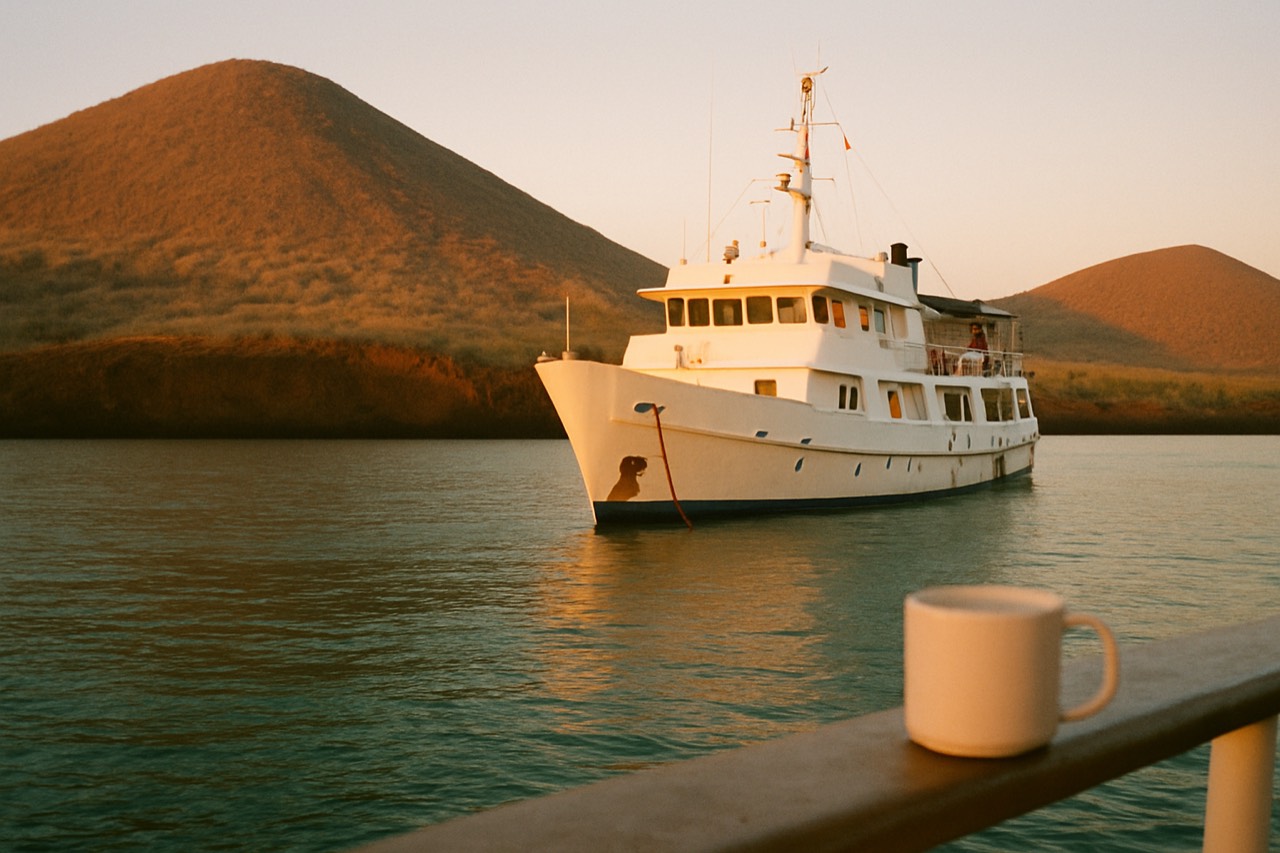
There is no single best Galapagos tour company, and any article that crowns one is selling you something. The real answer is that there is a best company per boat class and per travel style, and many of the famous names you have read about charter or resell the same physical hulls. The question to ask is not who is best, but who actually operates the product you are booking.
That distinction, between the operator and the seller, is where most Galapagos research goes wrong. A traveller books a seven-day cruise through a website they like, assumes that website owns the yacht, and then writes a review praising or blaming a company that never touched the boat. The Galapagos fleet is small, the berths are limited by law, and the same vessel appears across dozens of storefronts at different prices. Understanding that structure tells you more about choosing well than any top-ten list can.
The other reason a single answer fails: the products are barely comparable. A luxury liveaboard cruise from $8066 per person and a four-day land-based package from $450 per person are both "Galapagos tours", and the companies that excel at one rarely excel at the other. Even within one operator, quality varies by hull, by guide and by itinerary. The park fixes those itineraries, so a company's flexibility matters far less than its fleet, its guides and its honesty about what is included.
Before comparing specific operators, it helps to see the shape of the market you are buying into.
Who Actually Operates The Boat You Are Booking?
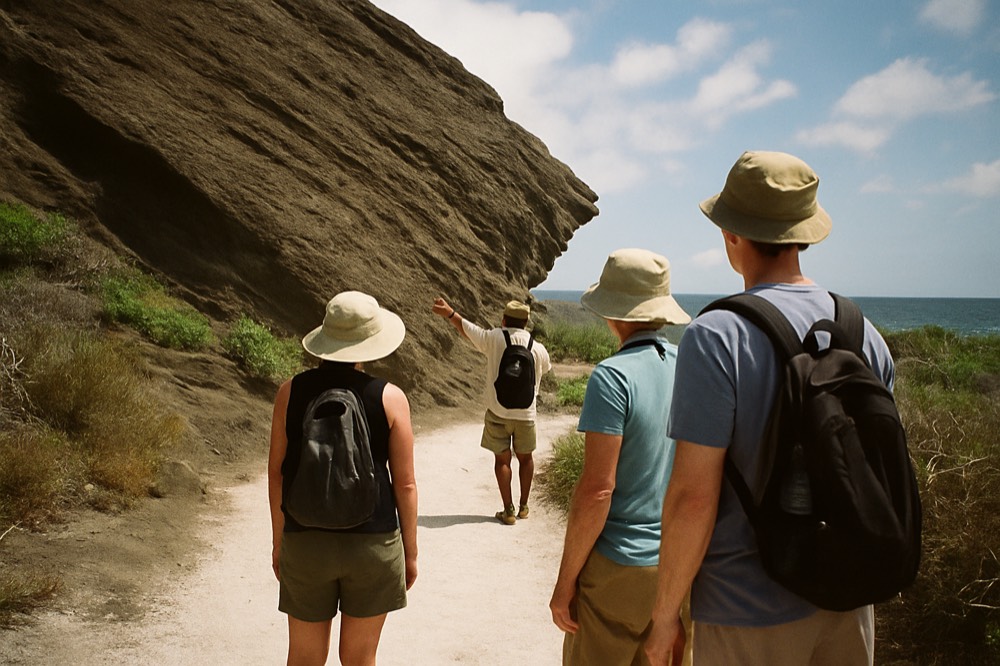
Many of the best-known names in Galapagos travel do not own vessels at all. They are sellers, charterers or resellers, and the same hull can appear under several brands at different prices. When Lindblad Expeditions wanted two more ships recently, it bought the Celebrity Xpedition and Celebrity Xploration outright in a deal reported at roughly $17 million. The lesson: research the vessel and the operator behind it, not the storefront.
The fleet is structurally small for a reason. Ecuador's tourism regulation for protected areas caps a navigable cruise at 16 passengers per permit and 64 passengers per vessel, which means a 64-berth ship is legally a stack of four permits. The park management plan contemplates vessels up to 100 passengers, but only ships under 20 passengers may change their itineraries at all, and larger vessels only in proven force majeure. A cruise itinerary approved by the park, in the words of a real 2021 authorisation resolution, may not be modified "under any concept" without express park permission. There is no such thing as a company that will swap your route because the weather looks better on Thursday.
Scarcity of hulls produces the charter market. An Ecuadorian destination management company owns or manages the yacht, hires the crew and holds the park permits, while international brands sell berths, add their own guides, their own branding and their own price premium. Neither model is a scam. The branded version often brings better onboard interpretation, nicer linens and a bigger support organisation. The direct version often brings a lower price for the same hull. What you should never do is assume the name on the invoice is the name on the hull.
How do you find out who runs the boat? Ask the seller directly, in writing, for the vessel name and the operating company. A seller who refuses to name the ship before you pay is telling you something. Once you have the name, search it: recent cruise market reporting shows fleet changes happen constantly, with new catamarans entering service and older ships sold or refurbished, so a review of a hull from three years ago may describe a completely different product today.
How To Judge A Company By Boat Class
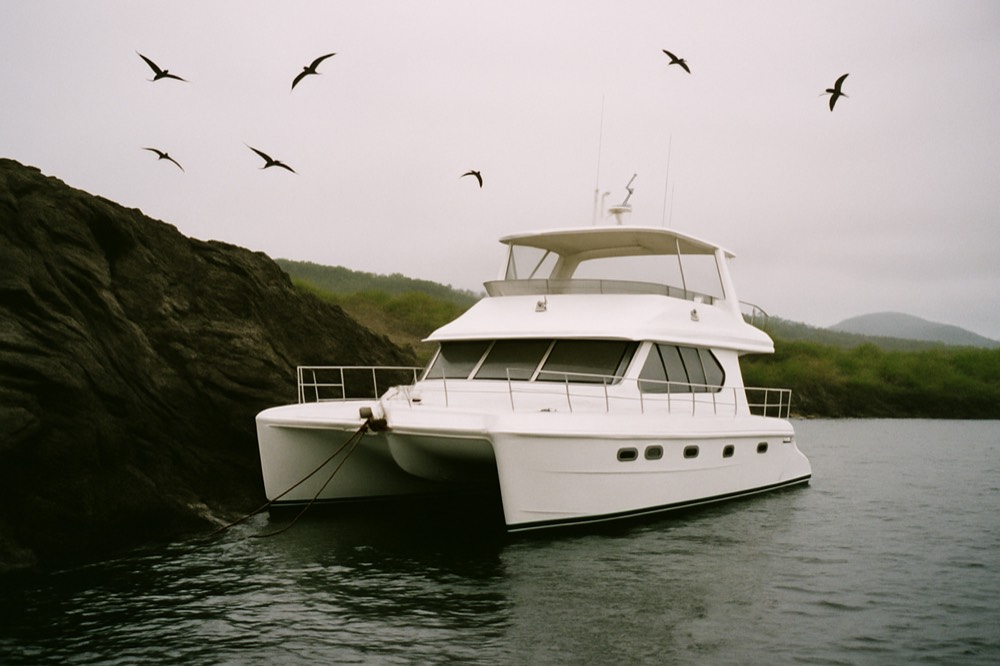
Judge a Galapagos company within its class, never across classes. A 16-guest catamaran, a 48-guest expedition ship, a 64-berth vessel and a land-based hopping package are different products with different economics. Within each class, the honest comparison points are the hull's age and layout, the guide category the operator employs, what meals and gear are included, and whether the itinerary's confirmed stops match what you actually want to see.
Start with the hull. Traveller reviews of small ships return to the same complaints again and again: lower-deck cabins near the engine, noise, fuel smell, poor ventilation. One detailed review of a small yacht described clothes that had to be washed on arrival because the lower-deck cabin reeked of fuel fumes. That is not a company problem or a brand problem, it is a cabin-selection problem, and it means the best company in the world cannot fix a bad cabin choice. Ask for a deck plan, and prefer upper-deck or midship.
Then check the guide. Park rules make a DPNG-accredited naturalist guide compulsory at protected sites, and the park's current visit rules, Resolución MAE-PNG/DIR-2026-0044-RM of 12 August 2026, set minimum distances from wildlife and other behaviour standards that guides enforce. The park trains and licenses guides itself and runs scientific briefings for them, so a guide's category and experience genuinely shape your trip. An operator that publishes its guides' credentials is more trustworthy than one that treats the guide as a mystery.
Then read the itinerary against the park's own site list. The archipelago has 176 authorised visitor sites, 91 marine and 85 terrestrial, and every cruise itinerary is a fixed selection from them. If your dream is Fernandina, the youngest and most pristine island, you need a western-route cruise, because no land-based package reaches it. If your dream is snorkelling with penguins, the same logic applies: the penguin population centres on the western waters around Fernandina and Isabela, where the 2024 park census counted 413 birds. A good company matches you to the itinerary; a lazy one sells you whatever has berths left.
| Class | Typical product | What to check before booking |
|---|---|---|
| Small catamaran or yacht | Luxury or first-class cruise, $3560 to $8066+ per person | Hull age, cabin deck position, whether the operator owns or charters the vessel |
| Mid-size expedition ship, capped at 64 guests per cruise vessel | Cruise with more onboard amenities | Which permits the ship stacks, whether the fixed itinerary covers your must-see sites |
| Land-based hopping package | Hotel nights plus guided day tours, $450 to $2898 per person | Meal inclusions, ferry logistics, which day tours are confirmed versus optional |
| Combined mainland-plus-islands package | Quito or Machu Picchu plus Galapagos, $2876 to $4495 | What the mainland segment actually includes, and who runs each leg |
What The Reviews Actually Say, And What They Cannot Tell You
Galapagos tour review pools are small, and honest reading means always checking the count beside the rating. On a typical multi-product roster, the largest single review pool is 56, several products carry three or four reviews, and a handful have none at all. A 5.0 from three reviews is a rating from three people, not proof of excellence. Read the text, not the number.
The pattern in recent traveller reports is consistent enough to be useful. On the cruise-versus-land question, opinions split hard: one traveller who did both wrote that the cruise was "vastly superior in every way", while another preferred the land-based portion for its "flexibility and freedom". Both are telling the truth about their own priorities. What the reports agree on is practical: inter-island ferries are rougher than cruise legs, seasickness medication should start the night before, and the hidden extras, the $200 park fee in cash, the $20 transit card, wetsuit rentals, tips and drinks, push the real total above the advertised base price. Everything else covered here is indexed on Galapagos Islands Tour Packages.
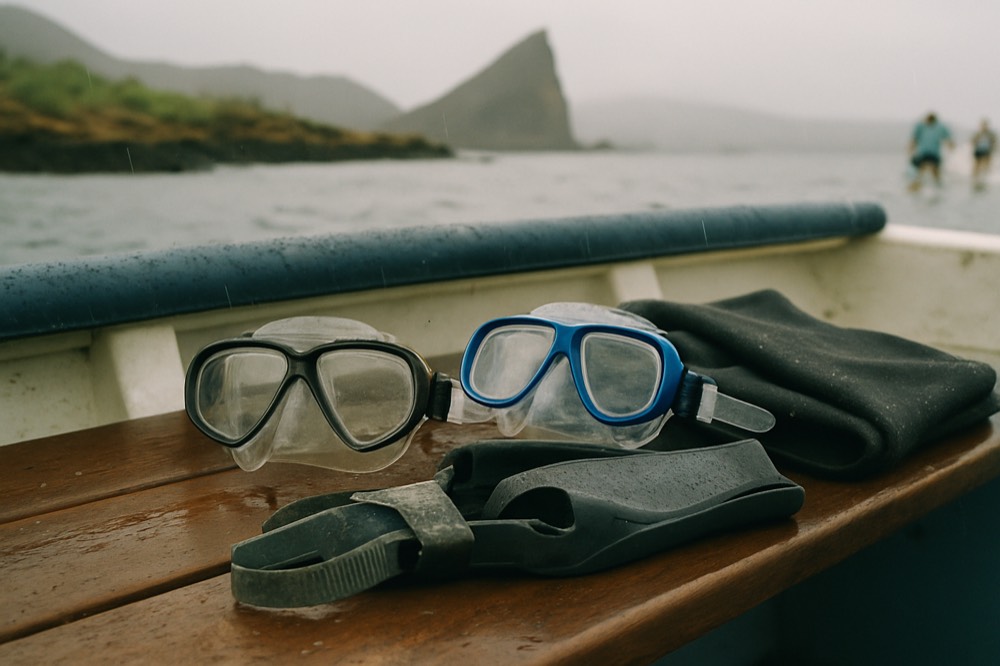
Complaint patterns cluster around two failures. First, boat substitutions close to departure, where a traveller books one hull and sails another; this is a direct consequence of the charter structure, and the only defence is getting the vessel name in your booking confirmation. Second, nickel-and-diming on gear that the listing called optional but the trip effectively required, particularly wetsuits and snorkel equipment. Reviews repeatedly advise bringing your own mask and snorkel.
Here is how a few real products on the market compare, with each rating shown alongside its review count:
| Product | Format | Rating and review pool | From, per person |
|---|---|---|---|
| Galapagos Island Hopping 7 days, 6 nights | Private land-based, 7 days | 4.9 across 25 reviews | $1650 |
| Galapagos Intensive 5 days, land base, 3 islands | Land-based, 5 days | 4.7 across 56 reviews | $1399 |
| 8-day Galapagos Island Hopping Adventure Expedition | Small-group land-based, 8 days | 5.0 across 17 reviews | $2400 |
| La Pinta, Darwin's Legacy | Cruise, 7 days | 5.0 across 48 reviews | $8066 |
| 4- or 5-Day Galapagos Islands Explorer Package | Small-group, 5 days | 3.8 across 19 reviews | $1043 |
Notice what the table does not say. It does not say the $8066 cruise is "better" than the $1399 land package; it says one has a larger review pool at a perfect score and a much higher price. The intensive five-day land package carries the deepest review pool on the land-based side at 56 reviews, which makes its 4.7 the most statistically meaningful number in that class. The explorer package's 3.8 from 19 reviews is worth reading in detail, because nineteen people is enough for the complaints to have a pattern, and patterns are what you act on.
Which Companies Suit Which Kind Of Trip?
Match the company to the trip you are actually taking. Luxury small-ship travellers should compare hulls and guide categories, and expect famous international brands to cost more over the same or similar vessels. Mid-range buyers get the best value from Ecuadorian operators selling direct. Land-based travellers should judge the day-tour lineup and the hotels, not a boat. Families and seniors should prioritise operators that publish pickup, meal and accessibility details rather than glossy wildlife photos.
For the luxury small-ship segment, the market has recently been reshaped. Lindblad's purchase of two Celebrity vessels and their conversion into the National Geographic Gemini, 48 guests, and National Geographic Delfina, 16 guests, plus the arrival of new ultra-luxury catamarans such as the 20-guest Hermes and the andBeyond Galapagos Explorer with its 12 guests, means the top end is deeper than it was two years ago. Celebrity retained only its 100-guest Flora. If you are shopping this tier, the differences that matter are guest count, guide-to-guest ratio and the specific fixed itinerary, because the wildlife viewing is largely a function of which of the 176 sites the route touches.
For mid-range cruises, buying closer to the source usually wins. Ecuadorian operators hold the permits, run the boats and quote the lower price for the same berths that international brands resell. The trade-off is service recovery: if something goes wrong, a big brand's support desk is a real asset. Weigh the premium against the risk. Our Galapagos cruise packages guide breaks down how these tiers price out, and the Galapagos cruise versus land package comparison covers the structural differences in full.
For land-based trips, the company question becomes a day-tour question. Your week is a stack of guided day excursions plus ferry transfers plus hotel nights, so the operator's competence shows up in logistics: whether pickups happen, whether the ferries are buffered with spare time, whether the day tours are confirmed or merely optional. One well-reviewed private product in this class, the island hopping seven-day tour, rates 4.9 across 25 reviews from $1650 per person, includes hotel pickup and carries free cancellation, which is the kind of concrete detail that separates a serious operator from a listing that photographs well. Its confirmed stops are San Cristóbal, Santa Cruz, Isabela and Baltra, a standard three-island spine.
What Should You Ask A Company Before Paying?
Ask five questions in writing before you pay anything: the vessel or hotel names, the operating company behind the product, exactly which stops are confirmed versus optional, what the price excludes, and the cancellation terms. A company that answers all five specifically is demonstrating the operational competence your trip depends on. A company that answers with wildlife photos is demonstrating something else.
The exclusions question is the one that saves real money. On most packages the $200 park entry fee for foreign adults and the $20 transit control card are extra, and many listings simply do not state whether flights, wetsuits, drinks or tips are included. Treat "not stated" as exactly that: not stated, not included and not excluded. The park fee is paid in cash, US dollars, to rangers on arrival at Baltra or San Cristóbal, and there is no official online prepayment portal, so any company that tells you to prepay the park fee online is either confused or inventing a service. The transit card is bought at the CGREG counter at Quito or Guayaquil airport, though free online pre-registration speeds the counter up.
The stops question matters because listings blur confirmed and conditional. A route that lists eight islands may only commit to four, with the rest dependent on weather, permits or minimum numbers. The park's advance-reservation system makes this sharper: since the current visit rules took effect, six popular sites including the Fausto Llerena tortoise centre on Santa Cruz and Volcán Chico on Isabela require a pre-booked QR reservation that only agencies registered in Galapagos can obtain. If a day tour to one of those sites is on your itinerary, the operator must hold that reservation, and you are entitled to ask whether it does.
The cancellation question matters because Galapagos plans are fragile. Flights get rescheduled, volcanoes produce seismic swarms, and small operators overbook. Products that state free cancellation explicitly are worth a small premium for exactly that reason. Our how to book a Galapagos package guide walks through the payment and cancellation mechanics in detail, and the flights, park fee and transit card guide covers the arrival-side costs every buyer should budget before comparing company quotes.
How To Compare Quotes That Look Identical
Two quotes for the "same" Galapagos trip can differ by hundreds of dollars per person in ways that only appear in the fine print: cabin category, meal count, gear rental, guide category, transfer inclusions and cancellation terms. Build a simple like-for-like checklist before comparing prices, because the lowest headline number is rarely the cheapest trip. The company that quotes higher and itemises everything is usually the safer buy.
Start by normalising the days. A "five-day" package that is really four nights with a departure flight on day five is not comparable to a genuine five-night product. Then normalise the meals: on the current market, packages range from breakfast-only to full board, and two lunches and dinners a day in Puerto Ayora add up quickly. Then the gear: wetsuit and snorkel rentals are a recurring hidden cost in traveller reports, sometimes described as optional when the water is 21.5 degrees in the cool season and nobody snorkels without one.
The water temperature point deserves a sentence of its own, because it explains the gear question. Park-climatological data for Puerto Ayora shows mean sea temperature peaking at 25.7 degrees in March and bottoming at 21.5 in August and September, roughly four degrees of swing. In the hot season a wetsuit is a comfort; in the cool season it is effectively required. A company that includes wetsuits is worth more in July than the same company is worth in March, and a like-for-like comparison should price that in.
Finally, normalise the guide and the group. A private tour with one guide for your family is a different product from a 16-person day tour with the same headline stops, even if the itinerary text is identical. The regulation caps day tours and bay tours at 16 passengers per permit, and liveaboard cruises at 16 per permit and 64 per vessel, so group size is not a marketing slider, it is written into the permit structure. Ask which one you are buying, and check the answer against the price.
| Checklist item | Why it changes the real price |
|---|---|
| Nights on the islands versus "days" | A five-day, four-night trip is not a five-night trip |
| Meals included | Breakfast-only versus full board can be a meal a day difference |
| Wetsuit and snorkel gear | Cool-season snorkelling without a suit is unrealistic |
| Park fee and transit card | $220 per adult, cash for the fee, extra on most packages |
| Confirmed versus optional stops | Optional stops may not happen at all |
| Cancellation terms | Free cancellation is worth a premium on fragile itineraries |
Common Questions About Choosing A Galapagos Tour Company
What Is The Best Galapagos Tour Company?
There is no single best company. There is a best operator per boat class and travel style, and many famous names charter or resell the same physical hulls. Judge candidates within the class you are buying, check the vessel name and operating company in writing, and read review counts alongside ratings before deciding.
Do The Big International Brands Own The Galapagos Boats?
Sometimes, increasingly so: Lindblad Expeditions bought two Celebrity vessels outright in a deal reported at about $17 million. But much of the market still works on charter and resale, where an Ecuadorian operator holds the permits and the hull while international brands sell berths. Always ask for the vessel name before paying.
Can A Galapagos Company Change The Itinerary If The Weather Is Bad?
Almost never. Park rules fix cruise itineraries, and only vessels under 20 passengers may change route at all, with larger ships limited to proven force majeure. An approved itinerary cannot be modified without express park authorisation. Choose the route you want up front.
Why Do Ratings For Galapagos Tours Look So Extreme?
Because the review pools are tiny. Many products carry one to five reviews, a 5.0 from three reviews is three people's opinion, and some products have no reviews yet. Always read the count beside the rating and the text of the complaints rather than the headline number.
Should I Book A Galapagos Company Direct Or Through A Reseller?
Direct booking with the operator usually costs less for the same berth, but a reputable reseller adds support if something goes wrong and sometimes better cancellation terms. Either way, get the vessel or hotel names, the inclusions and the cancellation policy in writing before you pay.